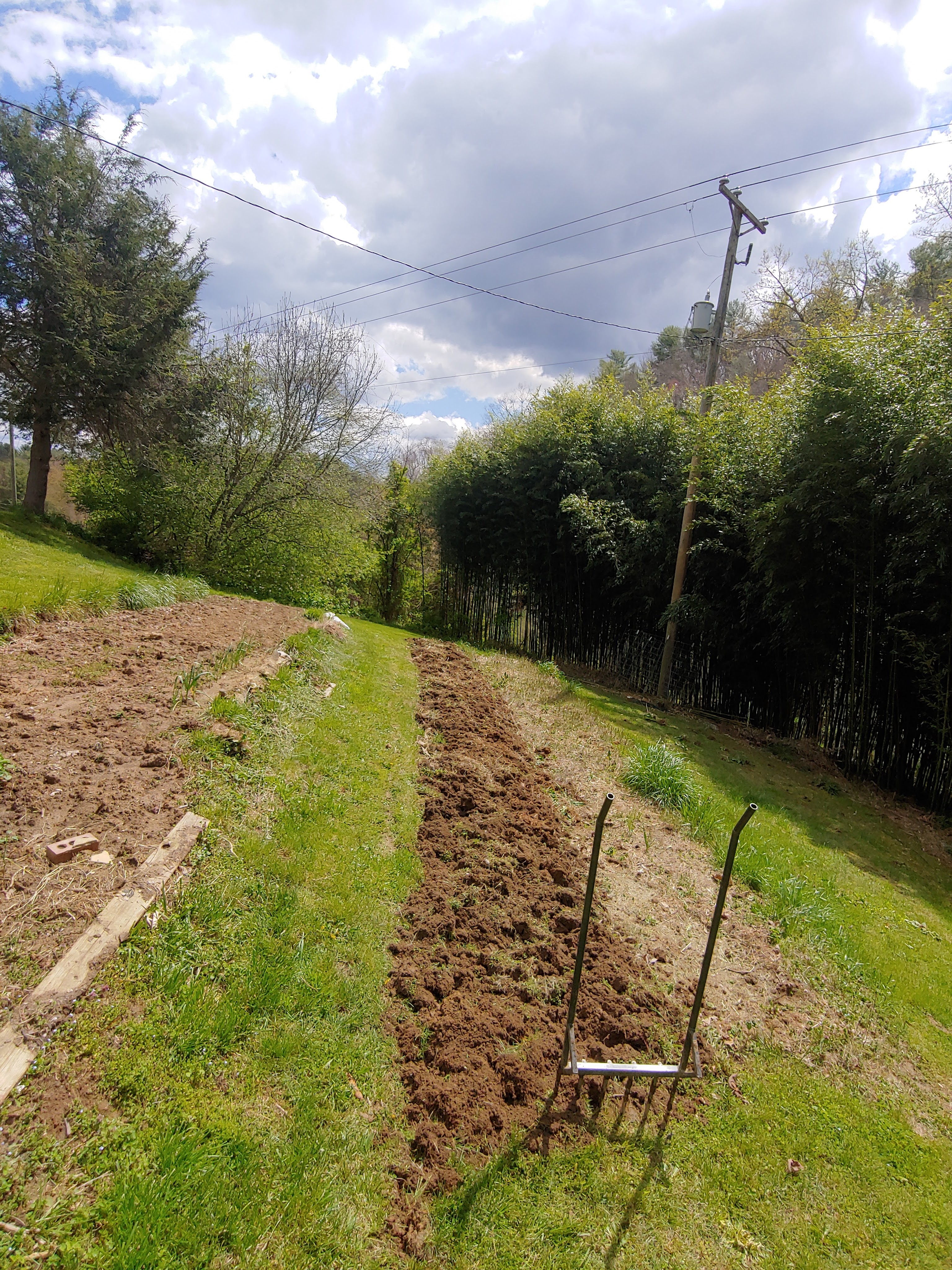
We’ve always had a garden. In the natural world, timing is everything, so I needed to shift my focus from the roof over my head to the ground under my feet. We have four garden spots since they have to be somewhat terraced on our hillside. Our little Mantis tiller can be slow, hard work to break them up from scratch after winter. We ordered a broadfork to do the initial deep break up of the dirt. It works better for me since it doesn’t require gas, oil and annual mechanical repairs and maintenance. Small engines are one of the banes of my existence. I had initially double dug all the sections with a pick and shovel as I created them. Each spring I would spend a couple weeks turning them with a shovel. Even I don’t like shoveling that much. The heavy broadfork worked much better, giving me a work out with less back pain.
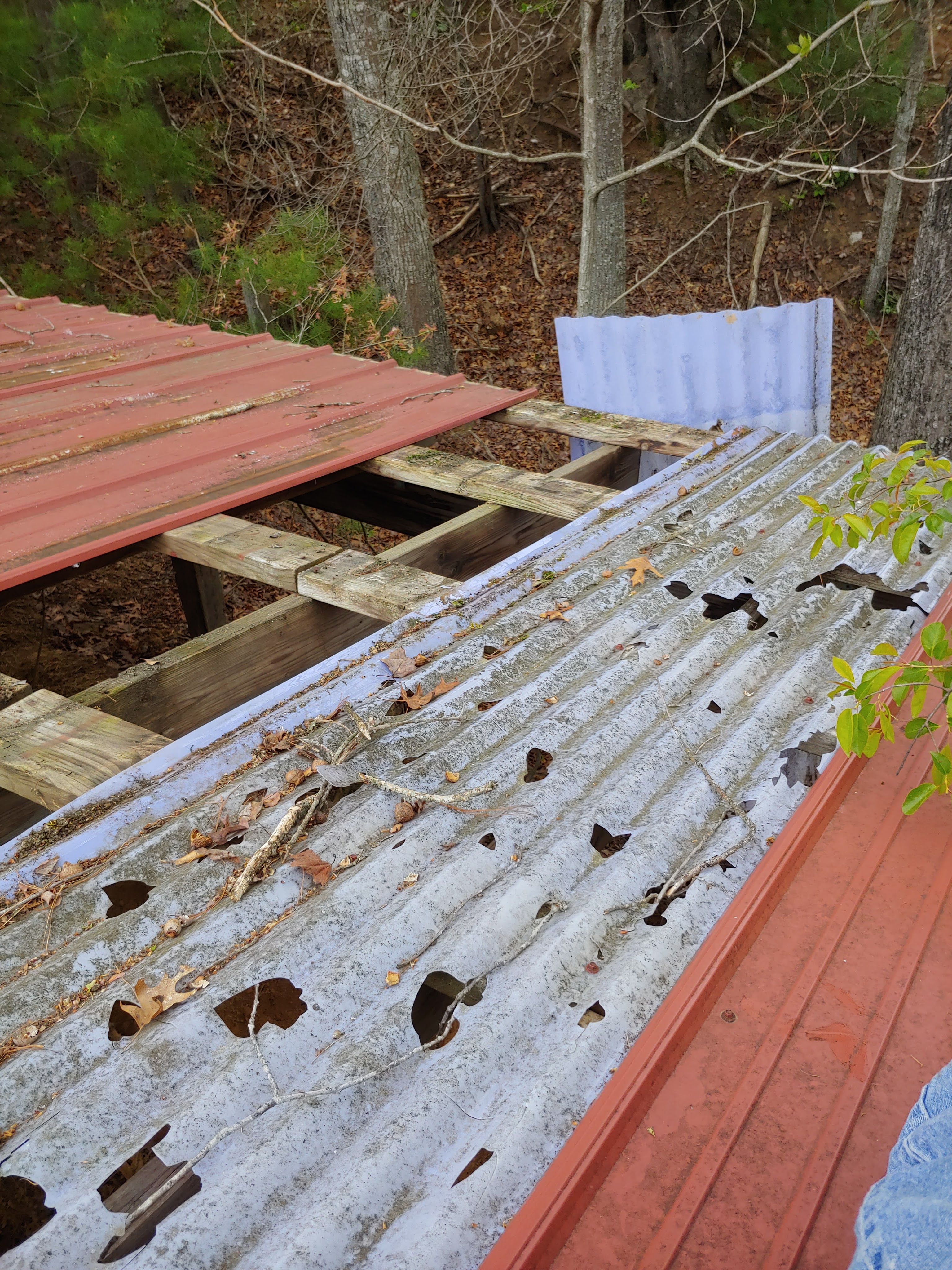
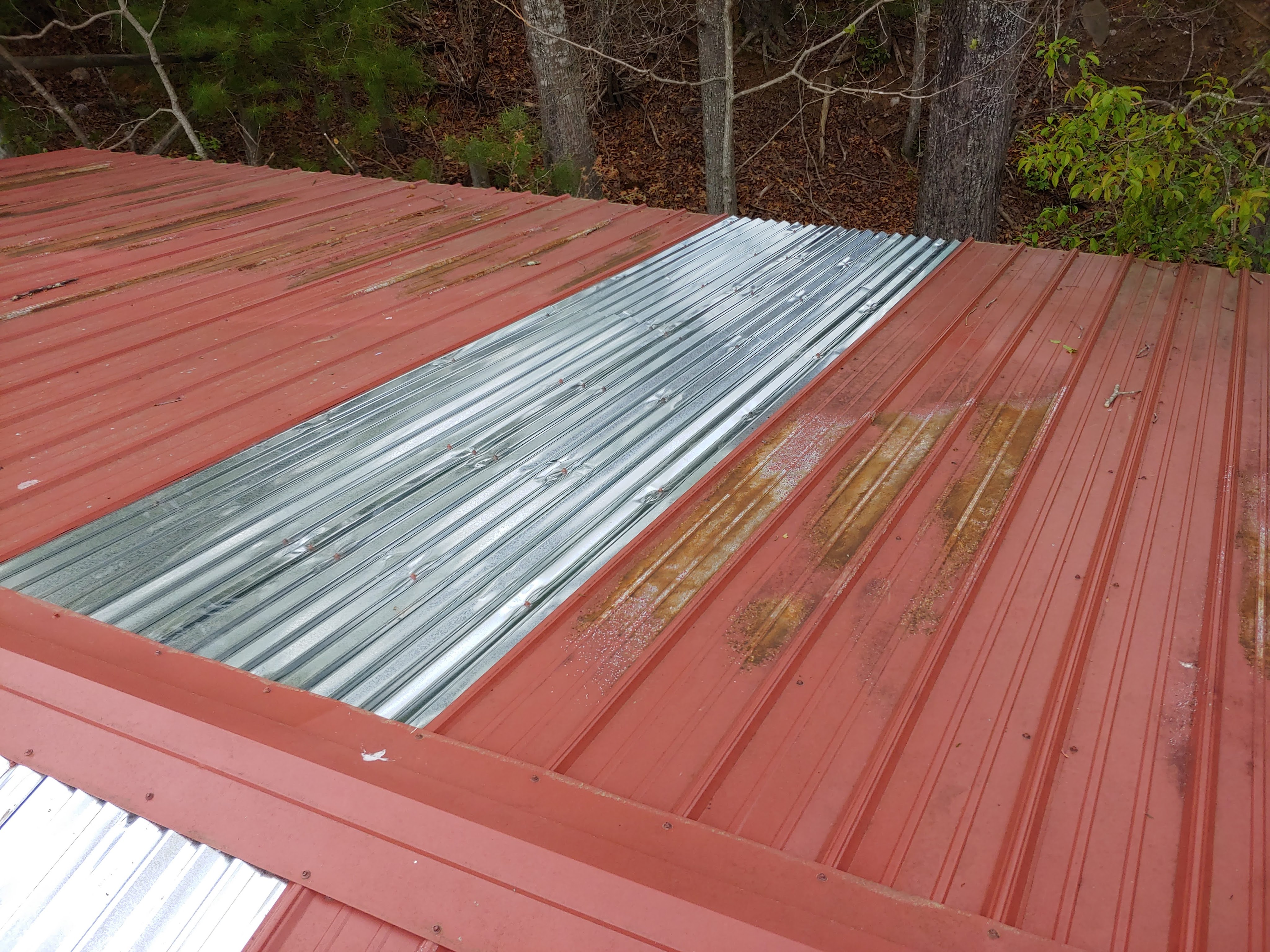
Another small job I needed to take care of was replacing some roofing on my shed. Years ago I had the bright idea of using some translucent plastic roofing over a section to allow some extra light in. Skylights never work out. The stuff rotted from UV exposure and developed gaping holes from acorns, limbs and hail damage. Extra roofing had been purchased along with the insulation for the shack to remedy the issue. The poor shed’s kind of rough and and anything but nice, but it deserved a little attention to keep my stuff dry.
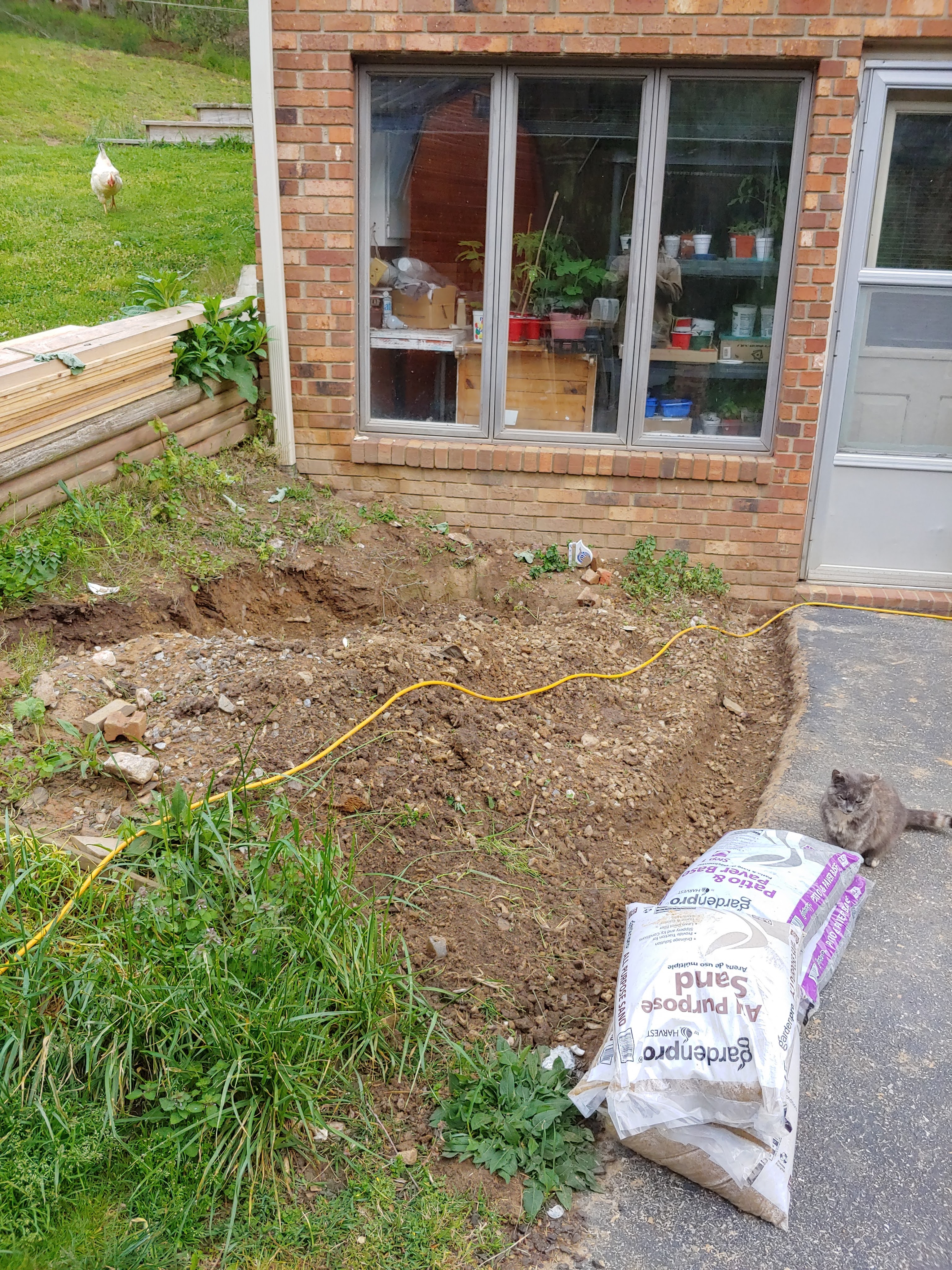
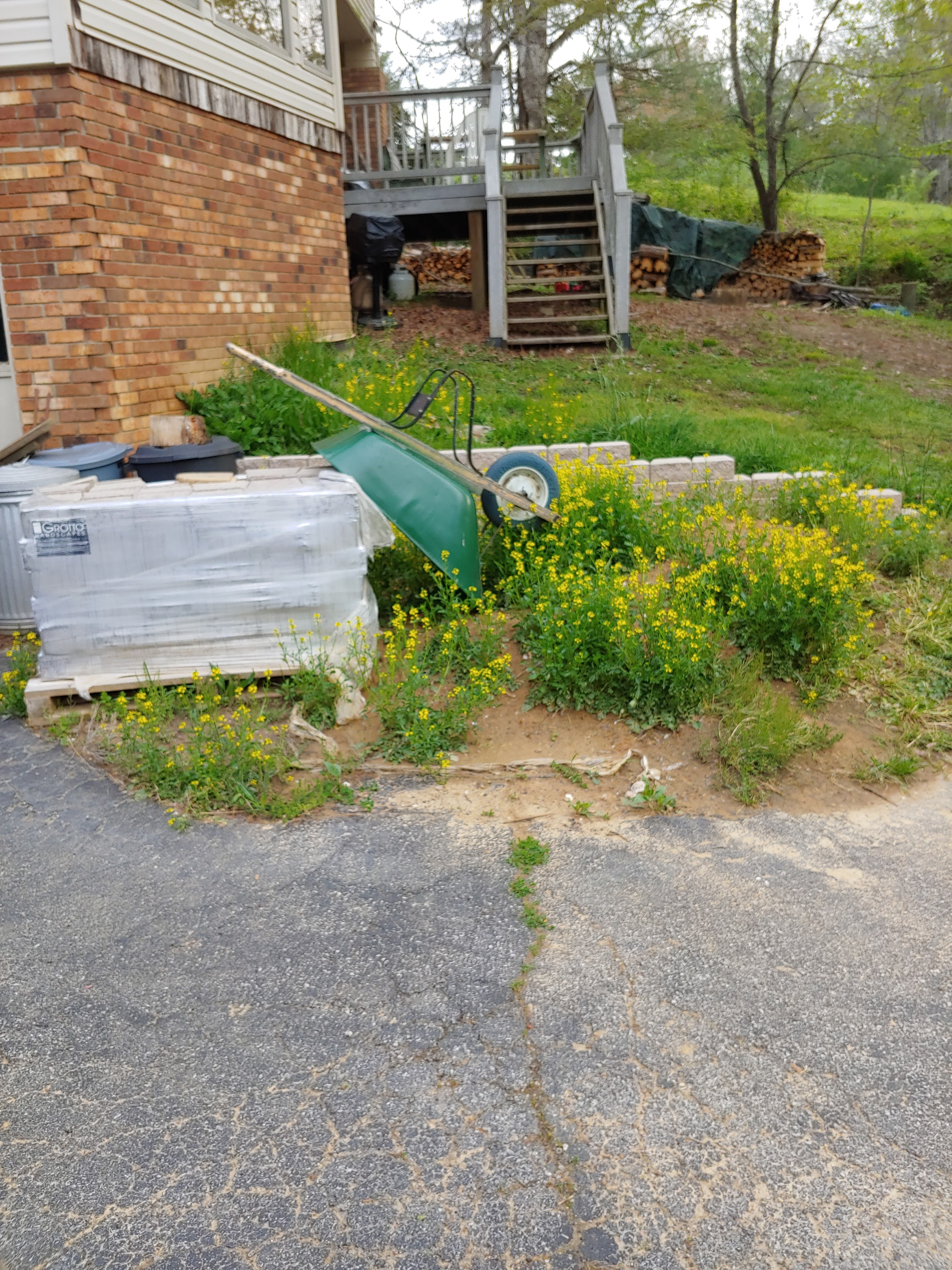
After working up the garden plots and fixing the shed, I turned to a job that had been in the procrastination list for quite some time. Two spots at the basement where the previous owner grew flowers and a holly tree were weed choked eyesores. I had in mind to landscape them and add raised beds. Lydeana and Shayley grow a lot of our herbs to cook with and this would be perfect.
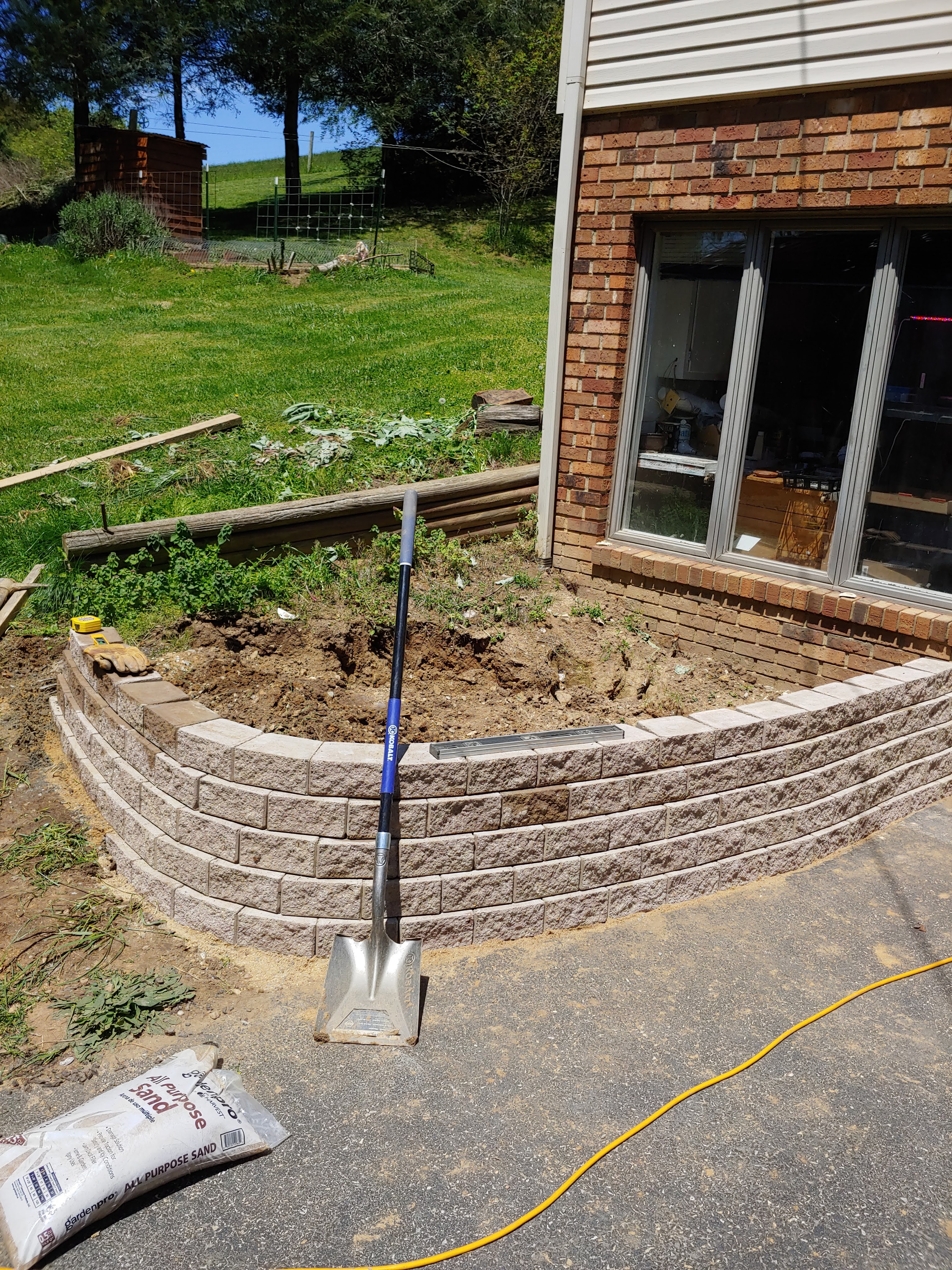
First order of business was removal of the stumps from the holly and a cherry tree that sprang up next to it. The roots were endless and deep, forcing me to dig each one and follow it for a distance to truly clear it out. When the house was built, a lot of gravel, rocks and chunks of brick were disposed in the spot, causing severe damage to any edged tool if not carefully cleared and manipulated. It took two days of digging and cutting to finally wrench the blasted thing out of the ground. Slinging that stump and roots over the fence into the woods was the epitome of satisfaction.
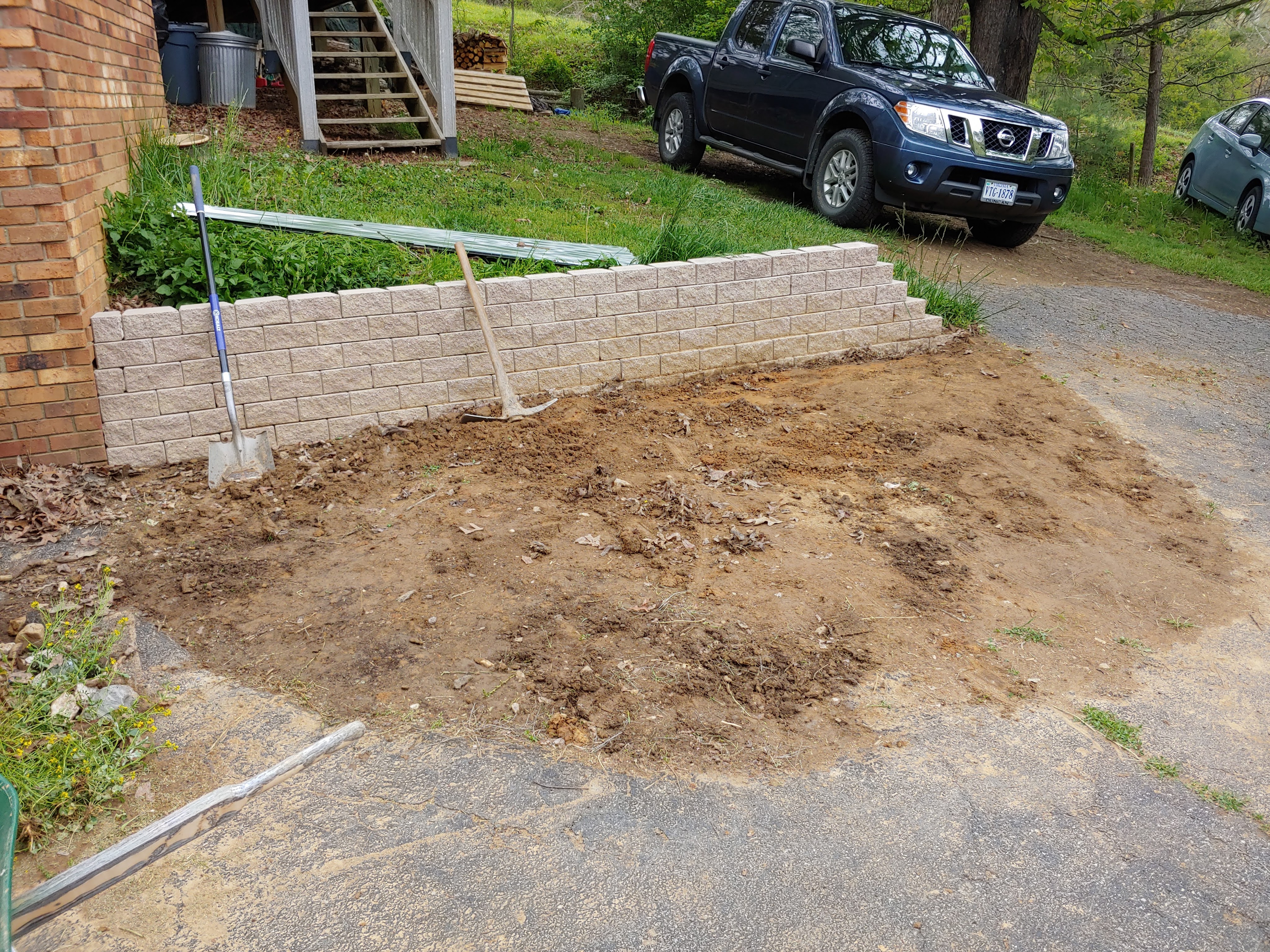
In anticipation of this project I had purchased a pallet of over 300 landscaping wall blocks long before. Digging the trench for the foundation and leveling the first layer was the most crucial aspect. The rest stacked up quickly and I could start leveling dirt and backfilling. As much as I dig I don’t have a lot of extra dirt laying around. The other weed choked spot was actually a pile from starting to level it the previous year and building a wall. I had pulled up all the weeds as I leveled it. You can never clear all those little roots out, so more sprang up to laugh at me. Again I pulled up the new weeds and proceeded to backfill the old stump spot. I was going to completely cover it with weed proof material so nothing could grow back. I’m sure someday those little dormant weed roots will see the light of day and get their revenge. Hopefully long after I’m gone.
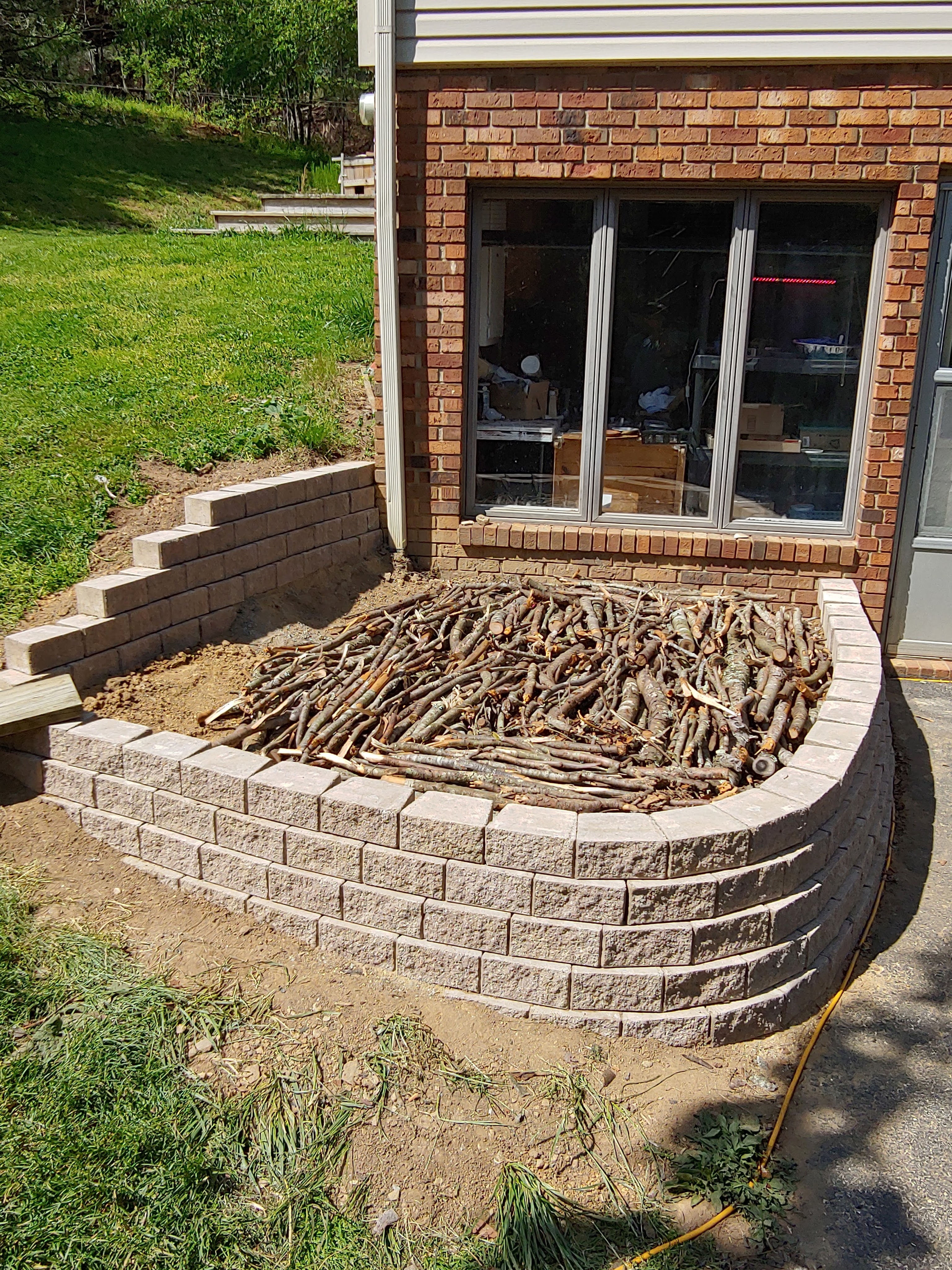

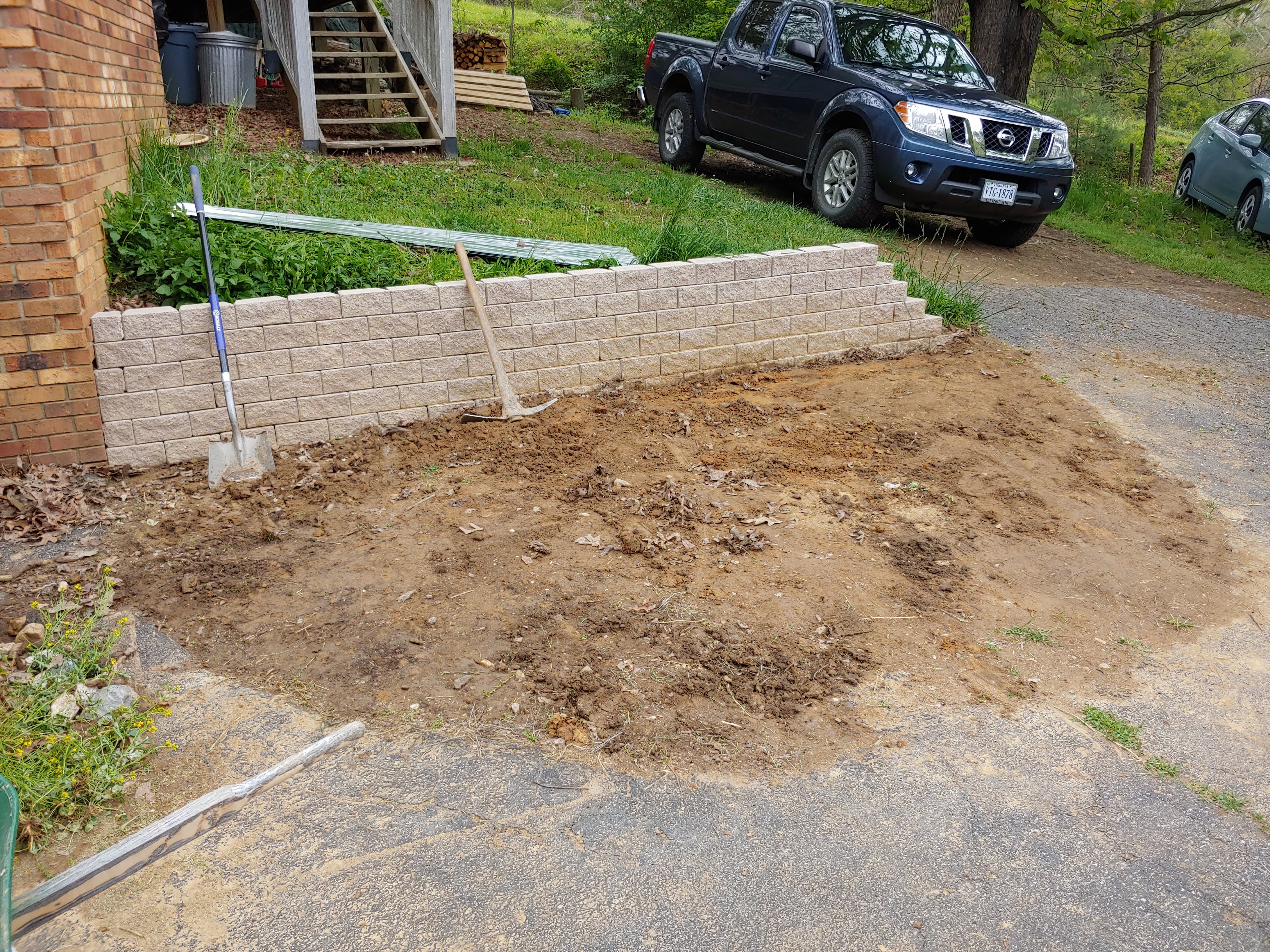
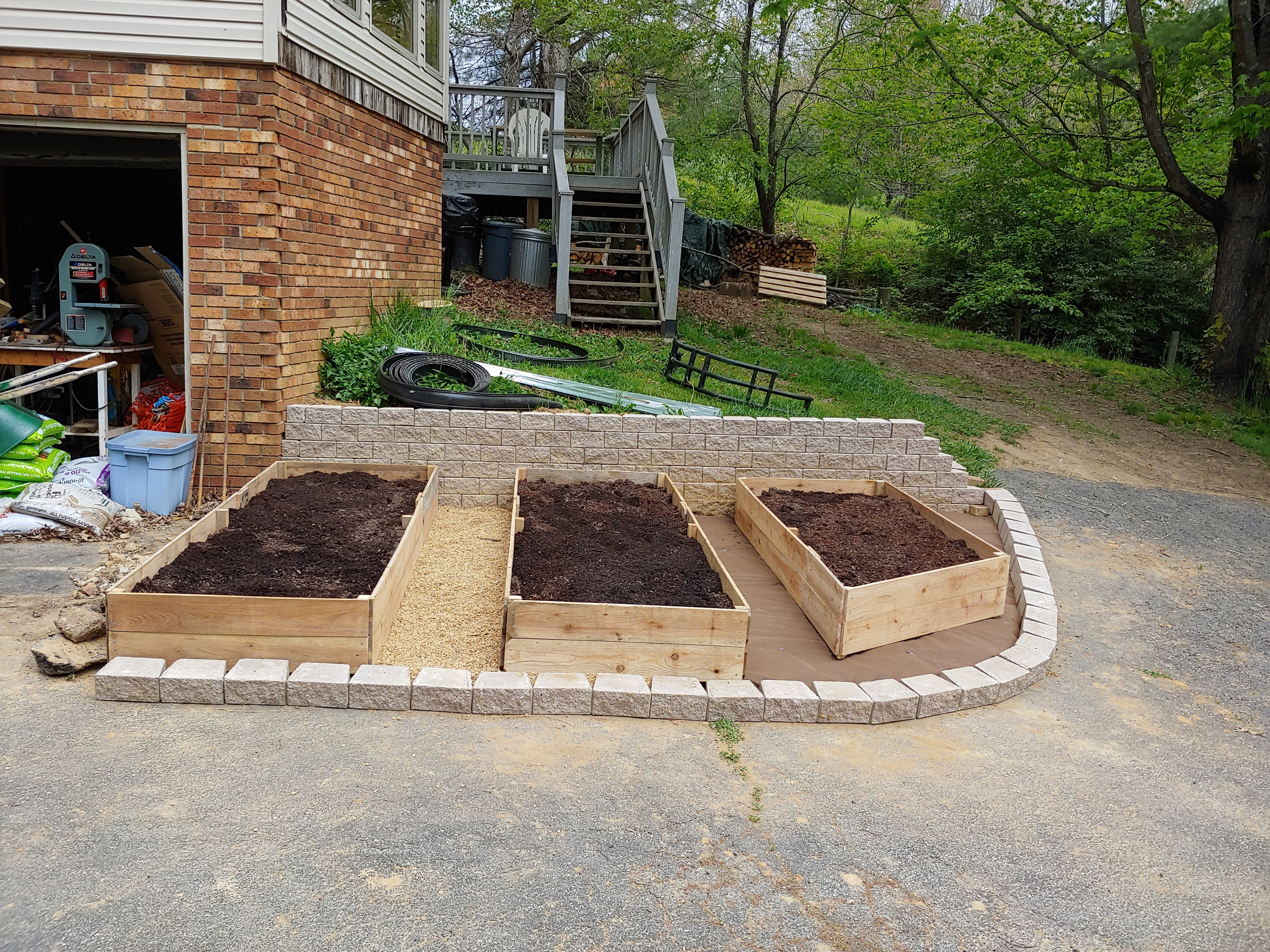
The dirt wasn’t enough. Another present left by the previous owner would save me. She had planted a bunch of hemlock trees too close together and in some very poor locations, such as under power lines and close to the driveway. A pile of limbs from some of them beside the driveway from the previous year were waiting for my chainsaw to get running. I was using a handsaw because I hadn’t had the chance to take it to the shop. Insects don’t like hemlock and it would make the perfect filler for my raised bed area. Some folks make raised beds with limbs under the dirt in the box to add volume and rot to add to the mix. Hemlock isn’t good for that. I cut and stacked pieces as tight as possible then added some dirt reserved for the purpose of leveling over it. Weed cloth was used to cover both sites and raised bed boxes were built.
The boxes were built with those cedar fence boards I had already been using for my tent floor. The plan was to use them for the boxes all along, they just detoured along the way. The impact driver echoed down through the holler and made short work of it once I figured out the dimensions. The sites were rounded, demanding some creative geometry. To fill them took a couple of big truck loads of raised bed soil.
The planting area of the boxes was small for the amount of labor and cost involved. A huge cloud lifted off of me after completion since I had been diverting my eyes and thoughts away from the initial eyesores for far too long. I could never quite get Lydeana to picture what I had in mind and she was nonchalant about spending the money and time. When I called her out to inspect it, I believe she would have hugged and kissed me no matter how grubby and foul smelling I was.
Contemplating my dirty hands I was reminded that my hand-washing station was sub-par. The soap jug required one hand to operate while wetting or rinsing the other with no good way not to contaminate the button for the nozzle. Also the jug sat in the sunshine with potential to grow any number of life forms. With the water just splashing on the ground, a small splash guard had to be positioned below to keep my feet dry. Quick solutions rarely have good long term results.
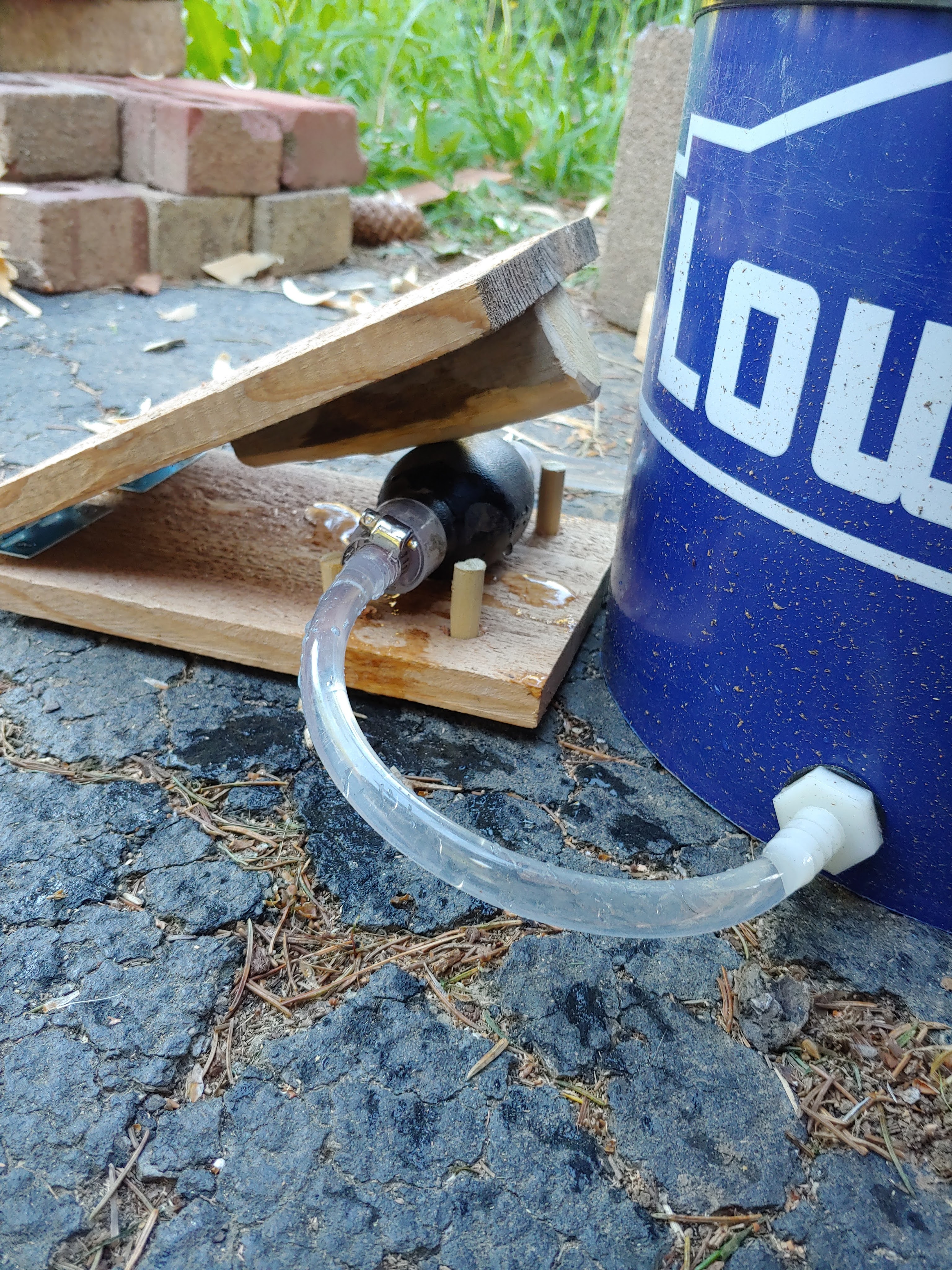
I got my water from an outside spigot we use for everything. I only handled it with gloves used solely for that purpose since Lydeana and Shayley also handled it on a regular basis. Located on the south side of the house it was in the sun so I figured it was reasonably safe. Back to the drawing board and the internet I went for a better solution. There seems to be no more useful object in the world than a five gallon bucket. A search and a few forums later and I had a new plan. A bucket with a drain, connected to a syphon using a compression bulb, would force water up at will to another empty bucket above with a catch basin. PVC pipe was used to direct the hose and give it structure. $9 for three buckets, $4 for a syphon from Harbor Freight, PVC pipe with elbows I already had and some extra long zip ties and I had a sink with running water. One bucket bottom five inches deep was fashioned into a sink on top with several holes to drain to the empty bucket underneath. The siphon bulb didn’t work too well alone so I made a pedal from wood scraps and two hinges to help it along. The result was a totally hands free sink I use to this day which does the job very well and is a water miser to boot. Better yet, it works without electricity. I’m not exactly off the grid, though getting pretty close.

 Back Yard Shack
Wow You love hard labor!
LikeLike
Almost too much!
LikeLike
I am so enjoying reading the adventures of a genius in the time of pandemic. Your solutions to problems that crop up along the way are entertaining. I need all the smiles I can get and you definitely help out. One suggestion: better pictures. I noticed you did a bit more than your usual vertical slices this time but I need an even broader vista. What may be obvious to you leaves me scratching my head sometimes. Other than that I must say I look forward to your backyard endeavors. Give my regards to your lovely family. Hopefully we’ll see each other at the Goose someday soon. 🤗
LikeLike
I didn’t take tons of pictures but I will do better with captions to help flesh it out.
LikeLike
Charlie, I have to remind myself occasionally that this isn’t your job! That you put in a full day at the hospital and then come home and do all of this! And as I wonder how you knew to do this or thought it through and figured stuff out, I am reminded that your mom and dad were pretty smart people, also! They would be so proud of your ingenuity and your determination to protect your family from COVID. I learned more about how Roger got to the Air Force Academy that I didn’t know or forgot. I treasure learning about his experiences! Thank you for this fascinating blog, Charlie!
LikeLike
There’s a lot of history I wish I’d asked about or Dad would have talked about. I have to remind myself to be better about that with Shayley sometimes. He did teach me a lot and allowed me to go make mistakes and learn in the process. He always taught us to think for ourselves. One statement he made often was to be a part of the solution, not a part of the problem. I took it to heart!
LikeLike