BETTER ALTERNATIVES

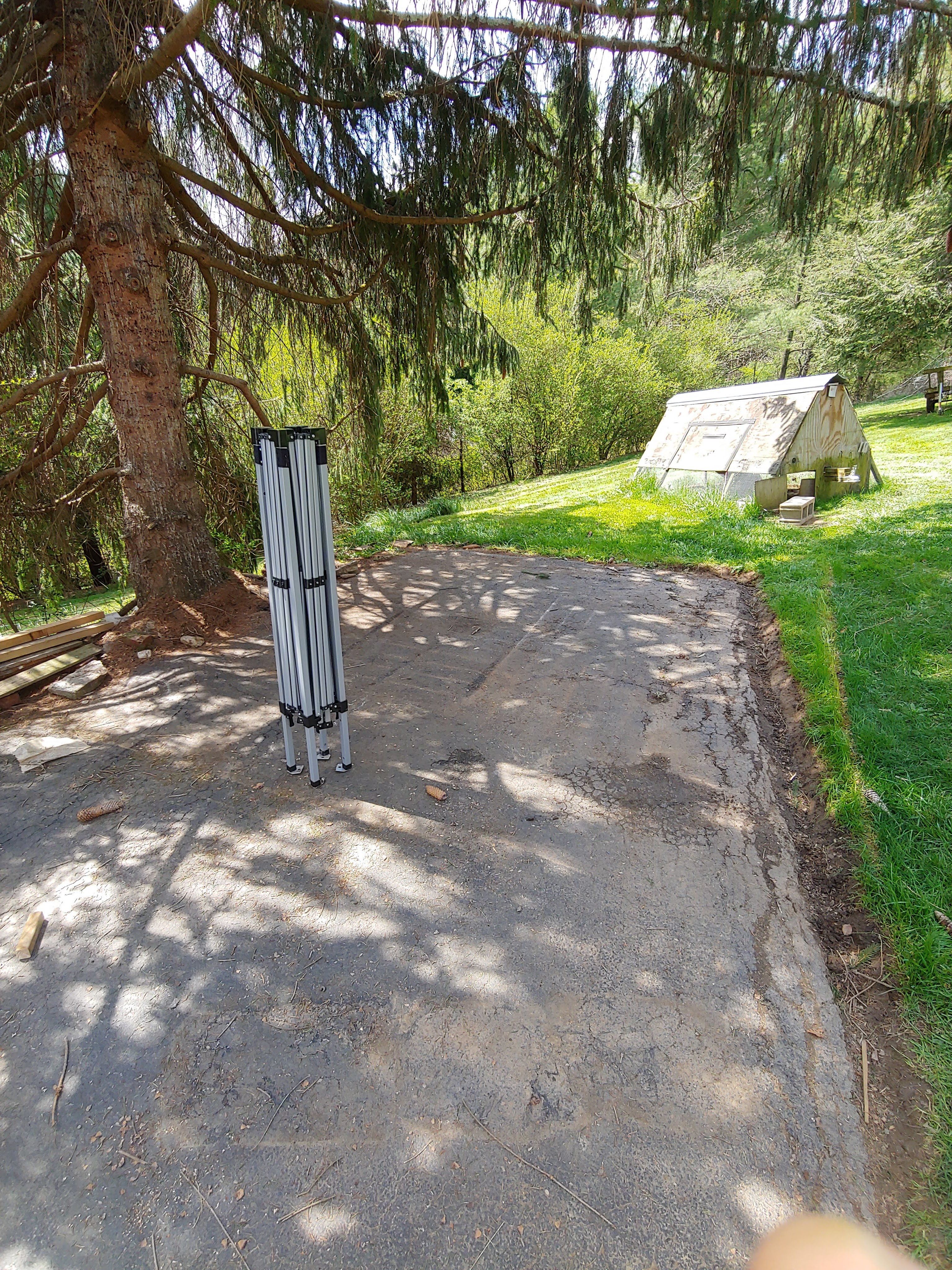
Sitting out in the cold and wet while listening to the uncertainty of the future in the news and at work, I started debating new choices. It was time to consider better housing and crunch the numbers to see what was viable. First I had to consider what my time was worth. If I had learned to consider that years ago, my bank account would be fatter and my piles of stuff would be significantly smaller. As I researched different shelter types and costs for the finished product purchased outright, I would calculate the total minus material costs and figure how many hours that would be at my current net hourly pay. Of course there are other factors, but this narrowed it down quickly if I was realistic about the time possibly required. My available space and the hill that is my parcel in the world dictated a lot already.

Living in Floyd County, alternative options are a common feature. There is a yurt company that always looked interesting and had several examples around. I thought about where I could build a raised round deck to put one. I have a brush- and briar-choked pile of leftovers from my addition that was the only place with potential. First the spot would need to be cleaned and prepped, which would be a major job unto itself. Accessing the spot was an issue because it would be uphill across grass and bare muddy areas that wouldn’t tolerate the traffic for long. Only my lawn tractor could get to the spot, and it has its limits if there’s anything heavy to haul. Materials would have to be purchased, and a round deck or a deck with 6 or more sides would have to be built. A square floor seemed like it would allow too much water to collect and possibly enter under the edges.

Earlier in life I worked with a guy putting up Deltec round houses. They came in prefab floor and wall panels with appropriately sized trusses nailed to a heavy metal cylinder suspended in the center. He always had someone else do the foundation so learning how to calculate for the shape was not my problem. Appraising round houses later on was a tribulation because they’re difficult to measure and almost impossible to draw on the software I used back then. Those houses were built on the coast a lot because they could withstand a hurricane when properly anchored. The wind flowed around them better.

The cost for both deck and decent yurt was still prohibitive. A lot of yurts advertised were made of materials that don’t breathe and require some sort of air system to avoid moisture accumulation. I had more than enough experience with that. I wasn’t feasibly going to have electricity at that spot anyway. After I moved back in, what would I do with it? Location, cost, time and future utility edged it out of my mind.

An RV was the next thought. I tend to run vehicles into the ground because I hate the purchase process. I’m not good at nor fond of wheeling and dealing. The idea of buying a low-cost used RV on short notice made me turn a little green. We didn’t have a significant amount of available funds for anything that would be big or decent and didn’t want any more debt than we already had. Sure, an RV has waste and water tanks as well as electrical fixtures for modern convenience. But where would I dump it? Then pumping it up the hill to the septic tank and installing the fittings for that are additional expense. A really cheap used unit might need repairs to be functional anyway. Buying something like that in a hurry under duress just didn’t make good sense to me.

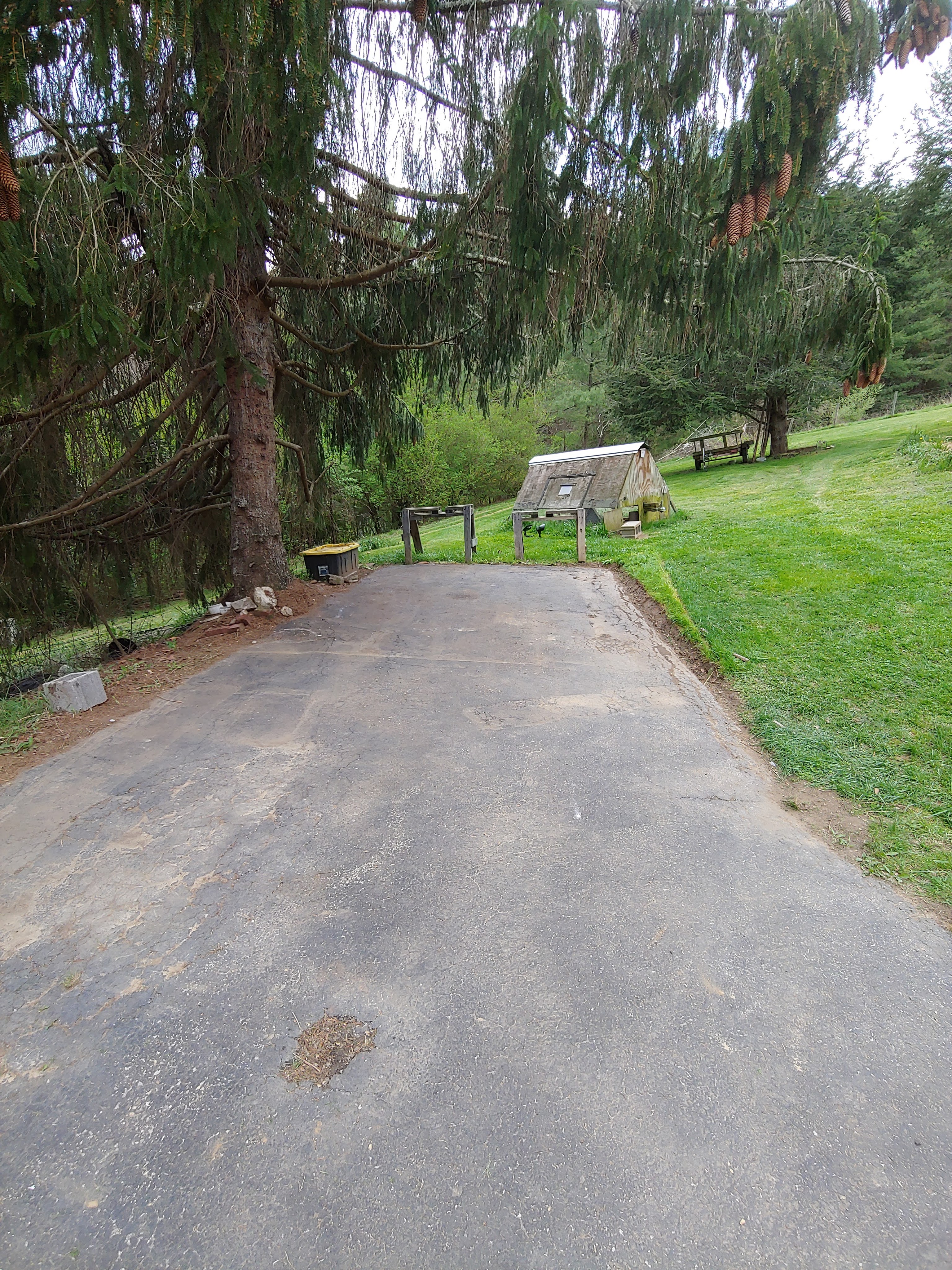
Constructing a building was the next logical idea. I sat around with a ruler and graph paper drawing and calculating sizes that would fit my current spot. Pricing materials, with some wiggle room for added expenditures, made me start seriously thinking this could be it. I began mulling the construction process over in my mind and what style building would be most efficient and useful both now and later. I imagined it sitting on posts just past my tent spot in the yard, partially where my chicken tractor (moveable chicken house) currently sat. The problem was, my lowest septic line ran across the hill just above that spot and tended to make the ground really soft from there down. I could build where the tent sat, but this was going to take time. And I would be out of a place to live in the process. Having plenty of construction experience in the past taught me that there will always be unexpected problems and delays.

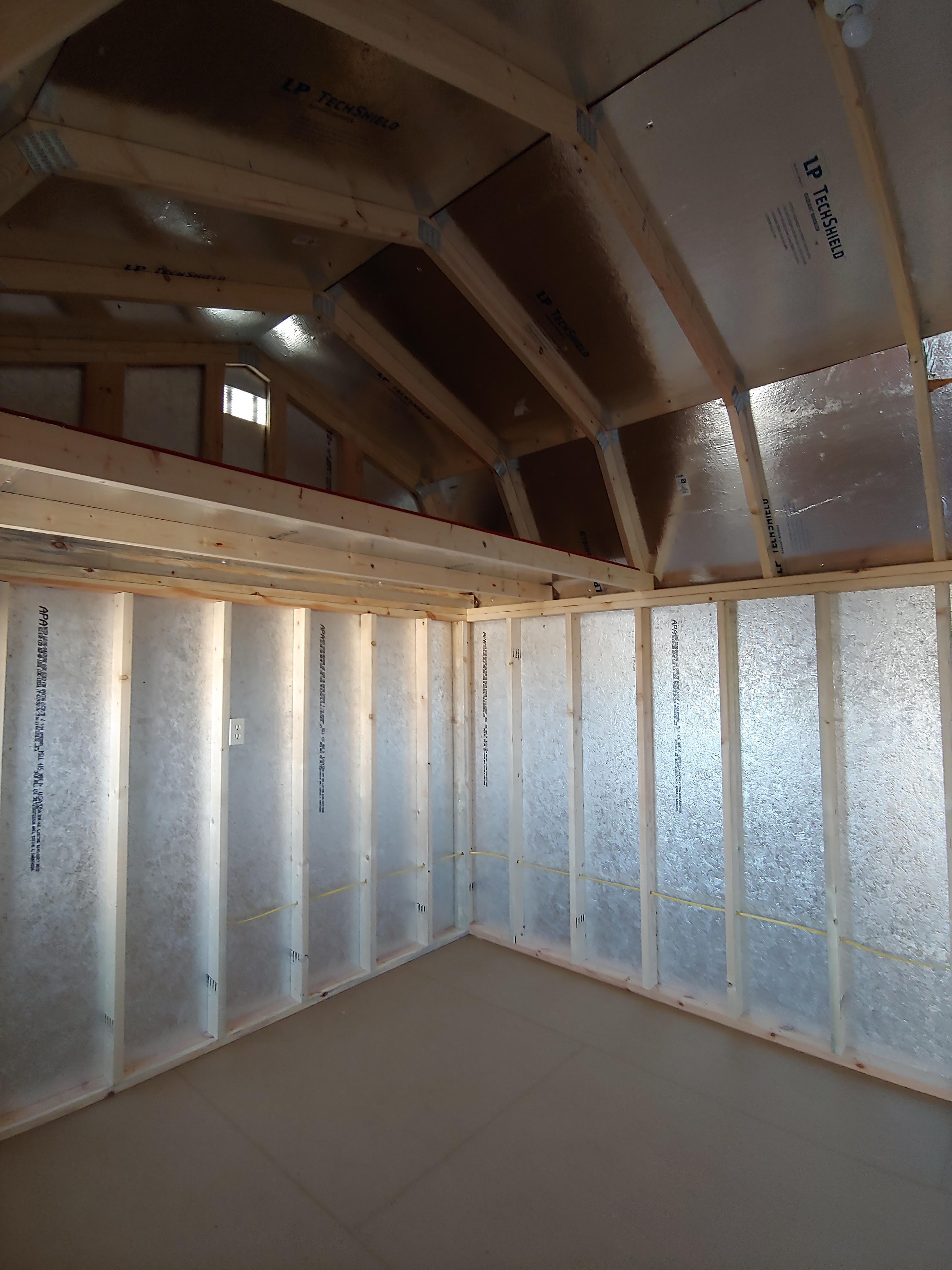
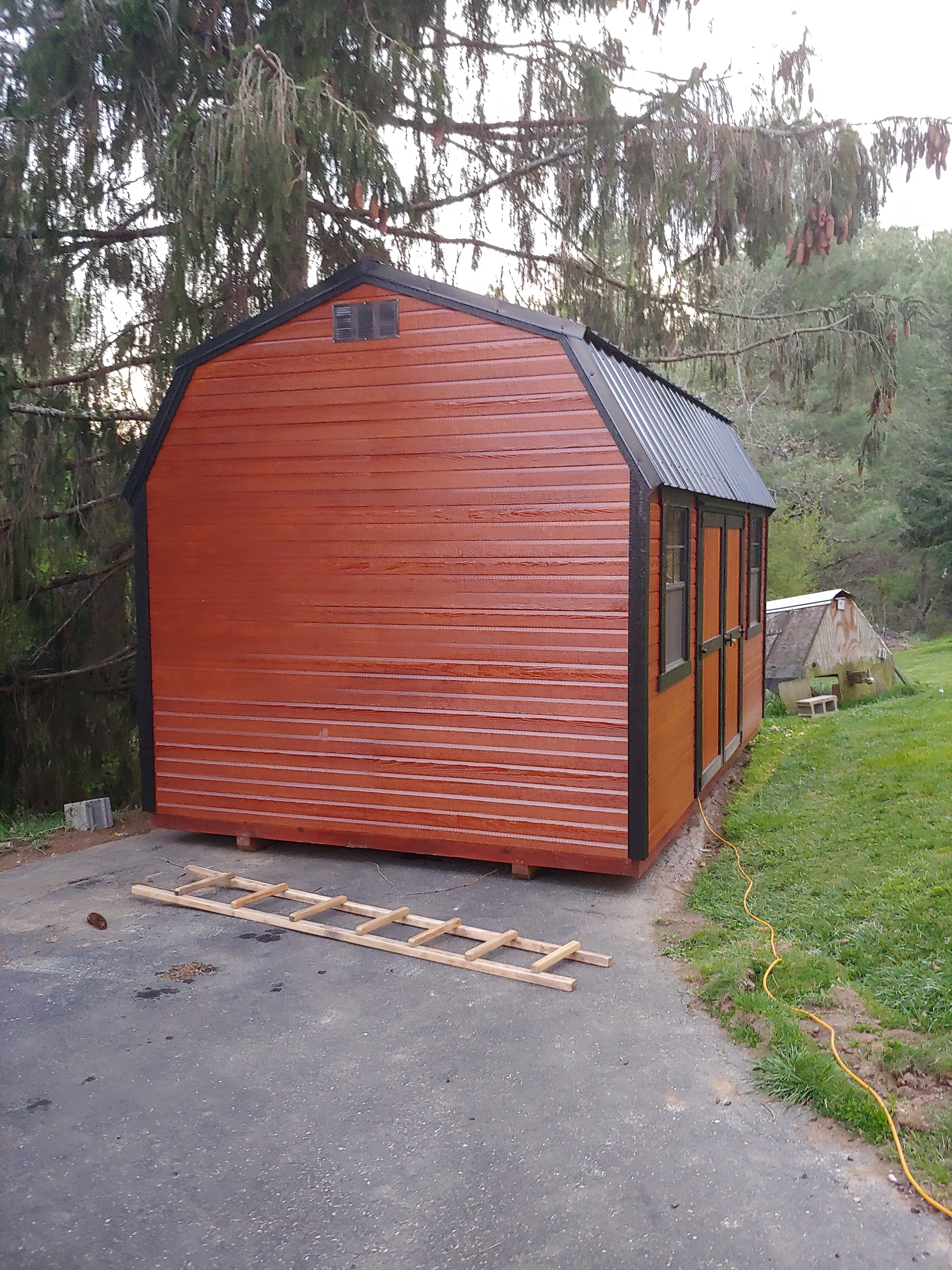
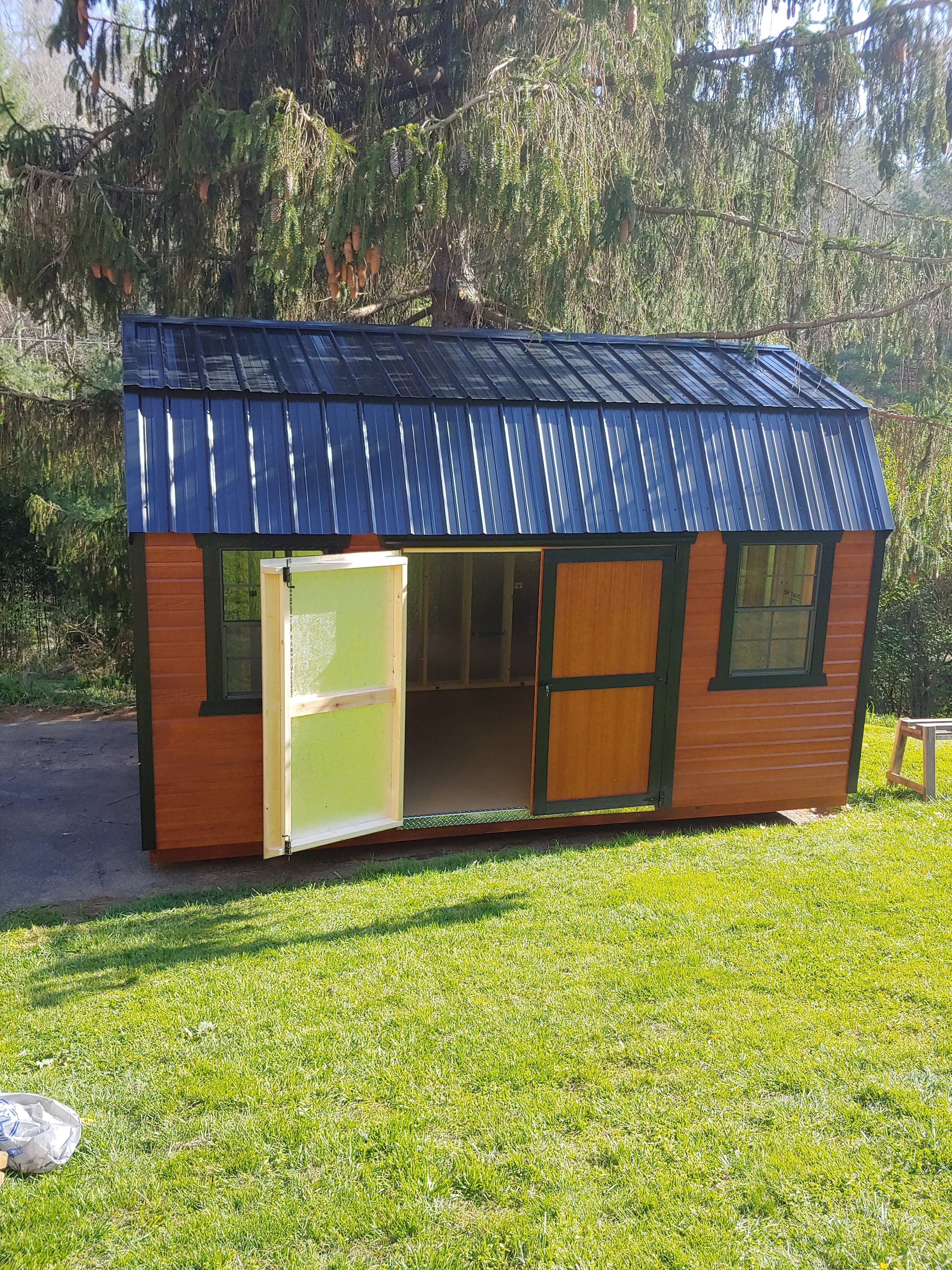
For grins I started looking into prefab buildings. I found the surrounding dealers and researched online and in person. Some companies will put all their models with retail prices online with deference to the dealership. Others give you nothing at all. The cream rose to the top in the form of G&G Sales in Christiansburg after scoping out what was available. I took pictures and noted the posted prices and went home to mull it over. Being built inside and mass produced allowed their retail price to beat my overall time and cost after even minimal time was considered. It would be better built than I could accomplish anyway.

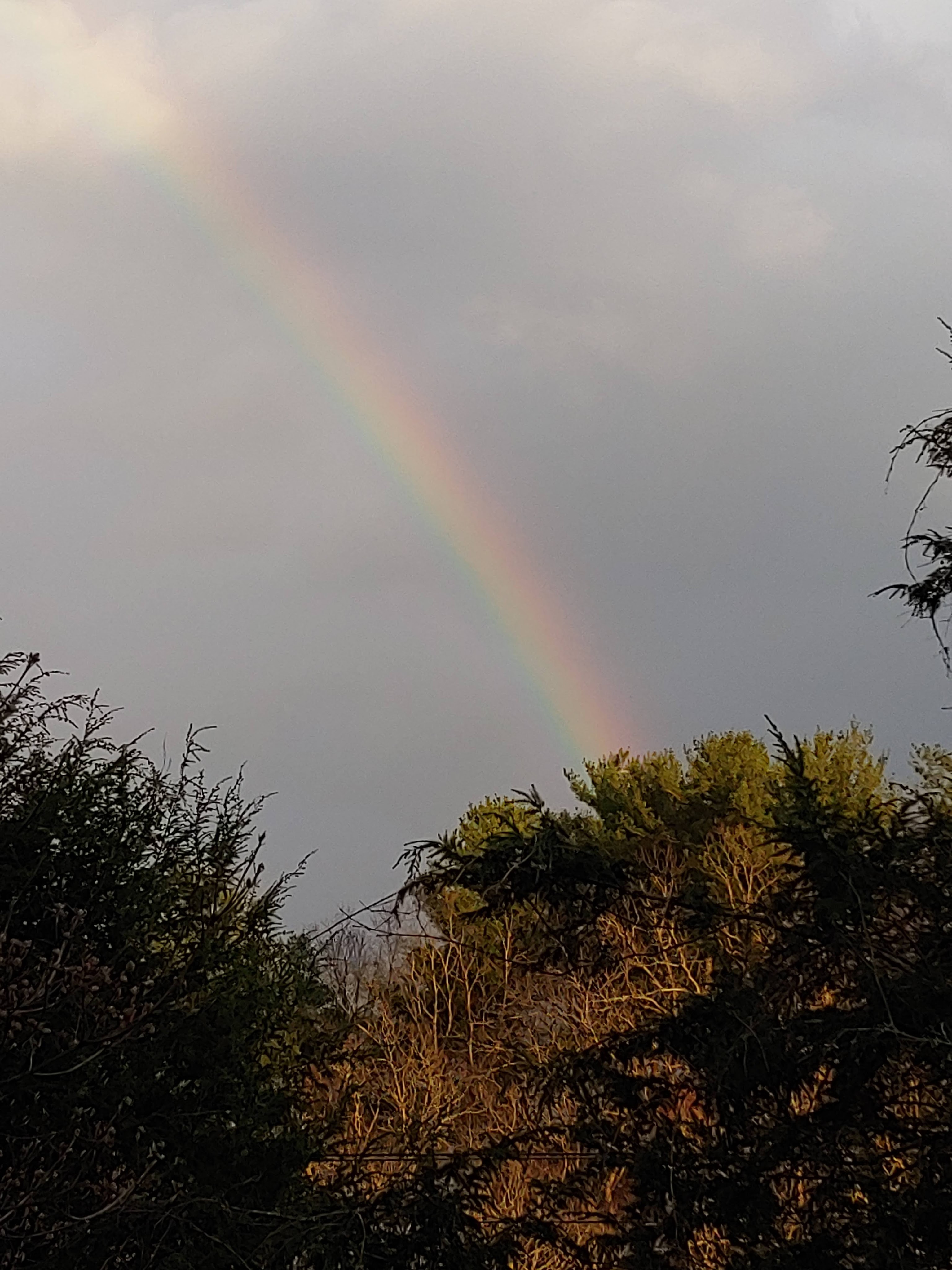
I had already started discussing the fact that I needed better digs with Lydeana. Of course I overdramatized the hurricanes, floods and similar natural disasters that plagued the tent on a daily basis. She agreed, and we looked at the finances to assure we could make it happen. We had each just received our $1,200 stimulus checks and that helped pay for over half of it. We mulled over pictures and options and narrowed it down to two based on what I found about minor specifics from the dealer. That day I went back and picked one out. The dealer was a nice guy, and as we talked about the process I told him what I was doing. Delivery timing was an unknown factor because his guy had several in progress over a broad area. I had to tear everything down as close to the delivery time as possible to avoid several nights in the little cat fort I transitioned through at the start. It was Saturday, and he thought it would be Monday at the earliest but probably later. We sealed the deal and I went home to start breaking camp. That evening there was a rainbow after a brief shower. A sign from God that my ark was about to land.

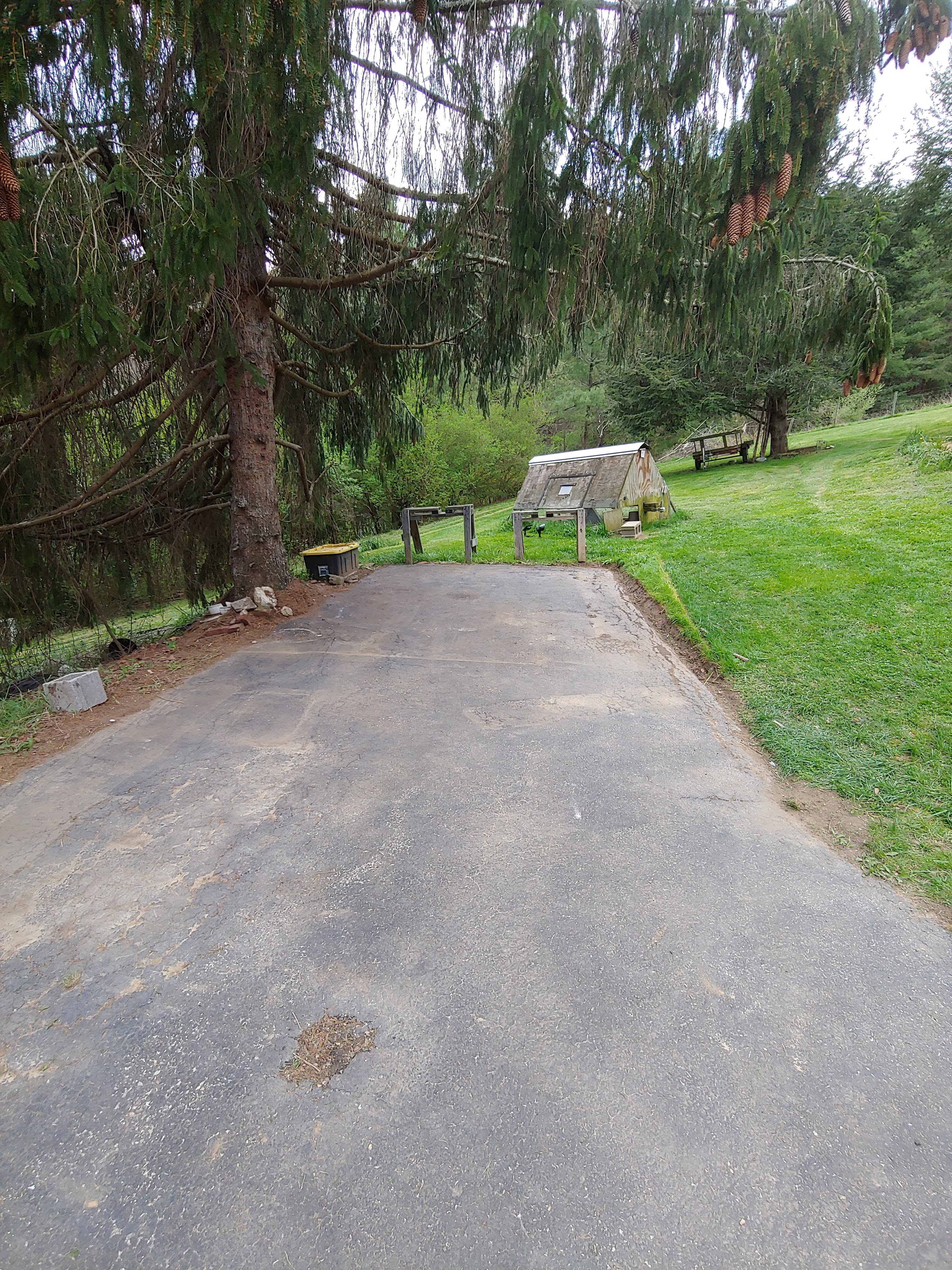
It came down faster than it went up. I of course made piles in front of the garage with a tarp over anything not fully waterproof. The weather was slightly cool and the wind did kite some of the walls a little if I didn’t maintain a good grip until they were folded away. All the boards and strips of wood were carefully stacked aside for their next life. The spot was swept clean and allowed to dry. I took my camp chair and sat in the middle of the spot for a period of reflection and appreciation.

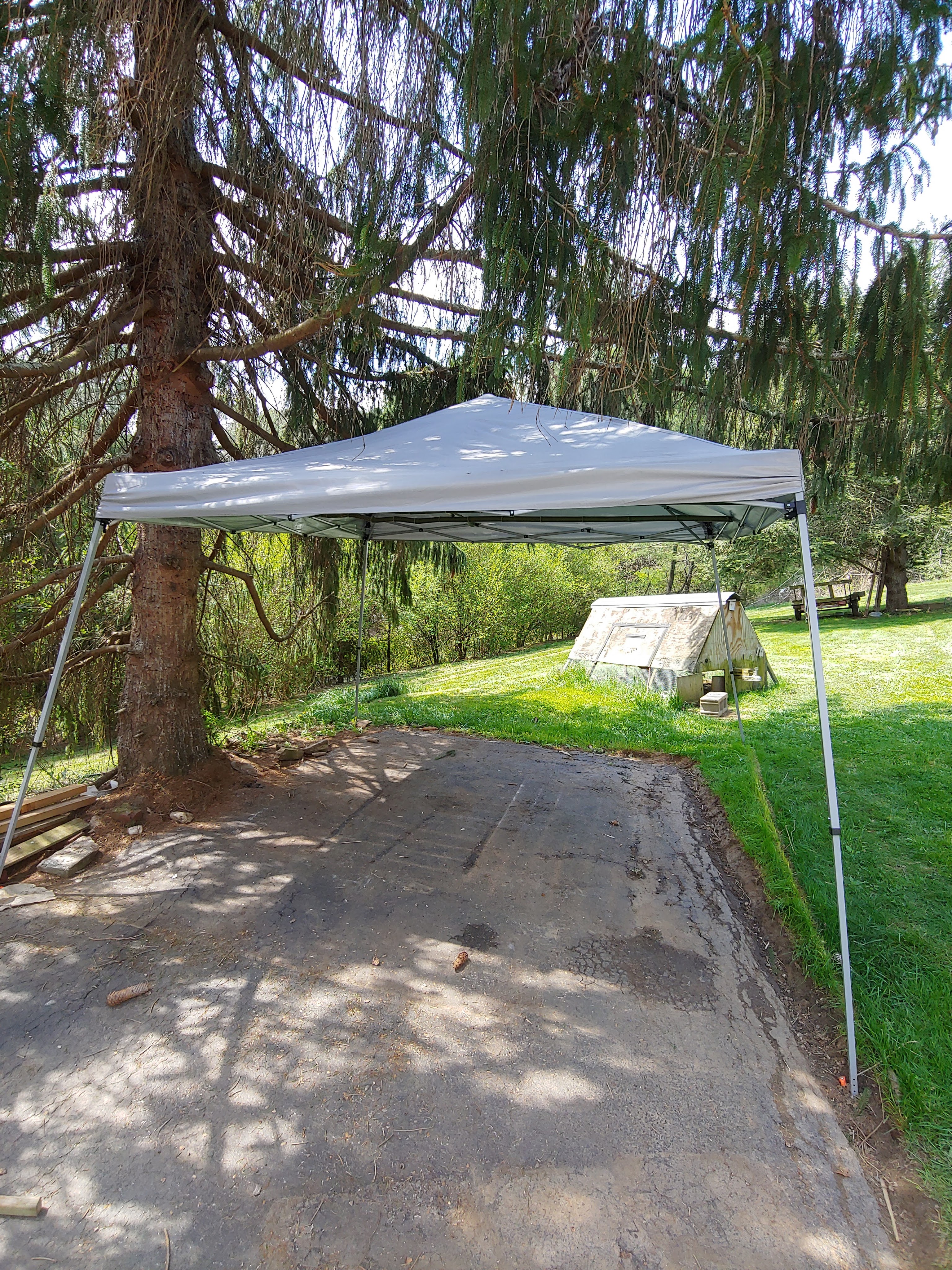
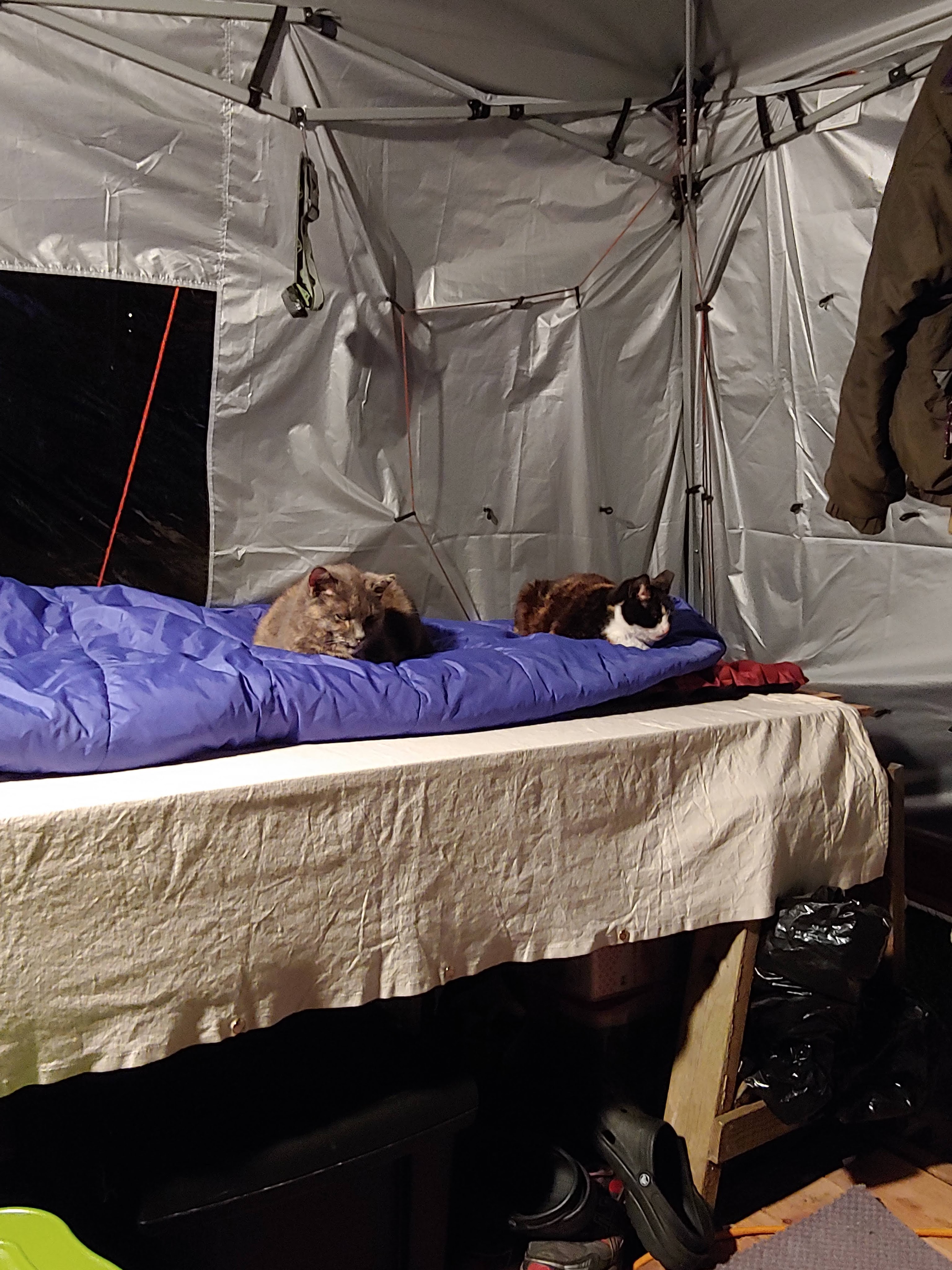
I set up the cat fort and put in the bare necessities consisting of a sleeping bag, ground pad, shave kit, head light, bottle of water and a fresh change of clothes. The cats were perturbed to say the least. I wasn’t sad to be sleeping on the ground. The raised bed I had made was terrible to sleep on. I’m 6’2″ and the boards were 6′ so I would stagger pulling the boards out lengthwise to make a compromise. The middle board was out under my head with six-inch spaces on either side to the next. The two adjacent boards were pulled out the other direction and landed under my feet. My feet always stayed in place because the cats liked to lay on the bag in between my legs, effectively pinning them down. I lost a lot of sleep when a cat was at the very foot over that space between boards, and I would shift, dropping them on the ground before they could rouse from their kitty dreams. I would lay there chuckling for at least another hour.

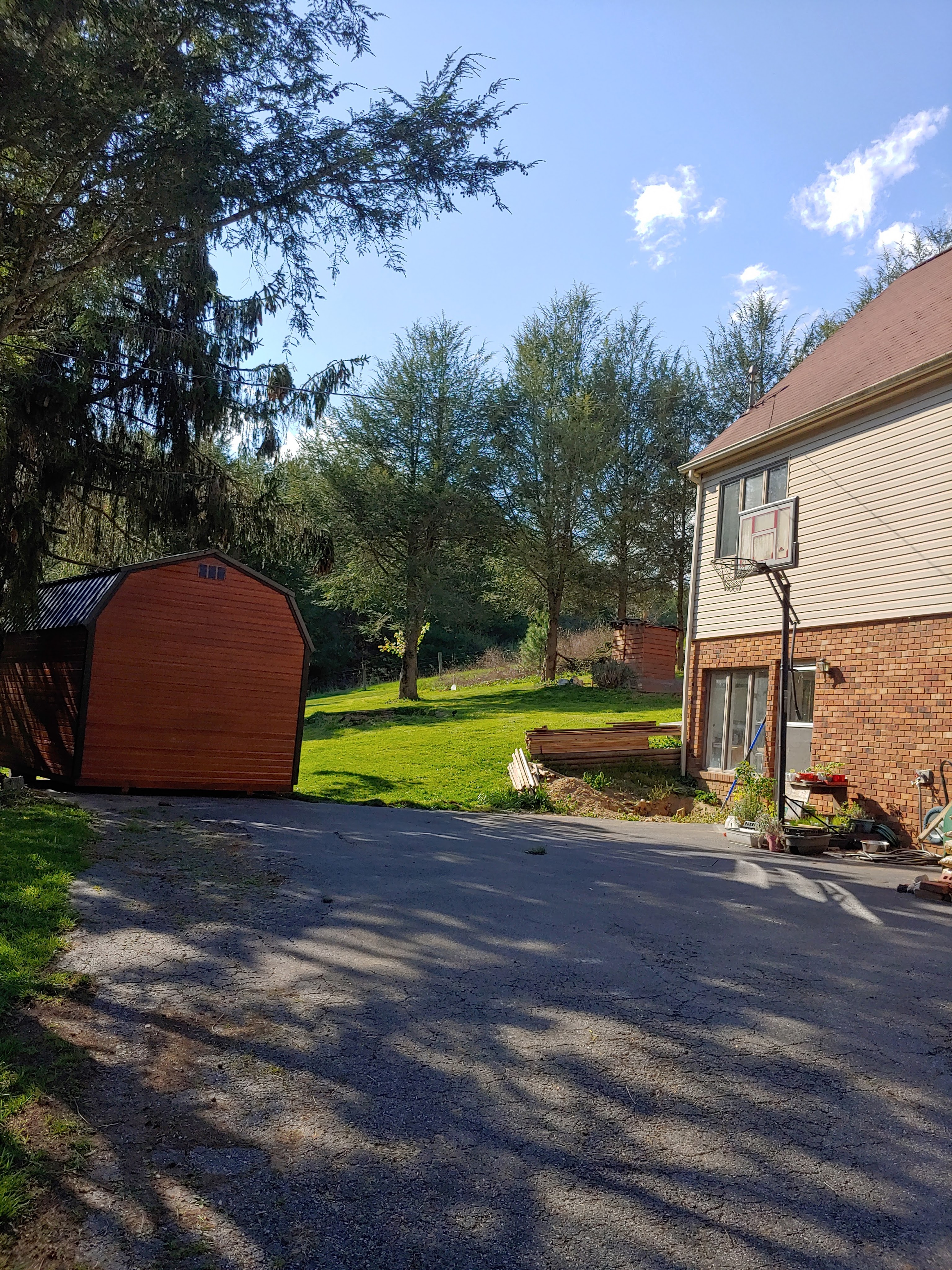
I went to work Monday morning and felt like an expectant mother praying for a fast delivery. As I started home, Lydeana called and said the delivery guy was a few minutes away. I took off, hoping to be there to make sure it was placed right where I wanted it. I passed him just after he left, only half a mile from the house. He was fast and set it perfectly. The ark had hit dry ground.
BETWEEN WORLDS

People have often asked me if I was having a difficult time through all this. I would reply that surviving is easy, co-existing in the civilized world is what’s hard. I believe we’d all be shocked at how many homeless people exist around us that do their absolute best not to appear that way. It’s hard work and worth it to many given the stigmas typically involved. I, for one, don’t care too much about appearances. Working in the operating room, I do care about cleanliness.

I’ve always had some form of beard or goatee, mostly because I despise shaving. When I started nursing school, Shayley asked me if I’d have to shave my beard to be a nurse. She cried, “If you do, you won’t be my daddy anymore!” I believe my mustache had only been shaved off three times before now. I say that appearances don’t matter, but after shaving to wear an N-95 mask at work , I saw myself in the mirror and a turtle face was looking back at me. Never one for selfies, this was not conducive to starting. I did look up one of the few pictures of my dad I had of when he was younger and compared us. He shaved every day except when he grew a mustache one year. It was just weird.

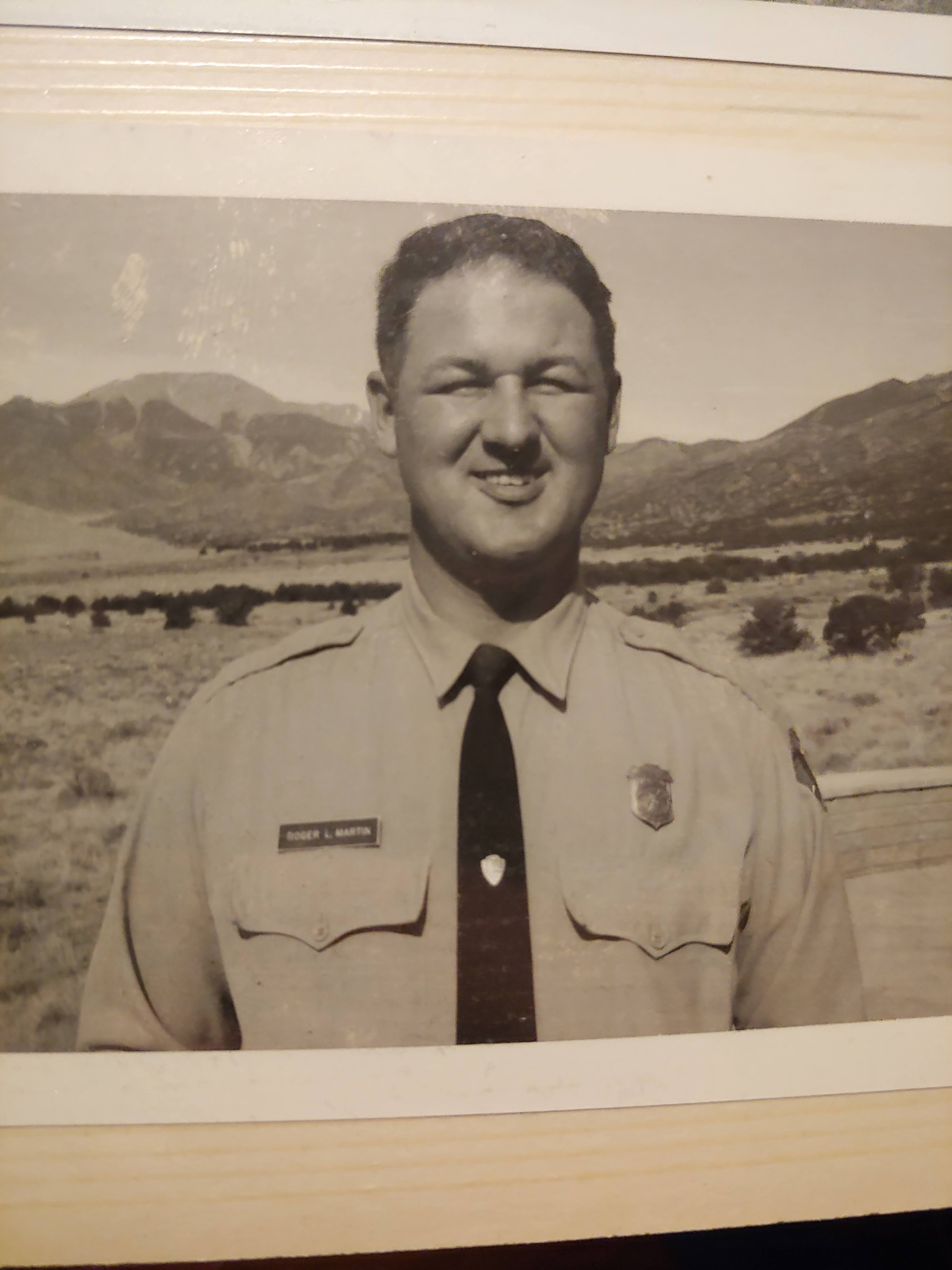
I have to talk about Dad to put things in perspective as well. Roger Martin was born in 1935. He grew up on a dairy farm in western New York state. With eight kids in the family, Grandpa’s job as a bank teller and dairy farming gig just kept them afloat. Dad’s perspective on managing money was influenced by seeing Grandpa sitting over any scrap of paper he could find, crunching numbers, trying to figure out how to make ends meet. It probably didn’t help any when Dad contracted polio at 15. He never spoke of it much, but said he spent three months in the hospital and a year quarantined in the attic of their two-story, uninsulated, metal roofed farm house. This was in western New York with lake effect snows and winters. Sleeping under a homemade feather tick (old fashioned feather comforter of sorts), he often woke up with snow on the covers. Nothing soothed him more than the sound of rain on a metal roof. You could always see it in the contented smile on his face. Fortunately, he recovered with no apparent issues and continued working on the home farm as well as for others.

Dad got drafted for Korea, and on inspection of his record, the military doc told him due to the polio he would put him back on a train home if he wanted. Dad said if it was all the same he’d stay since there wasn’t much to go back to. He went on to graduate top in everything he did and ended up assigned to the new Air Force Academy in Colorado Springs teaching nuclear mechanics, training cadets on the machine gun range and competing on the Rocky Mountain Regional Rifle team. He stood 6’4″ with hands and forearms as big as me, could build the atomic bomb and was the best shot I’ve ever known. My dad was superman as far as I was concerned. He went on to college on the GI Bill, where he met my mother Sally and had my sister Jennifer.

One day Dad stopped by a job posting board at the college and saw a posting for a seasonal Park Service job. He went to apply and the lady said they allowed 100 applicants and he would be 101. He insisted until he got an application. He was the very last interview and they asked, “What kind of work are you wanting to do? Everyone else wanted to do research and specific things like that.” Dad replied,”I’ll do whatever you want me to do. I have a wife and daughter and need a job. Whatever needs doing, I’ll do it.” He got the job. After one month on the job he became a Ranger, which was the fastest anyone had ever been promoted to that position at the time.

All this is to say that you never told Dad you couldn’t. Quitting wasn’t an option unless it was a waste of time or better routes were available to reach a goal. Not to say Dad didn’t have his faults. He was a terrible procrastinator. When he did get started on something, then it got finished. We were always in on some sort of construction project or creating things we wanted or needed from scraps. Every object, good or bad, was viewed with an eye toward its future potential. We used tools that were old when he got them and made others if we could.

Another legacy that had a huge impact on me were two of Dad’s books: his college anthropology book and a big thick book on camping written in the very early 1900’s. The first had extensive information about indigenous peoples and cultures around the world and how they lived. This gave me an insatiable appetite for everything primitive and ancient. Sources were kind of slim, but my brother Joel had devoured some of the same material and he had a six-year jump on me. He was more into the what and how than the who, like I was. His bedroom looked like a mad scientist’s lab just hit by a tornado. It was the most fascinating place in the world, and I envied all the cool junk he had and the stuff he did. He was always better with mechanical, electrical and conceptual things and was very meticulous executing it all. He’s a hoarder like me, and all that stuff is like a savings account for the future. What I didn’t know or find elsewhere, he filled in the gaps. We later worked together doing a handyman business, and we complemented each other pretty well. We each knew how the other thought, and two brains and sets of eyes caught more mistakes and came up with better ideas.

The camping book set my mind to imagining long self-supported treks into the wilderness. I regret not doing more to attempt that kind of thing when I was younger. Not to say I couldn’t do it now. With the wear and tear on my body now, I’d probably be more careful and less likely to die. The one dream I had was to set off with a backpack into the western backcountry for a month or more to survive and hunt elk or some other big game. I would do the same now, but I would just hunt small game to eat along the way and shoot the big stuff with a camera. Pictures would be far easier to pack out than multiple loads of meat, hide and antlers.

My favorite reading through the years besides how-to books on survival and the outdoors were Louis L’Amour westerns, wilderness survival stories, all types of history, various military stuff, anything about guns old and new, and anything with the use and construction of primitive weapons. Dad had a subscription to Mother Earth News and really started the ball rolling when he handed me one with an article on making a sling. Not a medical sling, but the kind David slew Goliath with. Some parachute cord and a pouch made from scrap blue jeans. I was chucking rocks and destroying anything within 360 degrees of my position because I was far from mastering it. He momentarily regretted it when my cousin Kevin and I were across the road from his house slinging stones down through the woods, getting a kick out of hearing them bounce off the trees. Dad and Uncle Lester were leaned up against Lester’s pickup truck in deep conversation. Kevin had a fist-sized rock, wound up with an underhanded throw and released it going straight up. The silence was long and eerie as we looked at each other and started glancing up and around to spot it. Suddenly it came slamming down dead center in the bed of the pickup sixty yards away! Dad and Lester practically jumped out of their skins and simultaneously screamed our names reflexively. We concluded it wasn’t a good idea to tarry there and took off down through the woods as hard as we could run. I can’t remember if Kevin or I got whipped for that one. The sound of that rock hitting and our hearts dropping to our stomachs was punishment enough.

All this is to say I wasn’t fond of having to shave, but I was tickled to be able to use my life skills to create a living situation that cost next to nothing. $40 for two weed sprayers and some hardware for showering and washing, a five gallon water cooler and a couple of new five gallon buckets. I tacked a couple of contractor bags to the top of the outhouse until I picked up some metal roofing a little later.

I would boil a quart of water, add it to three quarts of cold in my shower rig, and as long as I shook it up good, I could get through a shower in any weather without scalding myself or freezing to death. If I didn’t feel like it, I would use the shower at work. Being able to wear the scrubs provided in the OR along with surgical caps and masks meant that I needed to be clean but not stylish. Maintaining cleanliness is paramount for the sake of our patients, and it also helps coworkers tolerate your presence. I kept a couple sets of clean, appropriate clothes to go back and forth to work. Any other time I looked like a hunter or construction worker.

I would reside for a month in the tent that I initially thought would be my permanent abode. Trying to find a routine was simple. Go to work, then go home and start looking for potential problems to fix or improvements to be made. Feed the critters, haul water, shave, heat water and take a shower, eat supper when it was ready and hang out on the porch with family as long as weather permitted, dig out and arrange anything needed for the next morning, and then sit around and read until bedtime. Early in the morning I’d jump into stiff, cold clothes, brew up some coffee and feed the critters before jumping in the truck to go do it over again.

I tend to settle into most things and get in a rut until something forces a change. I started settling into this new setting with a sense of adventure and challenge. The wind was still roaring through, and the tent walls started to sound as if they were tearing and looked as if they would kite away at any moment. Nylon and similar materials are okay for short term camping, but have a limited life span. That prompted me to consider something a little more solid and permanent. I started taking a better inventory of my stuff and considering different options. My restrictions were sensible use of time, money and resources while still coming up with a realistic solution. That last one could be a problem considering the behemoth piece of junk I’d just created. Challenge accepted.

MOVING OUT….OR IN?

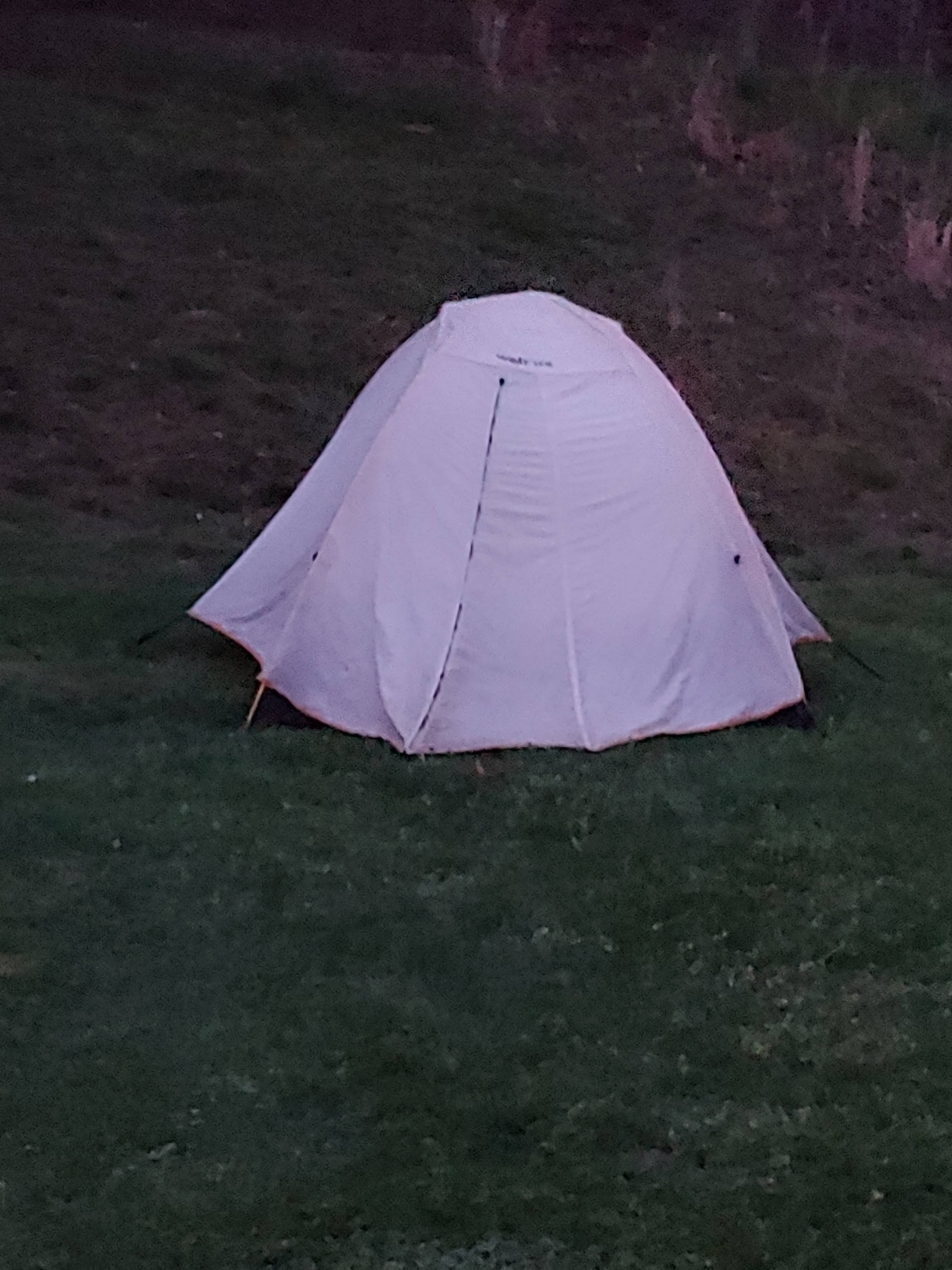
The evening of Sunday, March 31st, I crawled into a small musty backpacking tent I own after hauling all the final items I would need to be independent in the bigger tent. I can’t quite recall what finishing touches I had to complete, but it did still look like a biohazard construction site. I used the smaller tent for two nights before I was satisfied.

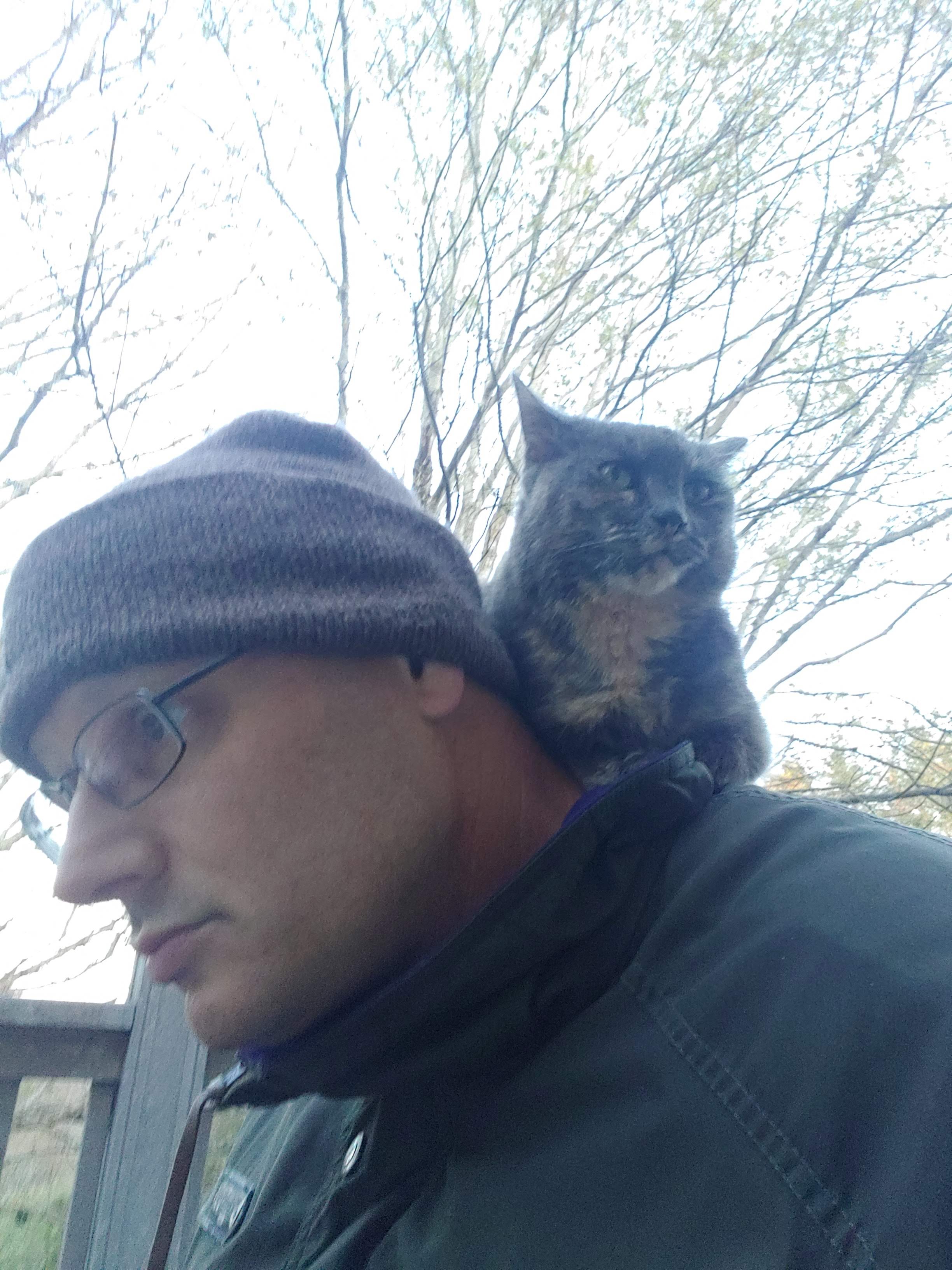
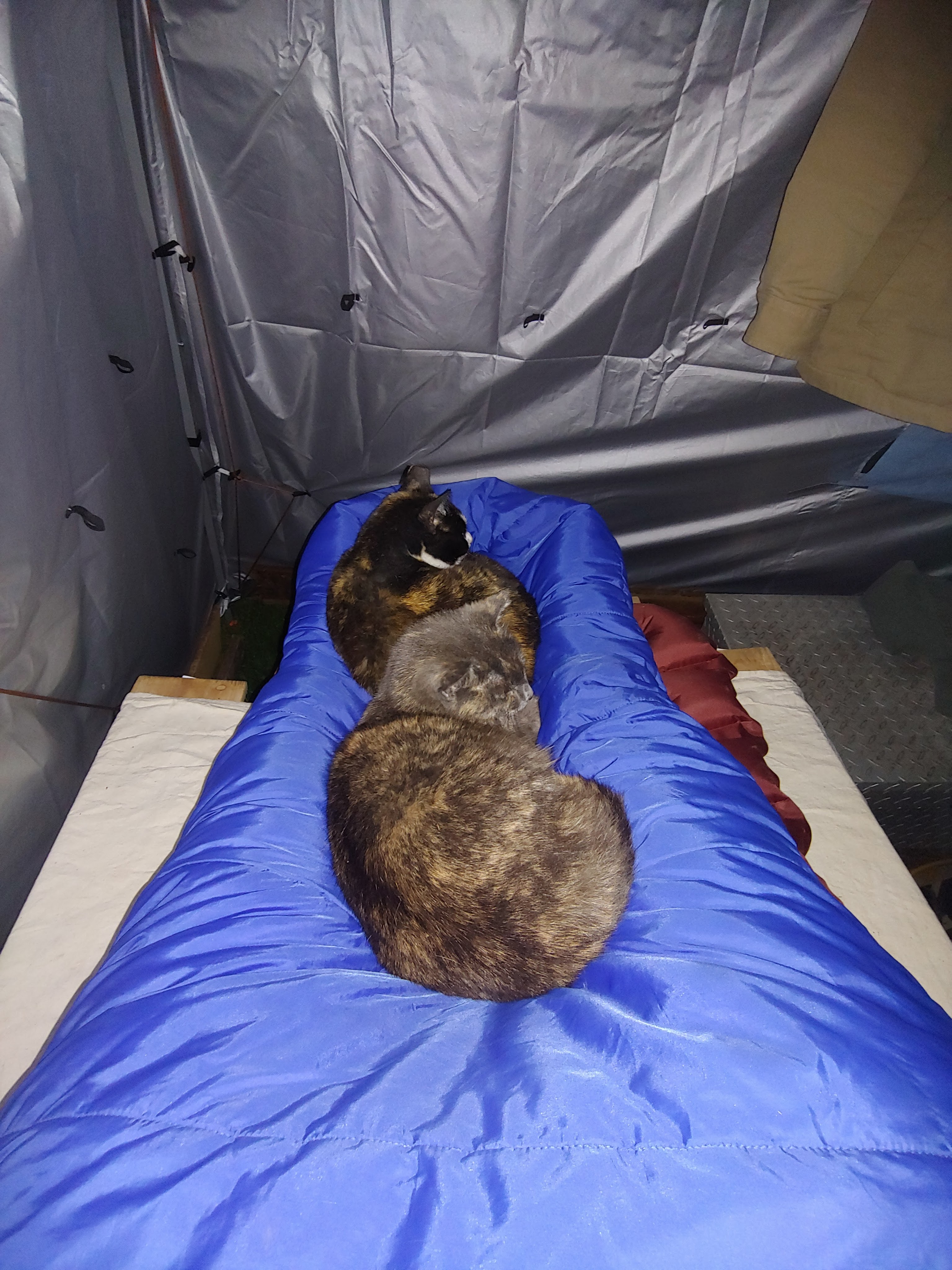
As I lay in my musty nylon cocoon I was frequently disturbed and later awakened by a phenomenon that would occur even into my outbuilding days. Cats. Twilight and Flitz, our two mostly outdoor cats, were desperate to be inside of anything besides a car. They of course witnessed my butt disappearing behind the veil of this funny nylon lump and they couldn’t resist. It began with stealthy little shadows circling at the edges, with an occasional test for weak spots with outstretched claws and a plaintive squeak. Not finding any vulnerabilities, the next logical step was to try climbing it and see what might give. What gave was my hand with a broad slap to their bellies that sent them flying in random directions. It was a midnight medieval siege in a backyard fort scenario.

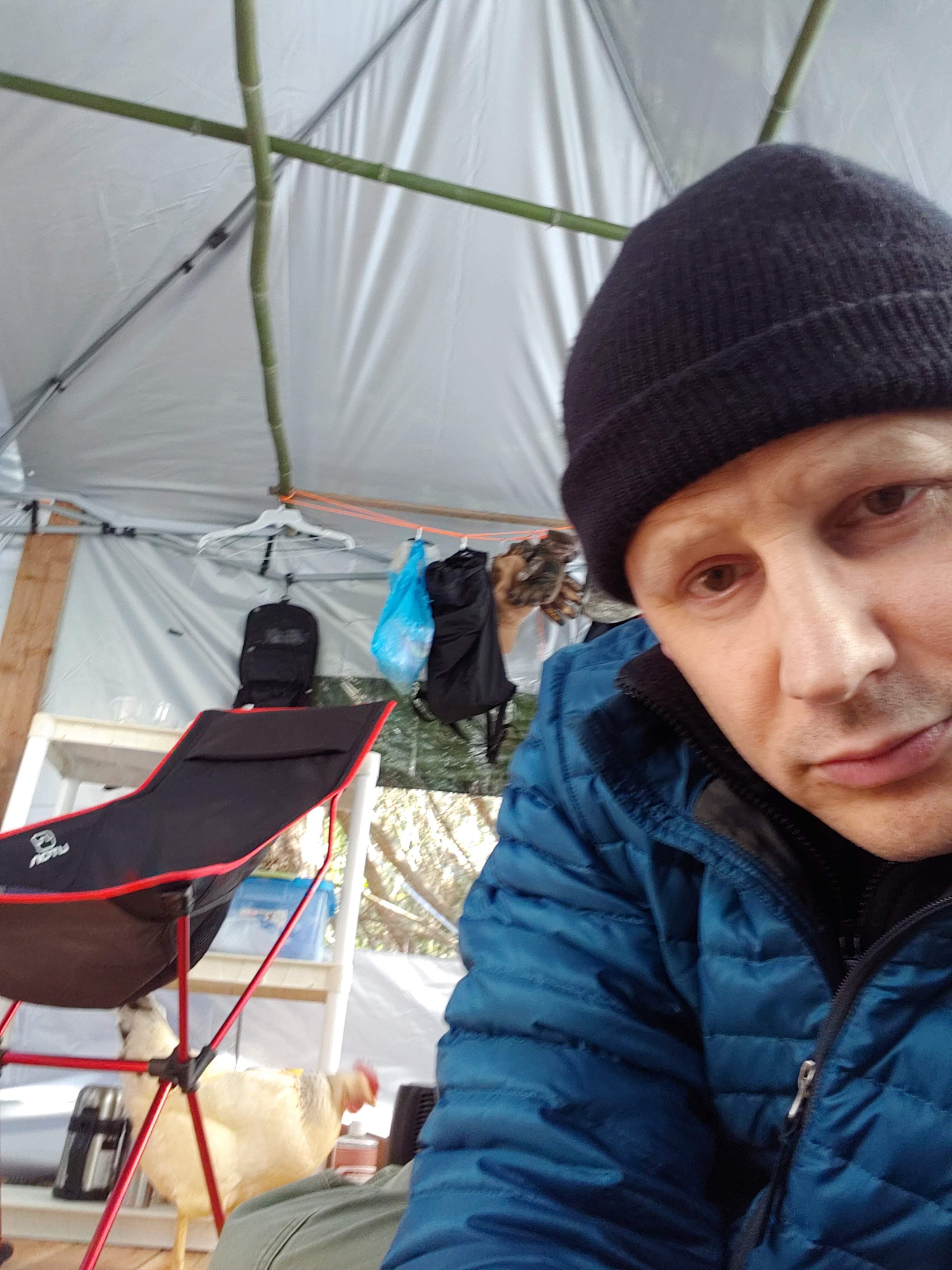
The big tent lacked a primary defense against cats and other environmental factors in the form of a zipper. The walls and the door were simply overlapped and tied into place, with the door held shut by the weight and framework of the boards attached to its edges. This left cat-sized holes and weak zones that were impossible to fortify. As long as a skunk, coon or possum didn’t find them, I elected to just let the cats keep me company.

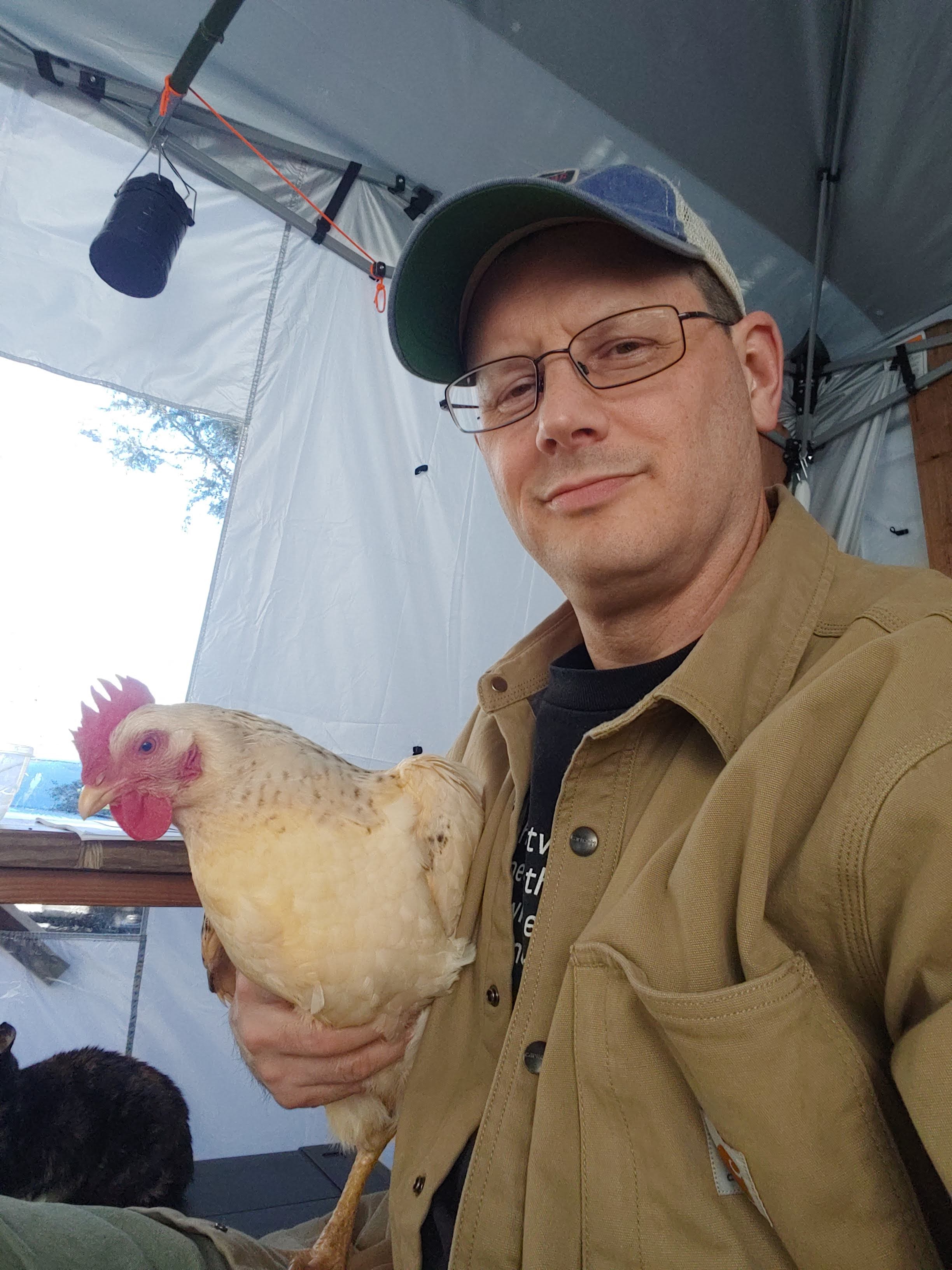
The cats were not alone. Our chicken Lucky, named for the fact that she far outlasted the rest of her particular batch, was a lonely critter, having grown up in a tight cluster of her own kind. Apparently Manny (the dog), the cats and I appeared to be acceptable replacements after the slow demise of her flock from predation by hawk, coyote, coon and possum. At first, when the door was open to the tent, she would tentatively peer in and inspect the contents, then slowly edge in and peck at every object resembling food. My only reservation about her hanging out for very long was her bathroom etiquette, or lack thereof. I had my outhouse, and the cats were discreet with hidden corners of the outdoors. Manny was at least consistent with specific areas, though half were located on the foot path to the front porch. But Lucky has no such parameters. She craps anywhere and everywhere with no indication for when the drop might take place. Lucky was allowed limited invitations under close observation. On the upside, she would typically check to see if the door was open, and when it wasn’t she would nonchalantly go about her business or look for someone to hang out with, human or otherwise.

The critters had three good reasons to want to hang out with me: wind, cold and rain. It was the first of April, which may bring Disney-type images to mind of Bambi and Thumper frolicking in green, sun-washed fields of flowers or some such nonsense as that. Quite the opposite is true. I lucked out when the rain stopped just long enough for me to get the basic structure up.

The wind was another thing altogether. Those cheap ill-fitting walls could not be drawn taut and caught every little breeze with multiple rattles and snaps as they billowed. Major winds that blew for ninety percent of the next month only helped when they were steady and kept the walls stretched in like sails. I was positive that if the floor was connected, then soon I would see Oz. In reality, the worst outcome would be if it collapsed on me while zipped up snug in my mummy bag. I hoped the walls would tear apart before that happened.

Sometime in the middle of that first week, the rain set in. I would discover quickly if this was to be my Waterloo. The rain came hard and the wind gusted in fits. A few minor drips came down inside the walls harmlessly to the pavement, with the exception of some spray the wind helped whip onto my sleeping bag. Immediately rivulets of water began running in under the floor. I had to check all my storage bins and sundry items, simply laid across strips to keep them dry because the floor only covered the bare minimum I needed to walk on. I had also placed some sand bags in front of the door to divert the worst part to a shallow ditch I had dug along the pavement on the north side. This ditch was inside the tent and had a constant river flowing through and out the back. It took a while for my mind to reconcile that everything important was still dry. I had a deep appreciation of those people living in simple stick or bamboo stilt houses along the Amazon and other out-of-the-way wet spots you see on National Geographic.

The most worrisome thing during the rain was the extension cord running from an outside outlet to a light and small electric heater I used to knock the chill off when I wasn’t dressed for it. I carefully coiled it and kept the ends of the plugs up high and away from possible immersion. First thing in the morning when I got up, it was nice to get a little heat when putting on cold clothes. Last thing in the evening it was nice to warm things up a little before hitting the sack so I wouldn’t have to play catch up from already getting chilled. Of course I’ve always liked cold weather, but here and there it can be no fun at all. It’s painful transitioning from a warm sleeping bag to clothes that are below freezing, or even worse, clothes that are just above freezing and damp. The majority of the water may have run harmlessly under the tent, but it never dried out during the entire stay. When it was dry outside it was always somewhat humid inside.

When I was a kid living out West, the winters were super cold. The advantage was that the ground always froze up and there wouldn’t be any mud per se until the melt in spring, which typically came late. Here the ground rarely freezes up for any significant amount of time, and mud rules. I hate constant mud. It seemed like there had been an unusual amount of rain the previous fall through the winter, and the ground was saturated. Anything I did in the yard was a risk of slipping in mud or making muddy trails everywhere, destroying the grass and making a mess of everything. I was careful to never take the same path to the outhouse twice, and always wore boots with good tread.

The better part of that first month I wore my warmest insulated hunting and work clothes. There were occasional temperate days though. If I started doing any form of hard manual labor, I would have to peel them off first to avoid sweating. I had a big plastic tub full of all the clothes I thought I’d need for the foreseeable future. I found out I had more than I’d realistically use, and that’s still the case.

I ate meals on the front porch, except in the rain. Lydeana and Shayley would bring dinner out on my work days and maybe all three meals on my off days. They would come out and sit upwind over six feet away when the weather cooperated. I had a nice big stainless steel bowl right next to Manny’s. Just kidding, they had to put my bowl on the other side of the porch or we’d fight over who got what. I had some minor food stuff and a cooler in the tent. A five-gallon water cooler provided all my drinking, minor cooking and hand washing needs. Mostly I made my coffee with a propane camp stove, an old aluminum camp kettle and a french press. Cereal or oatmeal for breakfast, sandwiches and chips for other special occasions. I don’t cook much, and simpler was better. Besides, I had the bowl on the porch where stuff just kept appearing!

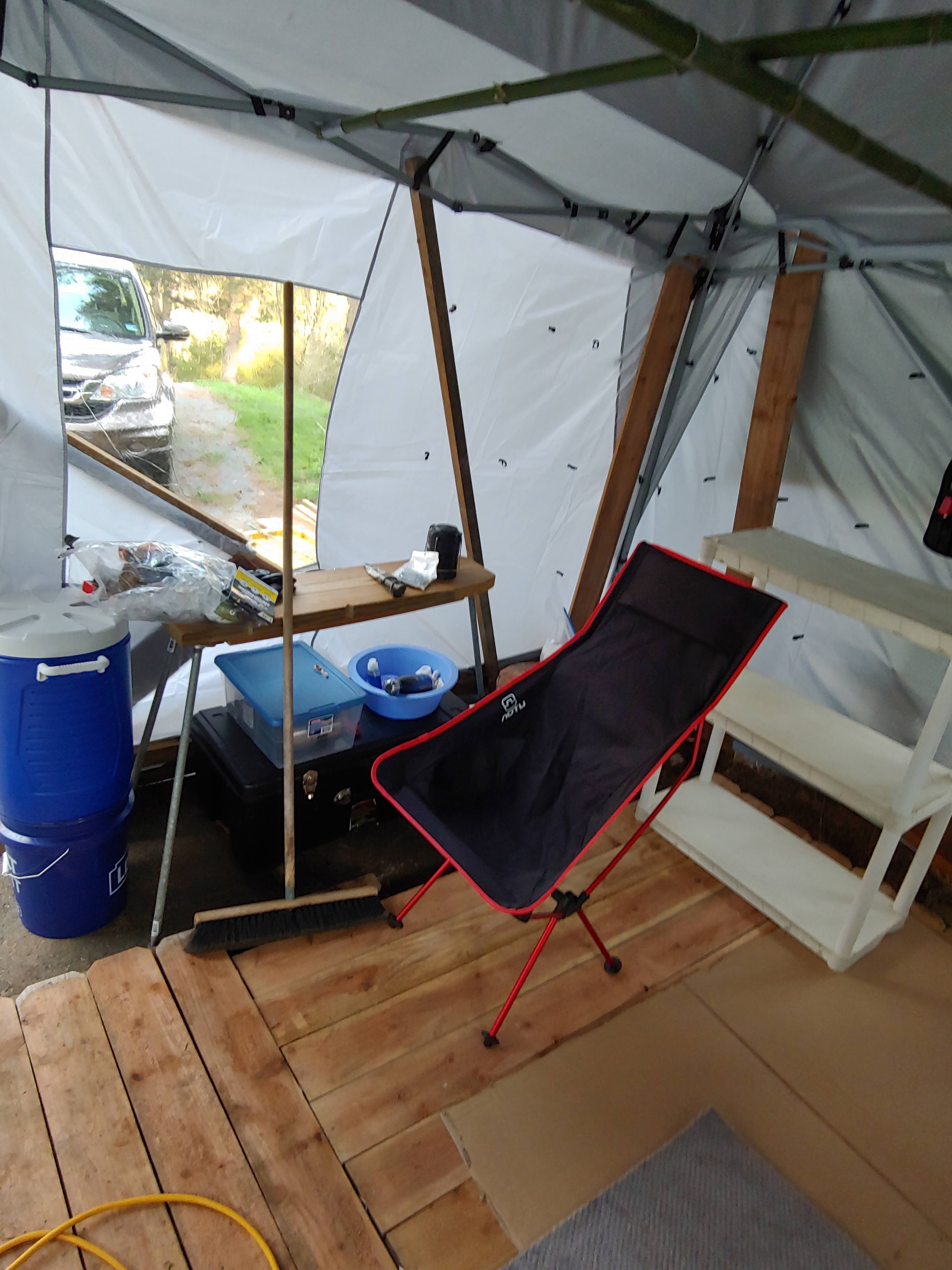
Tools rounded out the dry goods and were located in the truck toolbox I placed along the north wall above the ditch/river. It worked great as a work table and cook top. I had to be sure and keep it cleaned off so I could always raise the top and get what I needed at a moment’s notice. Choosing the most basic yet versatile tools to cover any and all needs was a little tough. At that time I wasn’t going in my garage for anything at all, and it only opened from the inside. Later I’d get Lydeana to open it up and then close it after I’d been out of it for a good while. At that time we still had no idea exactly how virulent this stuff was or how it typically spread.

There was one unforeseen bright point in it all. At night the peep frogs were emerging, signaling the coming of warm weather. Joining them were various breeds of owls hooting, screeching and making other odd noises I can’t describe. Coyotes would occasionally pipe up, and I knew there were at least three different groups from their reactions to each other from different directions. Coons would get in fights in the woods across the road, making a really wicked racket. Above it all, the wind was a constant, with the flapping of the tent wall next to my head lulling me to sleep.

THE BATHROOM

Outhouse partially constructed

Some argue that what makes a country modern is government type, advancements in technology and manufacturing, and overall access to higher education, but I disagree. I think it’s electricity, running water, hot running water and flush toilets. When faced with the prospect of living outside of a modern home, the basic necessities come out to stare you in the face. What were the first things to disappear off of store shelves? Toilet paper, hand sanitizer, alcohol and anything with Lysol printed on it. The first place people’s minds went was to their rear end. In an effort to remain clean in this blog I’ll refrain from telling the million and one head-in-butt jokes I have in my repertoire.

I have a little over an acre surrounded mostly by a farm on two sides of a triangle, and then on the third side a house and the road in the hollow beneath me. I was going to have to build a bathroom of some sort, the question was where and what kind. My property is steep enough I had to consider ease of access to it day or night, rain or shine. There is a brush covered and concealed area down by the bamboo patch that would be downwind of my tent, but the trail to it was extremely steep and hazardous. I work mostly in orthopedic (ortho) surgeries involving the joints and extremities, and I’ve seen far too many fall injuries to want to join those ranks.

The only other viable option was up the hill to the northwest of my tent where the prevailing winds come from. This weighed on me because growing up we would visit my Grandma Boggs in West Virginia, and all she had was an outhouse out by the old dairy barn and slop jars under the beds for nighttime. Slop jars were those old white enamel covered pots with lids. Hers had red trim, but I’ve seen others with blue trim. The outhouse was extremely memorable because one summer, us kids found a can of pink paint and gave it a nice bright coating. Even more memorable was the horrendous smell emanating from the ominous black hole I couldn’t help imagining falling into. I was skin and bones, so it was a real possibility in my mind, and the last thing I wanted was to die stranded in a pool of who knows what underneath a pink outhouse!

As I’ll probably discuss in the future, give me a pick and shovel or a splitting maul or ax and I’m a happy camper. It’s mindless and works out all the stress of the modern world because it leaves you no energy to worry about anything else. Regardless, I was not about to dig a hole for an outhouse since first of all, it’s probably illegal, and second, I still had that pink nightmare in the back of my mind and the subsequent smell which would ultimately find its way to my very airy tent.

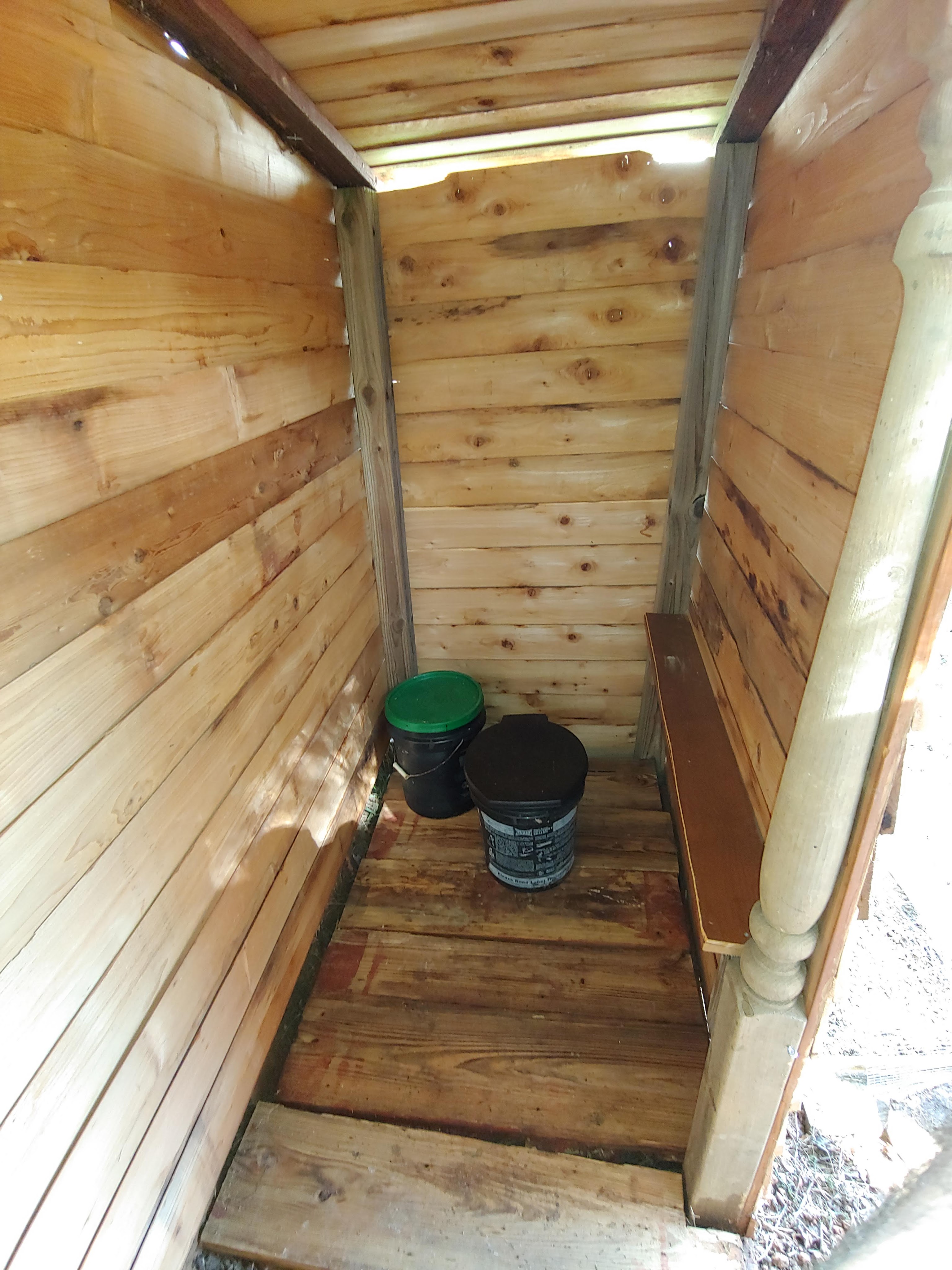
After a little research I opted for a composting bucket system. The premise is using old sawdust, dirt, mulch or some other degradable natural medium to layer over each deposit and it naturally composts into rich but benign soil. I have a toilet seat that snaps onto a five-gallon bucket and several old buckets waiting for a special purpose. I bought five big bags of mulch and was ready for the next step of creating the outhouse. I considered making a basic tarp tent at first, not knowing how far I would have to commit to the whole ordeal. That idea went out the window fast. I finally settled on a small corner of one of our garden plots that is shaded by neighboring hemlocks and has never had good enough quality dirt for gardening success. Building a small structure would be useful anyway because we always need more storage for gardening tools and supplies.

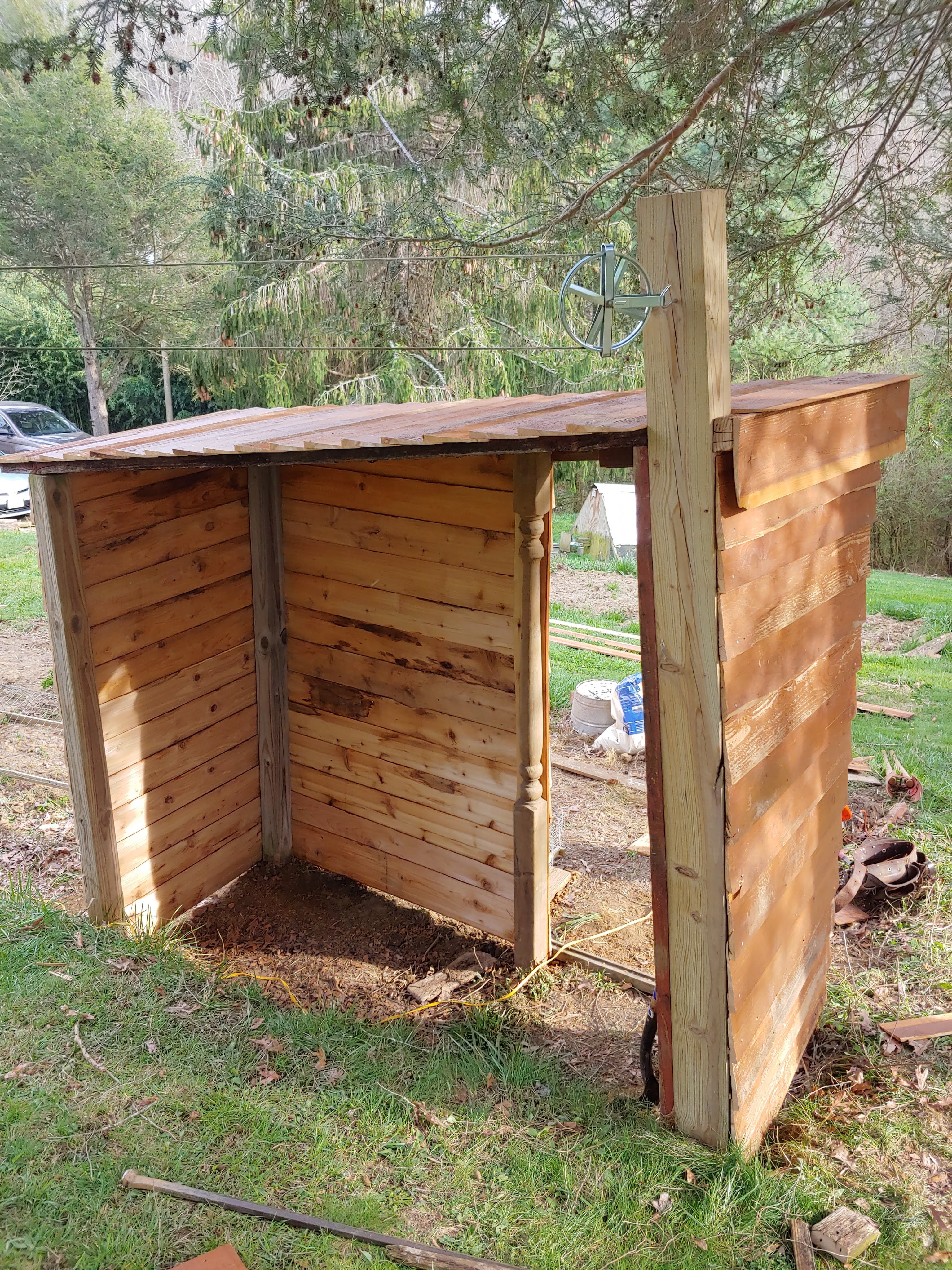
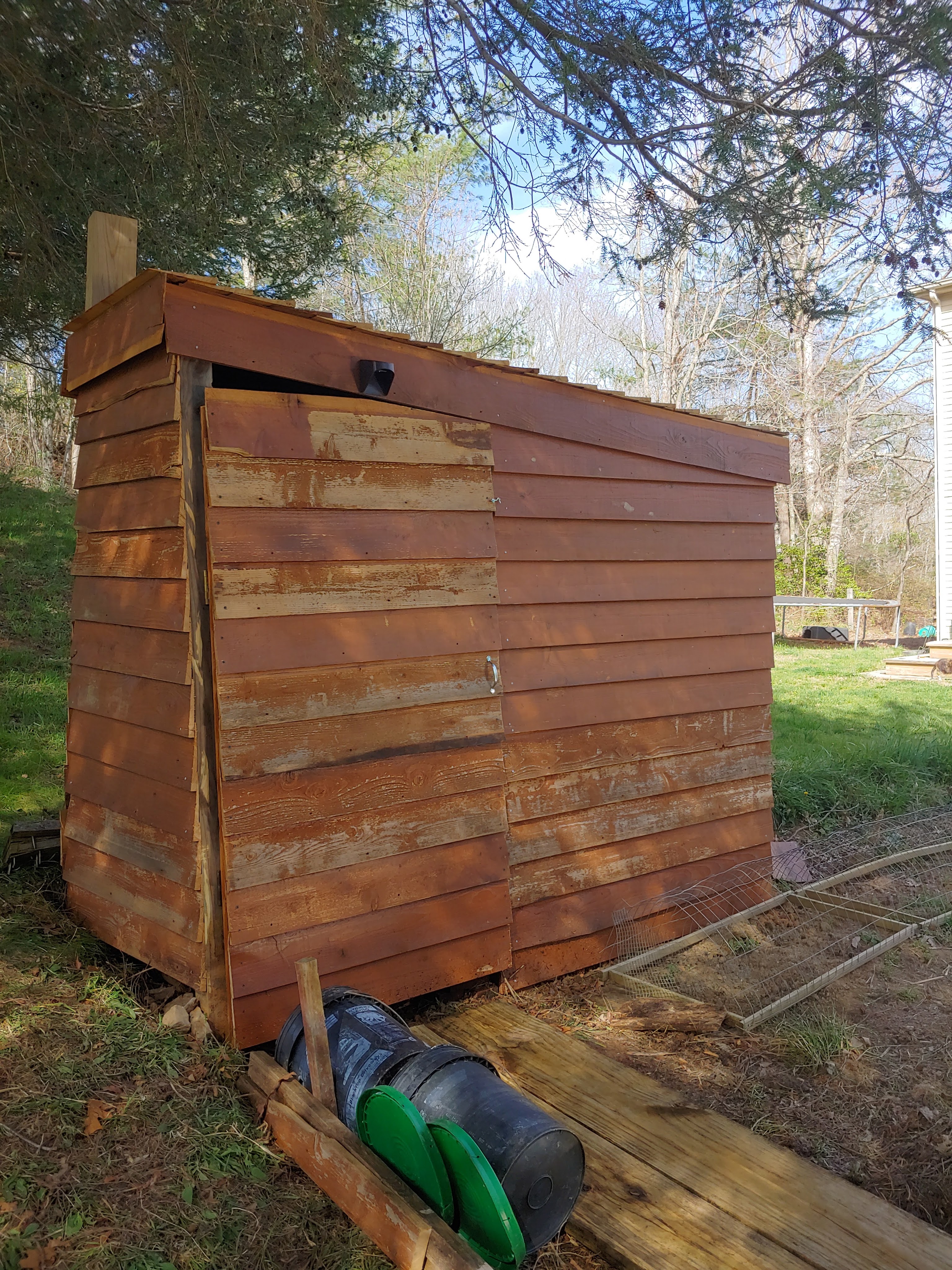
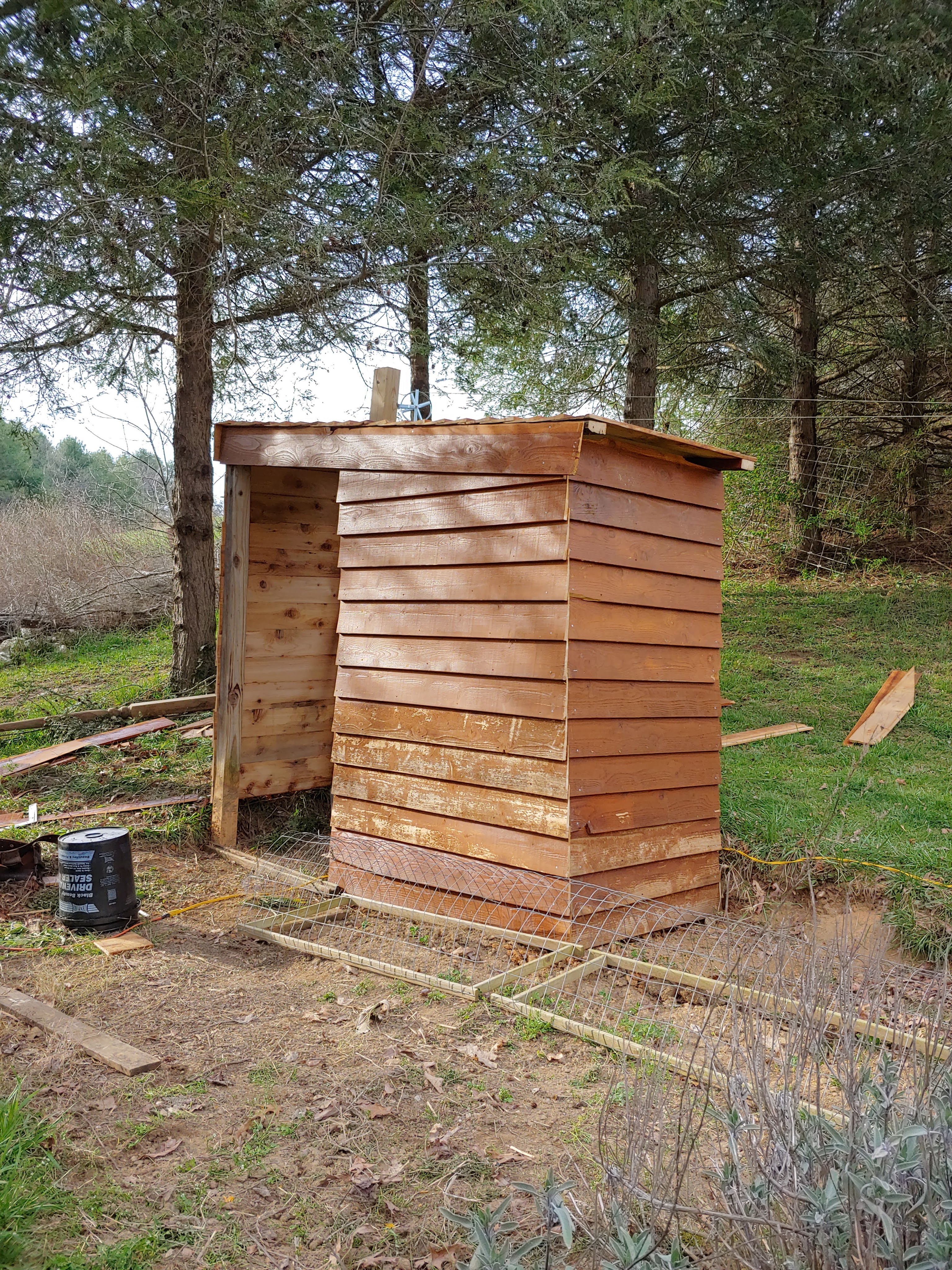
Once upon a time I had installed four posts along the edge of that garden for some long-forgotten reason, with the back corner post being heavy duty and deep to provide an anchor for one end of our clothesline. This was to be my cornerstone. I pulled up two of the other posts and used them to create a 3.5′ x 7.5′ rectangle.

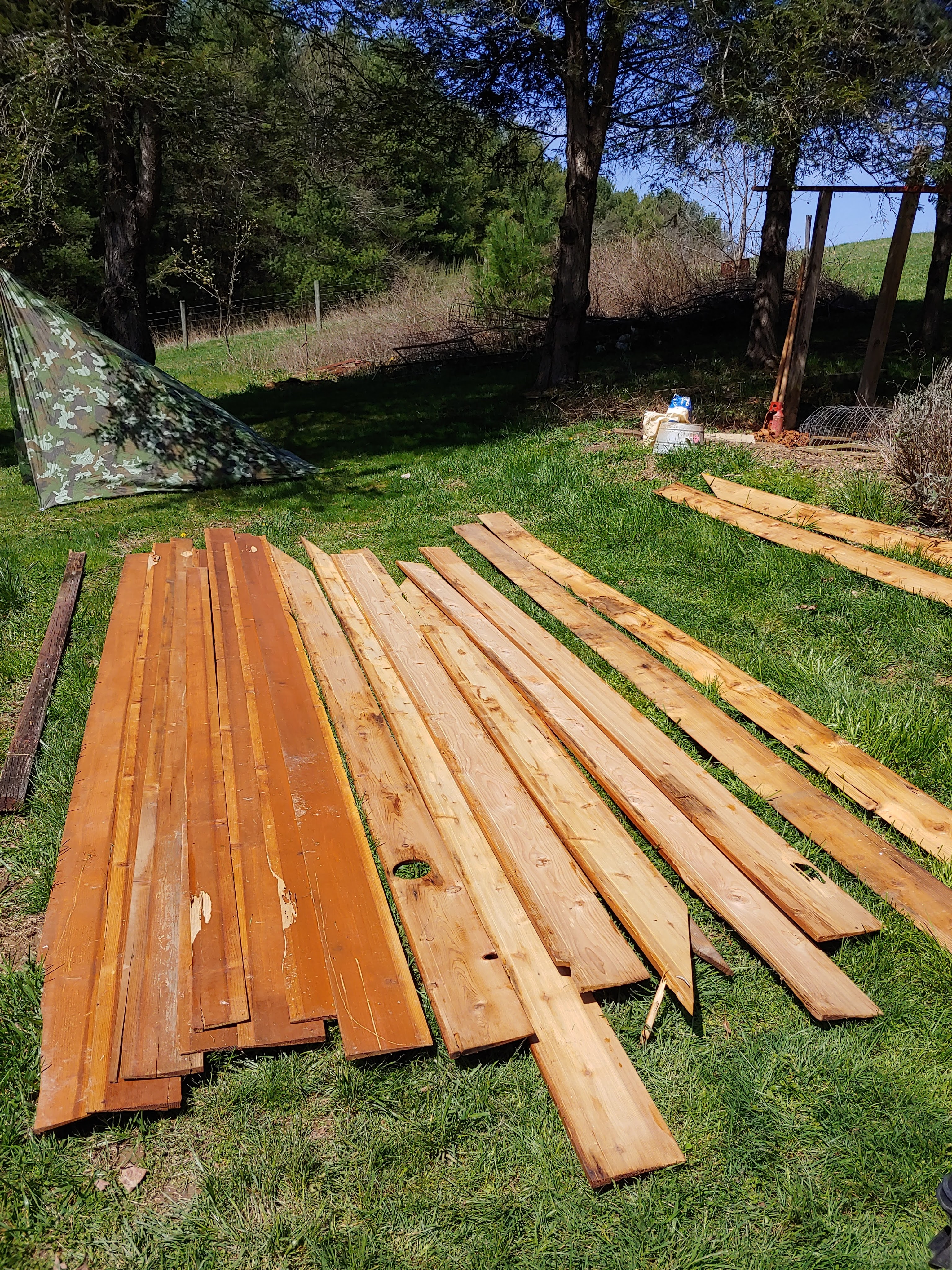
Many years back my mother-in-law had the cedar siding on her house replaced with vinyl, along with the porch posts and railings. Seeing a potential gold mine, of course I got a lot of it to add to one of my ever precious piles under a large shed I had built at the back corner of my property. All I have to do when various projects present themselves is go dig around in the shed and my garage and eminently some dusty, mouse-nest-encrusted gems present themselves.

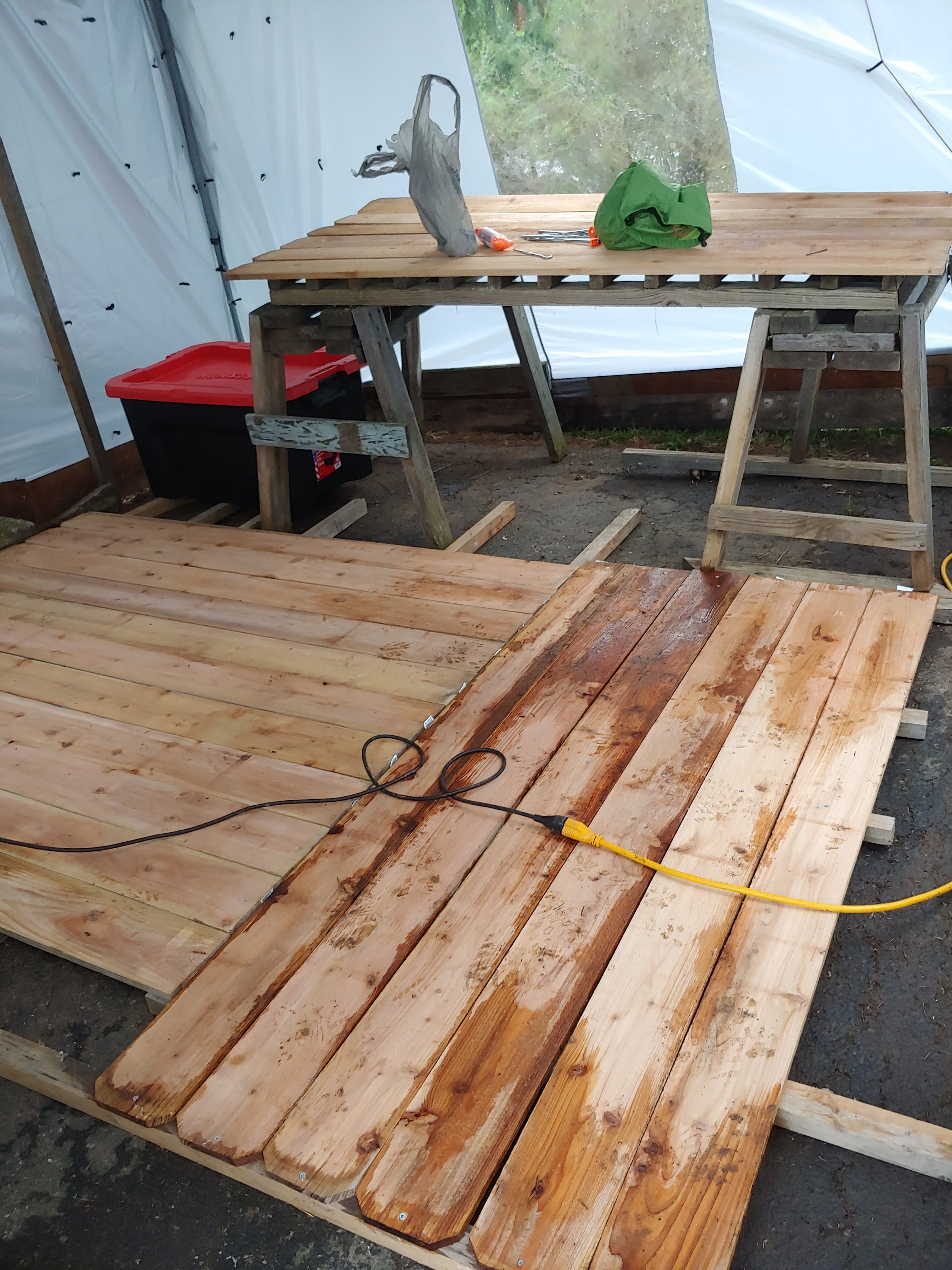
Early on the morning of March 28th (I remember because it was my birthday) I began digging out cedar siding and more posts. Another pile also provided some old treated 2 x 4’s from a deck I tore off the front of my house when we built the addition to it 20 years prior. I used an electric pressure washer to begin cleaning up the mess this stuff was in and pulled nails out of all of it, which I had neglected to do when I acquired it. I estimated what I had to work with according to the visualization forming in my head, placed an extra post and tied them together at the tops with 2 x 4’s, and proceeded to put siding up.

A lot was learned about cutting and handling that siding. It feathered down to a fine edge which would split and break along growth rings at the drop of a hat. I worked hard at maximizing the lengths to avoid as much waste as possible. There was enough I could do the roof, although the pitch was too shallow to be effective by itself. My post heights were my restriction, and I was going for reasonable headroom. I didn’t see backing into the toilet as a sustainable activity. After a revealing rain in following days, I bought a couple of pieces of metal roofing to remedy the leakage problem. Mind you, I had some roofing up in the shed, but it was buried so deep that my energy was better spent elsewhere at the time.

I had some old treated stair treads from the old deck that seemed to be made for the floor on the toilet side. I laid down and leveled some treated strips to keep the boards up off of the dirt. The entry area was to be my shower stall. The headroom was highest there, and I somewhat angled the ground away for some semblance of drainage. 2 x 2″ and 1 x 2″ strips were used to make a shower floor to drain water and keep me out of the mud. Two 6’x 2″ x 10″ boards were then laid down on strips to provide a mud free walkway to the door and allow water to drain underneath.

The roofing would be added the next weekend, and there would be future improvements to the outhouse, but as it was I had successfully given myself a bathroom for my birthday. I couldn’t simply press a lever and flush my worries away, but I had a private place that smelled like cedar and wasn’t pink!

One last thing that was needed was a way to take a shower. I have one of those camping solar shower bags that would be useless in this case, due in part to the low ceiling and the fact that it was the end of March and there were still a lot of cold cloudy days left. In my research of the composting bucket system, I came across a comment online from someone who used a weed sprayer adapted to a kitchen sink hand sprayer head. A lot of people make these adaptations for camping and situations that require off-grid solutions. It seemed like the most logical to me, so I went out and got a one-gallon weed sprayer, the kitchen hand piece kit, some brass connectors and a couple of hose clamps and rigged up the shower. I never in my life thought I’d brag that I could take a good clean shower with one gallon of water. There is a trick to it. I use one part liquid soap diluted in three parts water in a spray bottle so that it has a decent concentration and lathers very easily. You wet down, soap up, rinse off, then dry off. You can, of course, ask the dog to check you over to verify if you missed a spot.

When I finished it was Saturday evening, and I resolved to be moved out and ready to stay out after I came home from work on Monday. How long it would be before I went back in was anybody’s guess. I had my bases covered at that point and was ready for whatever came down the pike. Then and even now there are people who don’t give a crap, but I did, and now I had a place to put it.

FIRST DAYS

I guess I need to iterate what was going through my head when all of this started and provide some background. In 2007 my wife Lydeana was diagnosed with cancerous colon polyps and had a resection with no subsequent treatments of any kind. Little did we know that was just the beginning. The real blow came a year later when I took her for a colonoscopy on March 28th, 2008 (my birthday) and they found a tumor at the anastomosis site that turned out to be stage 3 colorectal cancer.

This began two years of hell with two colon surgeries back to back in September, and during Thanksgiving, a liver resection due to a metastasized tumor in the left lobe. She was hospitalized a total of 12 weeks including the surgeries that year because the chemo and radiation nearly killed her first. I slept in the floor beside her hospital beds throughout with the exception of 5 or 6 nights when a couple people we knew gave me keys to houses they owned to have a bed to sleep in. We spent the rest of the time at her mother’s house so that someone could help look after both Lydeana and Shayley (my daughter) while I attempted to work, look after our house and take care of our everyday business. All that time I slept on an air mattress in the floor and lived out of a backpack for my basic needs.

I was a real estate appraiser when 2008 hit, so my business was in the pot. I started working part time at Chateau Morissette Winery in several different capacities, kept the appraisal business limping along and took any other odd jobs I could pick up, including working the 2010 Census. It was the perfect storm that caused me to reevaluate my direction and apply for nursing school.

I have to say that through all of this we were supported financially, physically, emotionally and spiritually by an enormous number of people. This ultimately restored my faith in the good in people that 16 years of appraising had eroded to a nub.

After Lydeana was done with systemic chemo in 2010, we looked ahead and tried to resume a normal life within the parameters of the residual effects of what she had just been through. To this day her white blood cell count averages 2.1. The typical range is 4.5-11.0.

Fast forward to 2020. Even-numbered years seem to really suck. We got rid of TV service several years ago and I quit watching and following news for the sake of my sanity. I would catch glimpses on TVs at work and news feeds on my phone that I occasionally viewed, much to my chagrin. The reports of the virus springing up in China were worrisome but surreal, with no good information to gauge it by. As it started hitting the US, those of us in the medical business started contemplating the ramifications. By March, the possible scenarios along with the vast unknowns made me take a hard look at what I needed to do.

We didn’t know much about how the virus worked or spread and I work in the OR, so I considered myself to be the most likely vector to my family. Having fought so hard for Lydeana to survive a decade prior, I was not about to take any chances. Sometime in the last two weeks of March I decided it was necessary for me to stay out of the house. The rusty wheels in my head started breaking loose to formulate a plan.

Two major characteristics I inherited from my parents were 1) being cheap/thrifty and 2) hoarding. They were depression-era babies who grew up on farms where nobody had much, so they made the most of what they did have. It’s a blessing and a curse being brought up like that. I always wanted to make everything instead of buying it, and I had to do it as cheaply as possible. This often backfired because my eyes were bigger than my belly, so to speak. I’d get an idea, then gather and/or buy the necessary supplies and maybe even get started. Something would usually happen in life that required a different focus for a while (cancer, for example) and the project and supplies would be set aside and most times forgotten. In time piles would form, and all that crap would work its way to the nether regions of the piles.

Remarkably, despite my poor memory in general, I can remember where any particular item is located in those random piles as long as I don’t get the crazy urge to organize it all. After an organizational fit I can no longer find anything until I accidentally dig it up, which usually happens immediately after I purchase a replacement.

All this is important because I wasn’t about to live somewhere away from home, and due to the design of our house it was physically impossible to safely co-exist inside without risk of potential exposure. I also didn’t want to spend any more money than I had to. I began digging in piles and assessing what I had to make this happen.

We live on a fairly steep hill with two flat spots big enough for a tent. A flat spot at our back door was not an option due to drainage issues and I didn’t want to kill the grass and live in a mud hole. We have a small extension of the driveway past where we park, and that area accumulated outdoor piles that fortunately contained supplies I would incorporate for my purposes. The only drawback was the river that ran across it any time it rained. This precluded the use of the 9×9 dome tent I have, which should have been used to make diapers due to its tendency to soak up moisture.

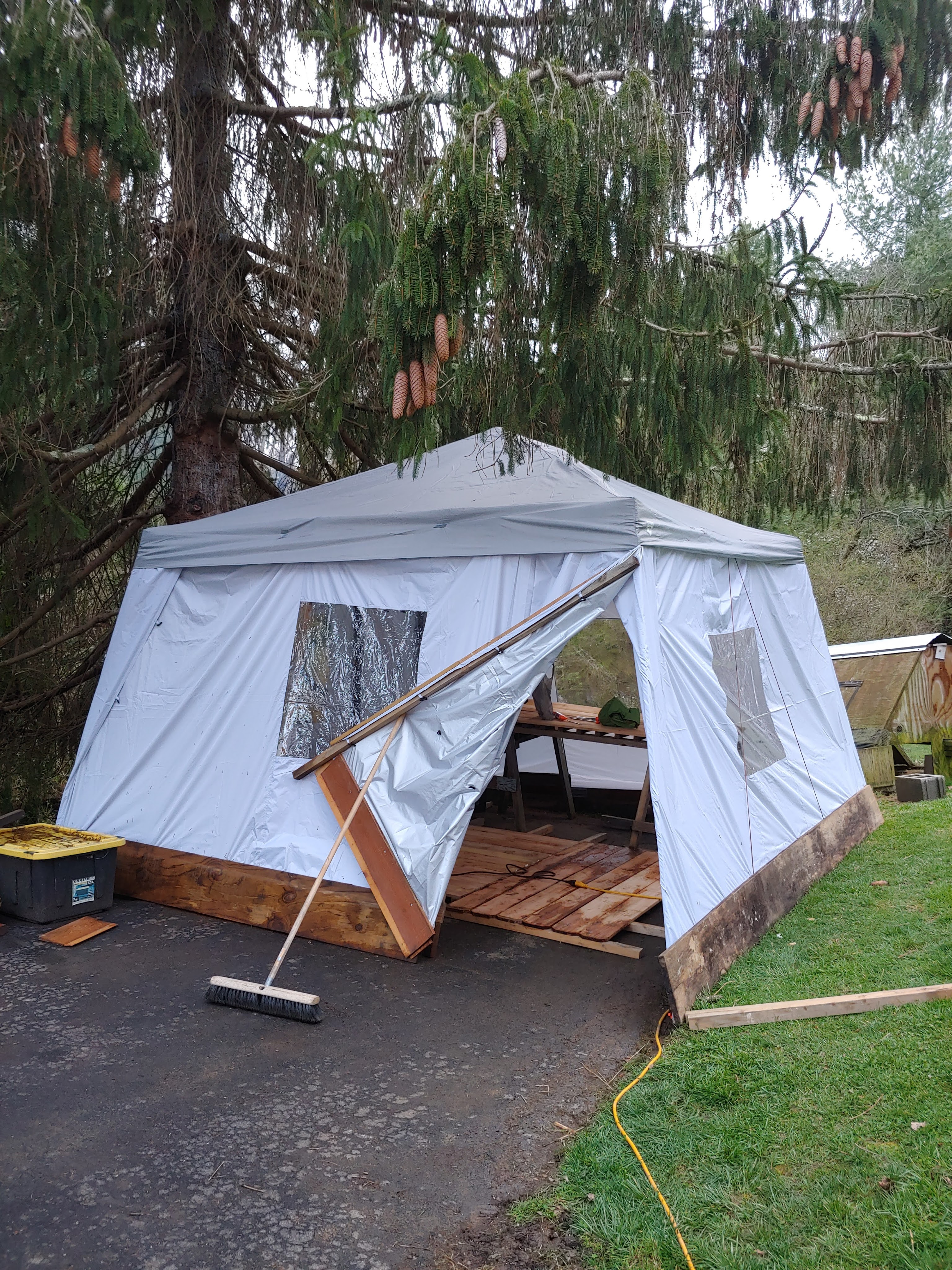
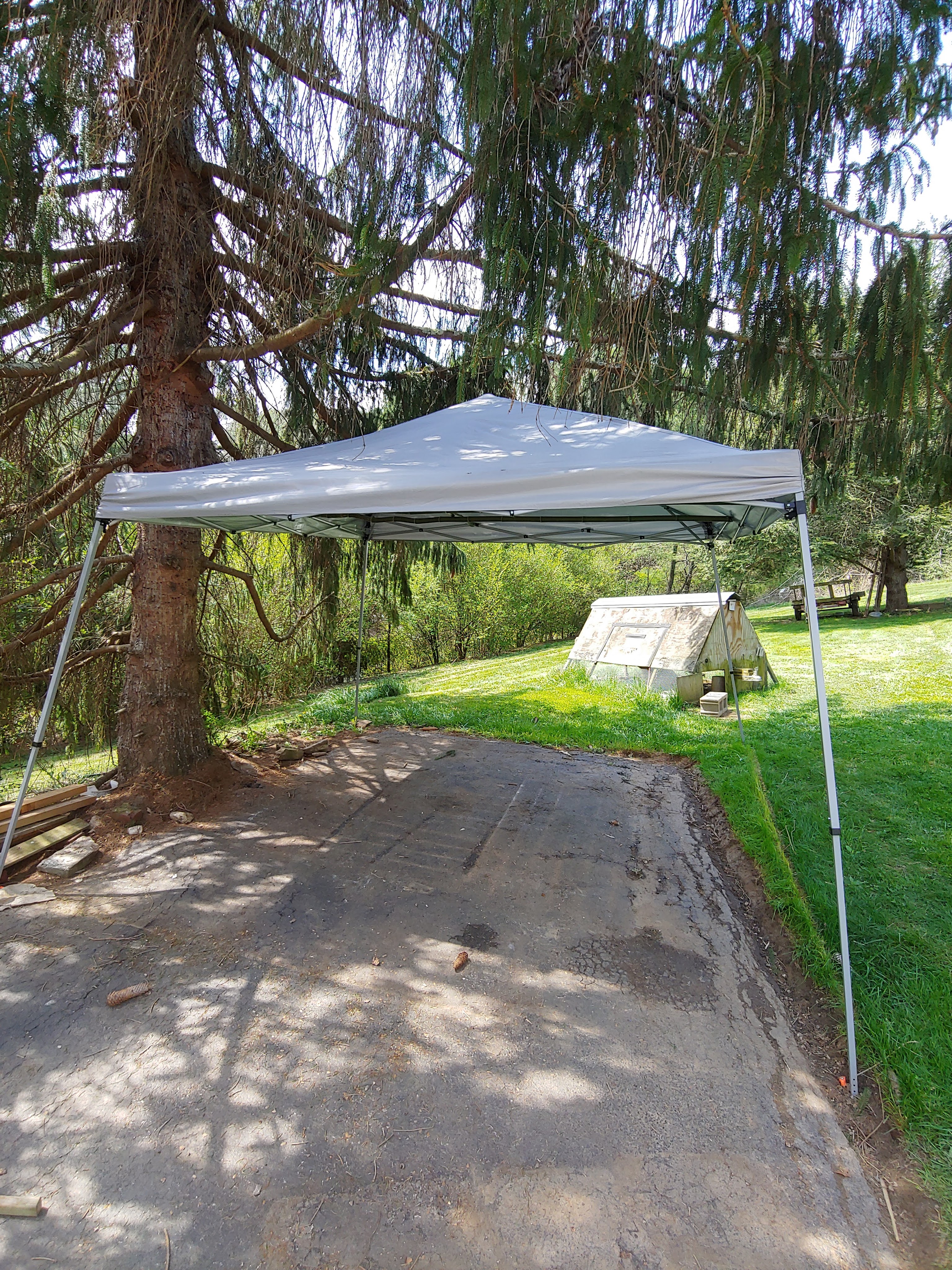
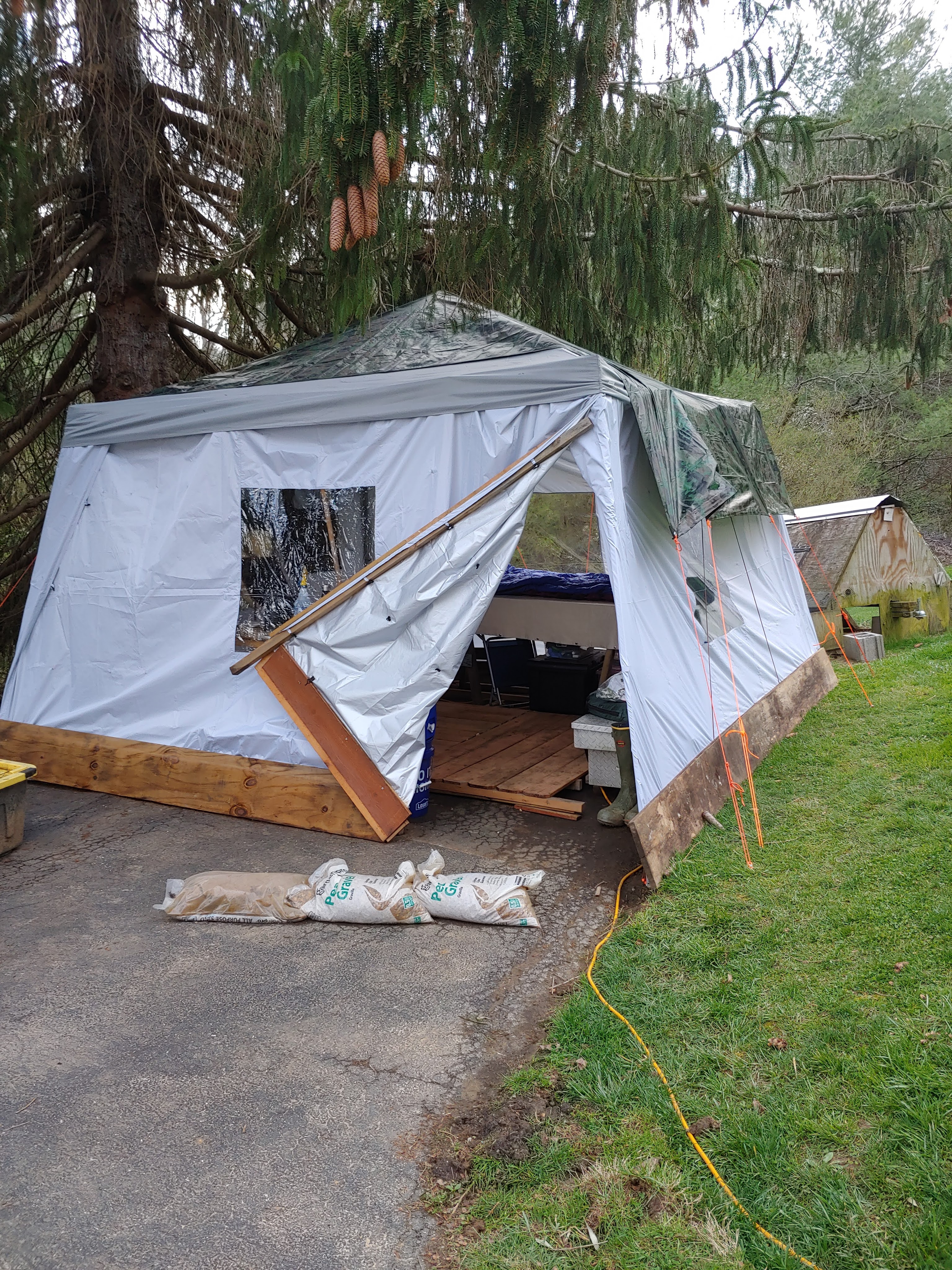
I started by erecting a CHEAP 10 x 10 awning. I got online and found CHEAP walls made for it available through Dick’s. Curbside pickup was a strange new thing, and the fear in the air was tangible when the dude threw the package at my truck window as he swapped ends to get back inside.

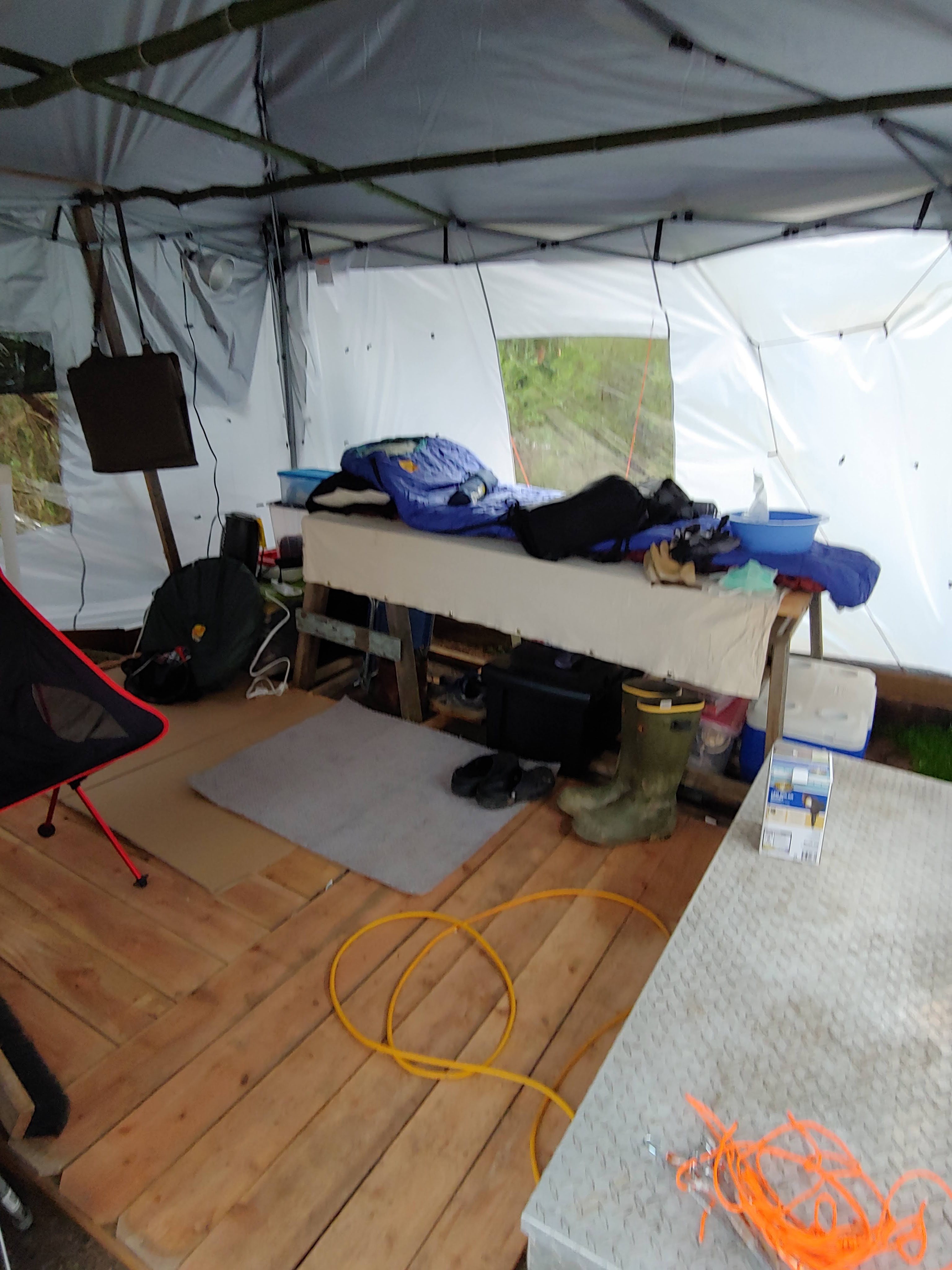
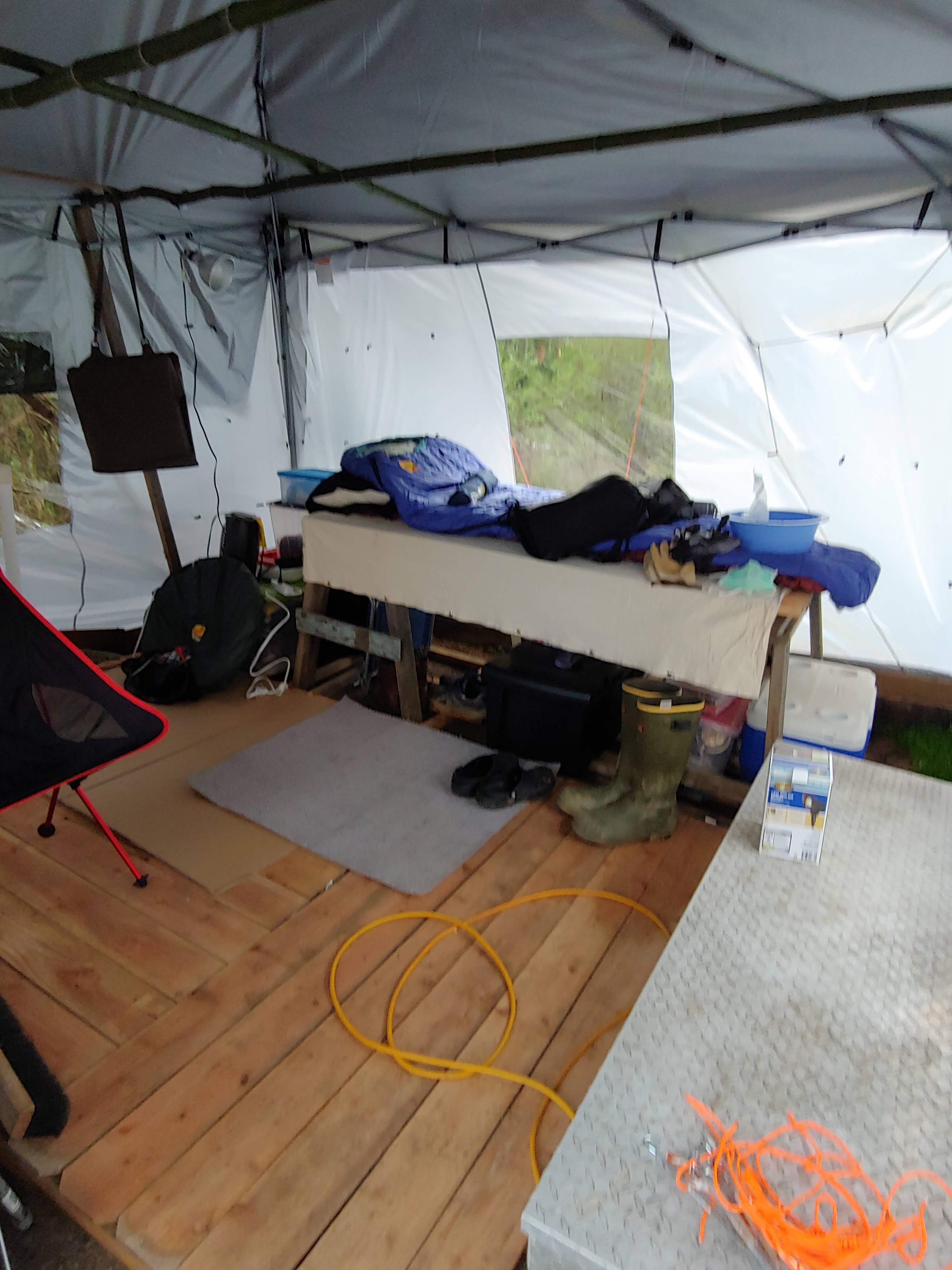
I discovered the walls were one size fits all for multiple sized awnings and were perfect for none, thus leading to a long procession of making round pegs fit in square holes. They didn’t reach to the ground, so I sandwiched the material between some oak boards I had to stabilize and seal the bottoms. There wasn’t a door on any of the walls, so I jerry rigged one side on the front to flip out of the way.

After a mild rain, I discovered lots of leaks, so I dug out some seam sealer I had to seal those with partial success. I decided to spread another tarp over the entire thing, which put unnatural stresses on the awning frame. Fortunately I have a bamboo patch. Lydeana hates my bamboo patch. I cut some bamboo braces to support the frame both diagonally and laterally. My patch was vindicated and my shelter seemed solid enough.

Next I built a floor with old wood strips under a bunch of 6′ cedar fence boards I had for another project. This was crucial because during an initial rain on my new abode, a literal river ran through it. I couldn’t reasonably dam it or divert it, so I resolved to live above it. I also used two saw horses with cedar boards across them to make a raised bed that I could store junk underneath in plastic totes and buckets to maximize my space. With a take down shooting bench I made years ago and an aluminum truck tool box as my other furniture, I was ready to move in the items I thought were needed to comfortably survive. I did this portion the weekend of March 21 and 22nd.

I had a place to hang my hat, now I needed to start the next vital phase, a place to bathe and take a crap. This is a whole subject to itself so I’ll address it in my next installment….THE BATHROOM.