
In our house there always seem to be three places where the most waking time is spent: the couch, the kitchen and the table. The shack doesn’t and most likely will never have a couch because of its space limitations. Two steps in the door and take an about-face to the right and you’re in the kitchen. About-face to the left and you’re in the bedroom. The literal centerpiece of the room is the table. I pulled an old folding table out of the garage to use initially until a better option was available. It took up far too much room, wasn’t very sturdy and the top sagged in from moisture damage to the thin Masonite top.
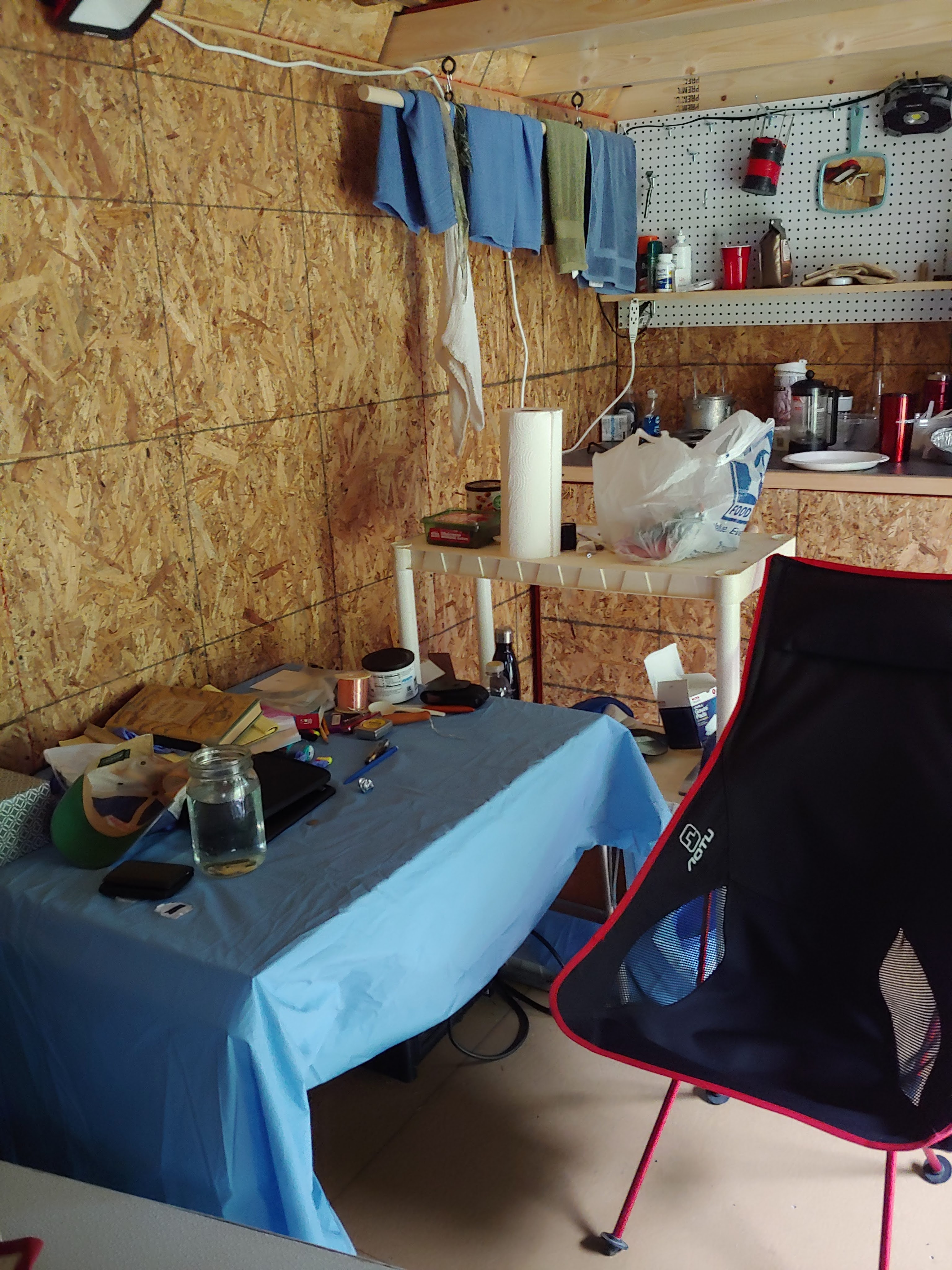
The search began in my mind to figure out what would best suit my needs. I wanted something the right size to be usable, but without taking up too much space or offering me too much room to clutter it up. If it were freestanding but shallow enough to leave plenty of room in the building, it might be a little tippy. The location would remain the same since all the other furniture and accoutrements were fairly well settled in place. Sitting at the table placed me squarely in the center of my little world. Measuring everything I could think of gave me some idea of the dimensions it would take. Several searches on Pinterest for design ideas and perusing various sites to look at commercially-made tables helped me form some ideas.
A folding table appealed to me to allow more space when desired or to tuck out of the way if I ever changed the layout. I didn’t expect this to be a work bench so it didn’t have to be a tank, but it needed to be reasonably sturdy and steady. Most decent folding plans had legs attached with crosspieces on the floor. I don’t like bumping my knees or my feet on stuff under a table. A solid one-piece table would be a space hog and might not fit well elsewhere if the layout was ever changed. There are several folding wall-mounted designs out there, which made good sense. Of course, none of them were exactly what I wanted, so the process of redesigning started.
First and foremost, it had to be extremely affordable, i.e., cheap. Scrap 2 x 4, a piece of 3/4 inch plywood, some hardware, stain and preservative were necessary. All that, except some of the hardware, was on hand. The concept was a table that would fold down to the wall if not needed and could be instantly raised and supported with swing-out supports that would leave full leg room around three sides. But I had to keep in mind that the shack might ultimately live on beyond its beginnings as a pandemic-induced man cave– for example, when the power goes out. So the table needed to be just big enough for three people to eat off of if we ever had to camp out during a long power outage in the future. Unfortunately, it also only allowed for a three-hand game of cards during said outage. We would be out of luck if company came by to join for a game or two.
I drew up some plans for the dimensions dictated by the materials and available space. I had to do a lot of measuring while sitting at the old table to come up with the acceptable sizes of the swing-out supports so they would provide the most support without being obtrusive. I would be cutting a couple of angles and worked out the lengths on paper so I could cut the pieces once and put them together. Some paper, ruler, pencil and basic math skills made it pretty easy. I’d like to say I remembered some algebra, geometry and trig equations and figured it out, but that stuff is a distant vapor in my mind and works against the K.I.S.S. method I generally employ (Keep It Simple Stupid). I purchased the hardware I needed and started sorting out the wood pieces to cut.
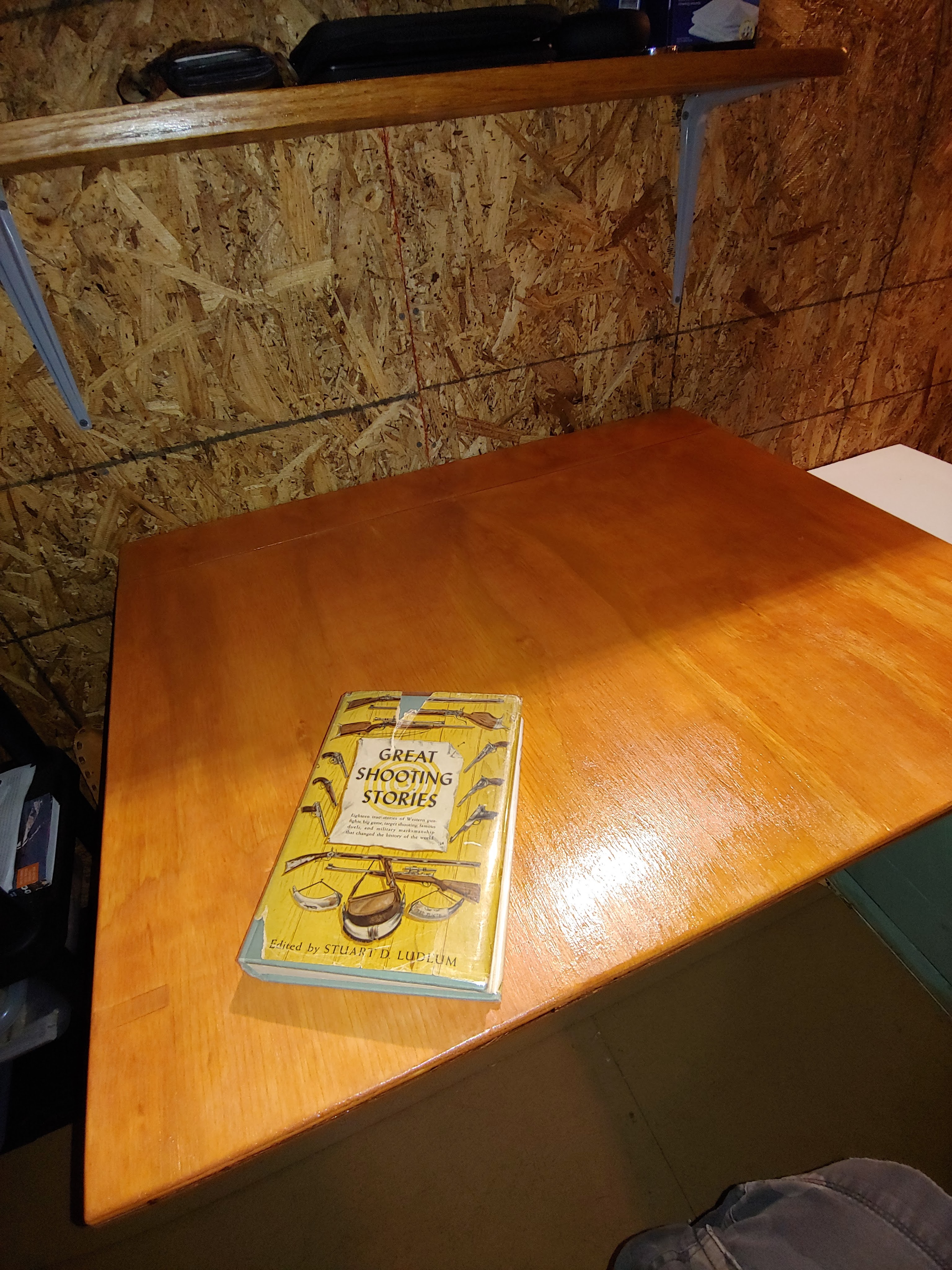
Several scrap pieces of 2 x 4 were used for my wall mounts and swing-out supports. A 28″ x 34″ top was cut from a 4′ x 4′ piece of plywood. A 4″ strip was cut off along the long side of the table top to mount to the wall and the rest would hinge off of that and cover the support braces and mounts when all was folded back. I don’t do fine woodwork or fancy joinery, so a piano hinge, some simple flat brackets, hinges and a bunch of screws would keep it together. I did use a router to round off the edges of the table, which helped give it a better look and feel. After staining all the wood parts and several coats of spar varnish on the top, it was time to put it together.
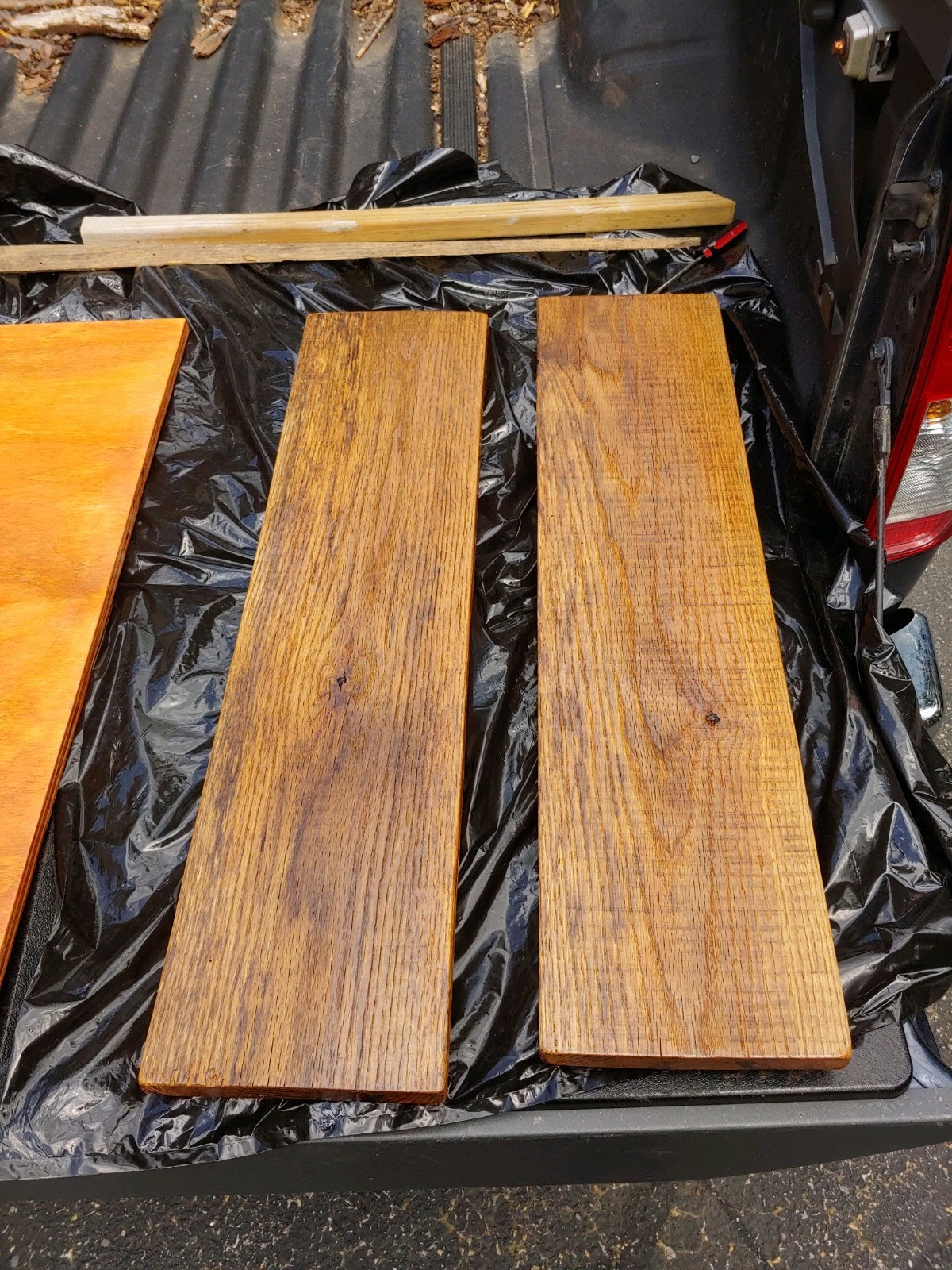
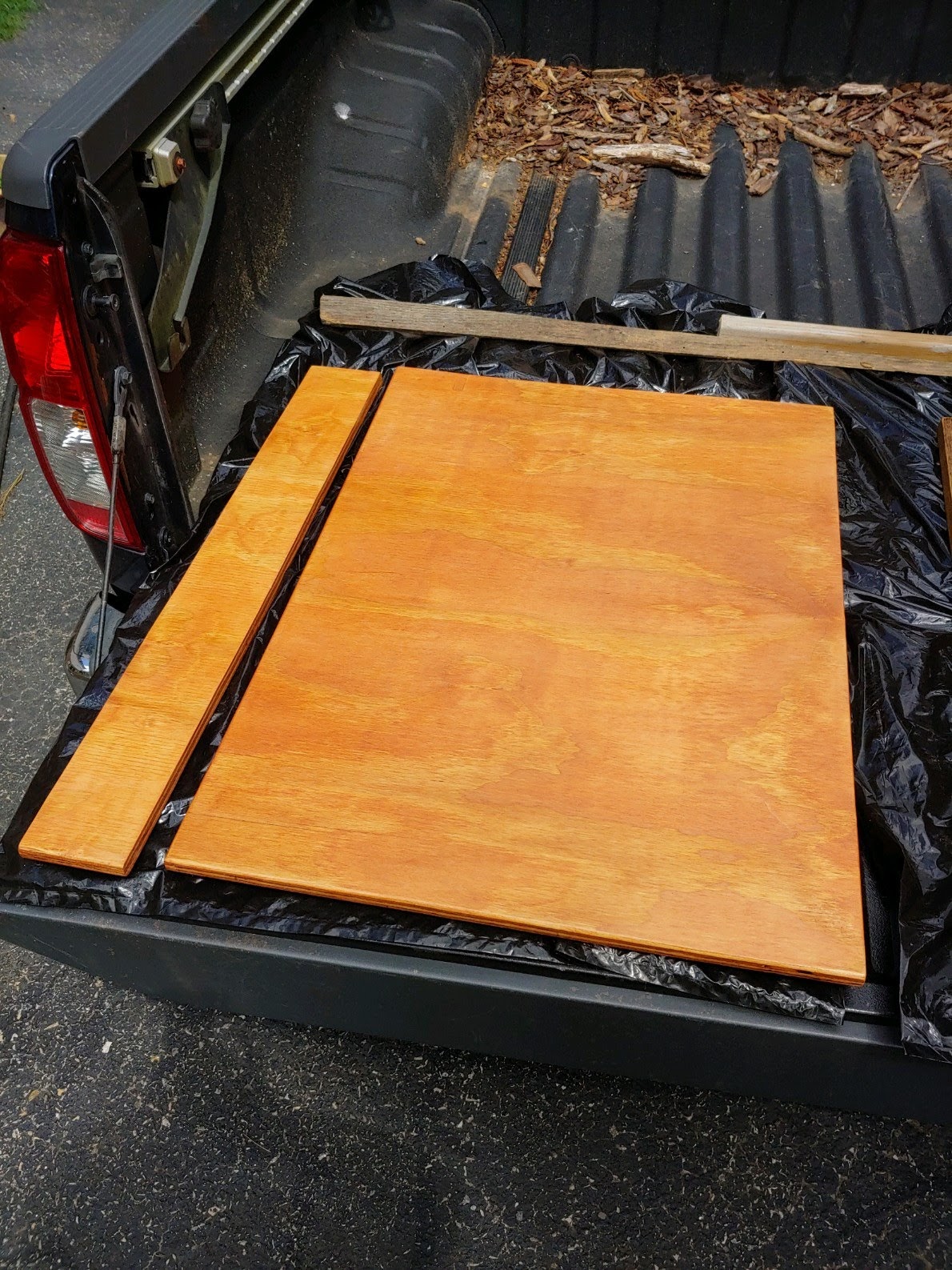
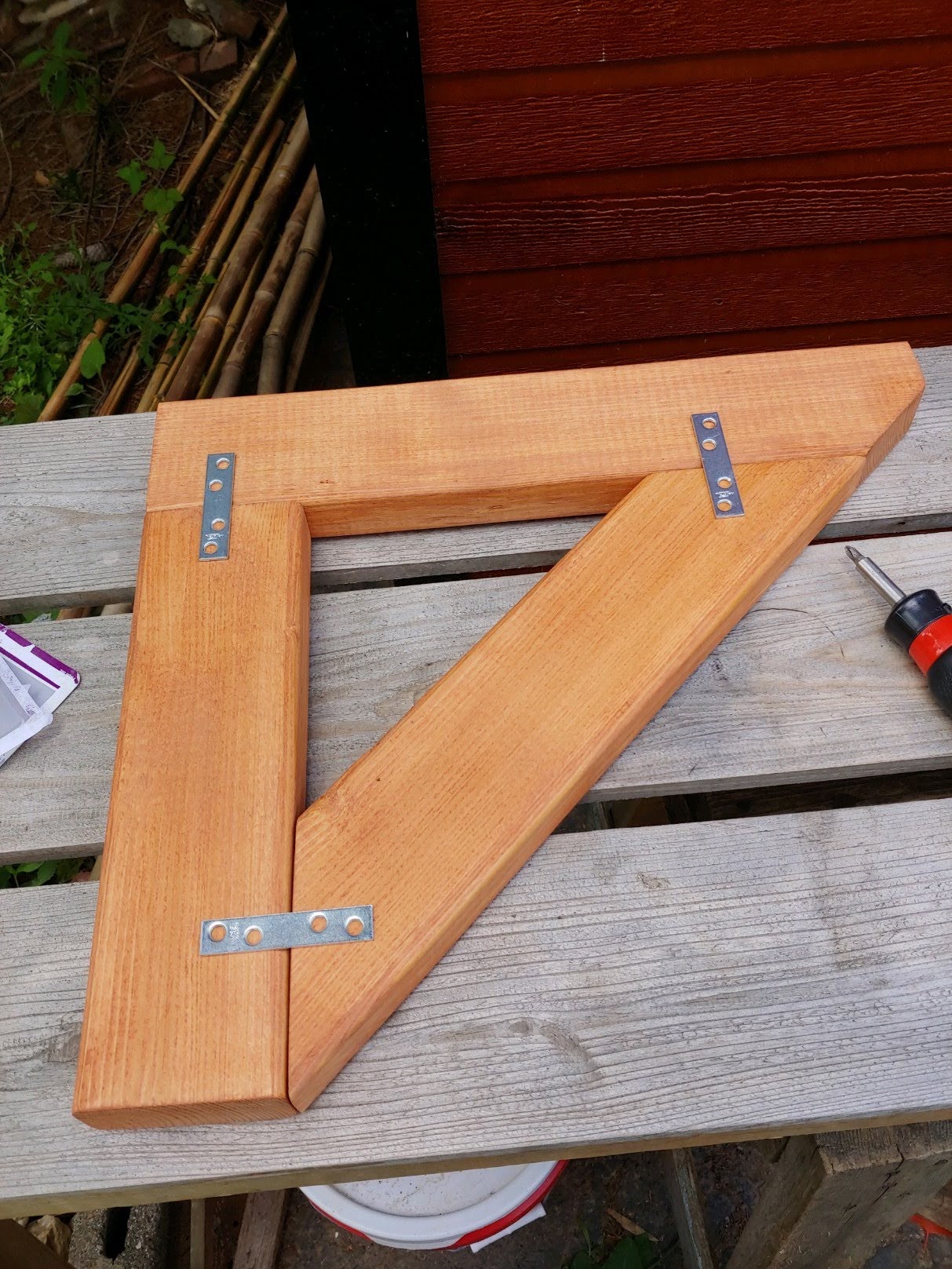
Two oak boards from the same stuff I used to make my shed rack were cut and sanded to be varnished along with the table top. They were going to be a couple of shelves over the table. All the cutting, shaping and sanding of things is no problem for me. Waiting for varnish to dry is torture. Doing it outdoors is a pain since you have to try to keep debris and insects out of it in the process. Poor light in the building helps a lot to hide those little gnat-induced imperfections.
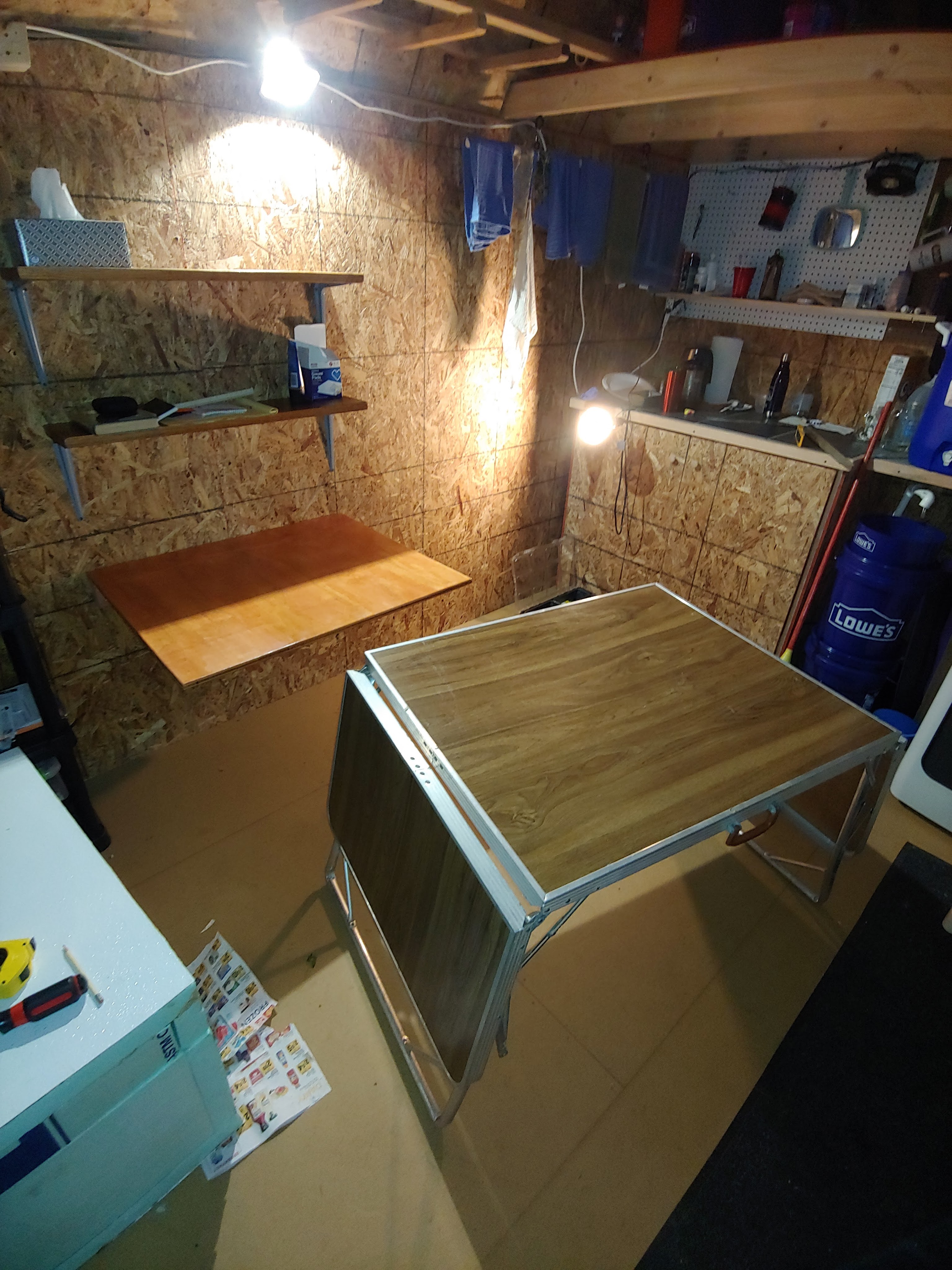
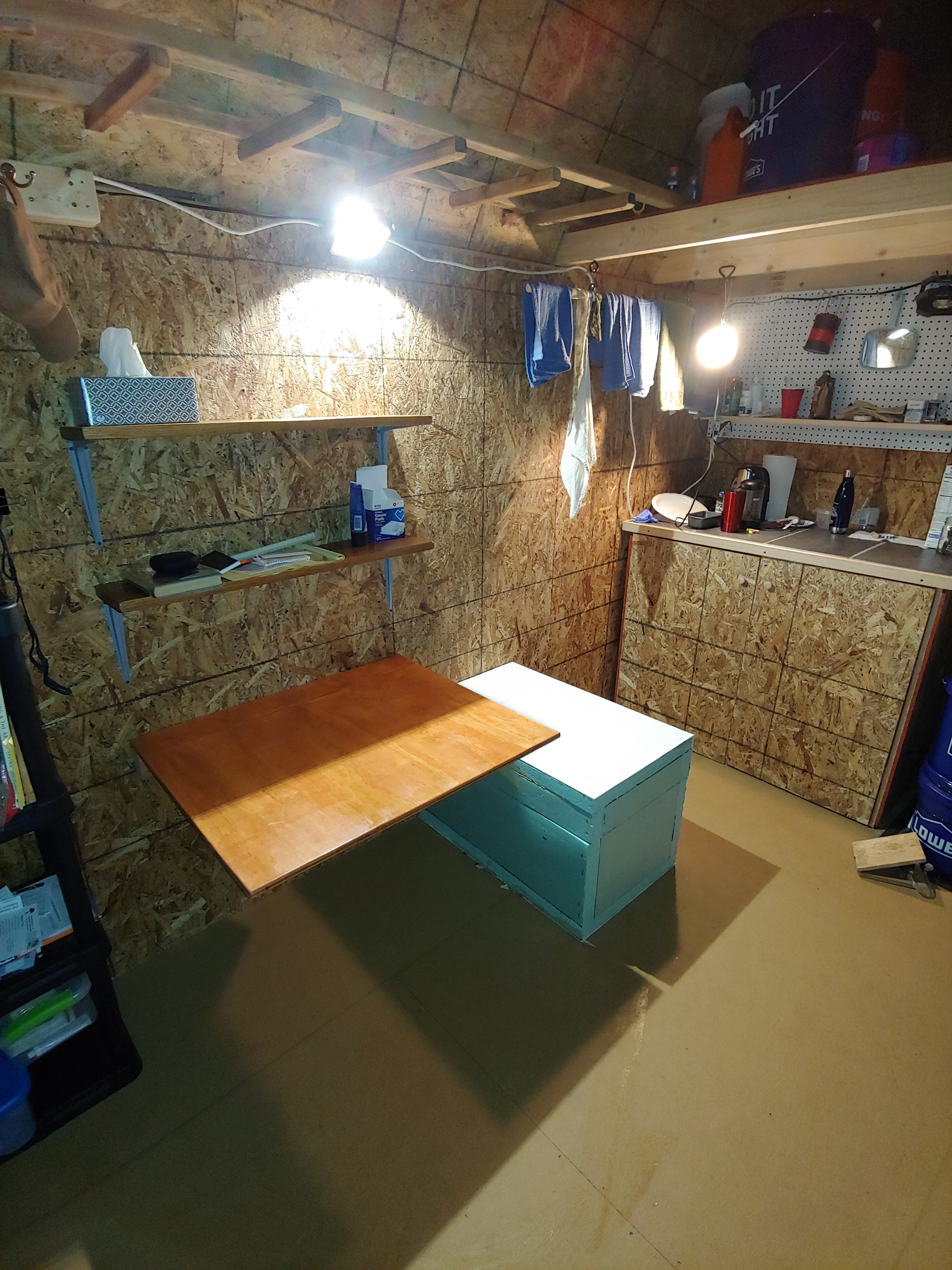
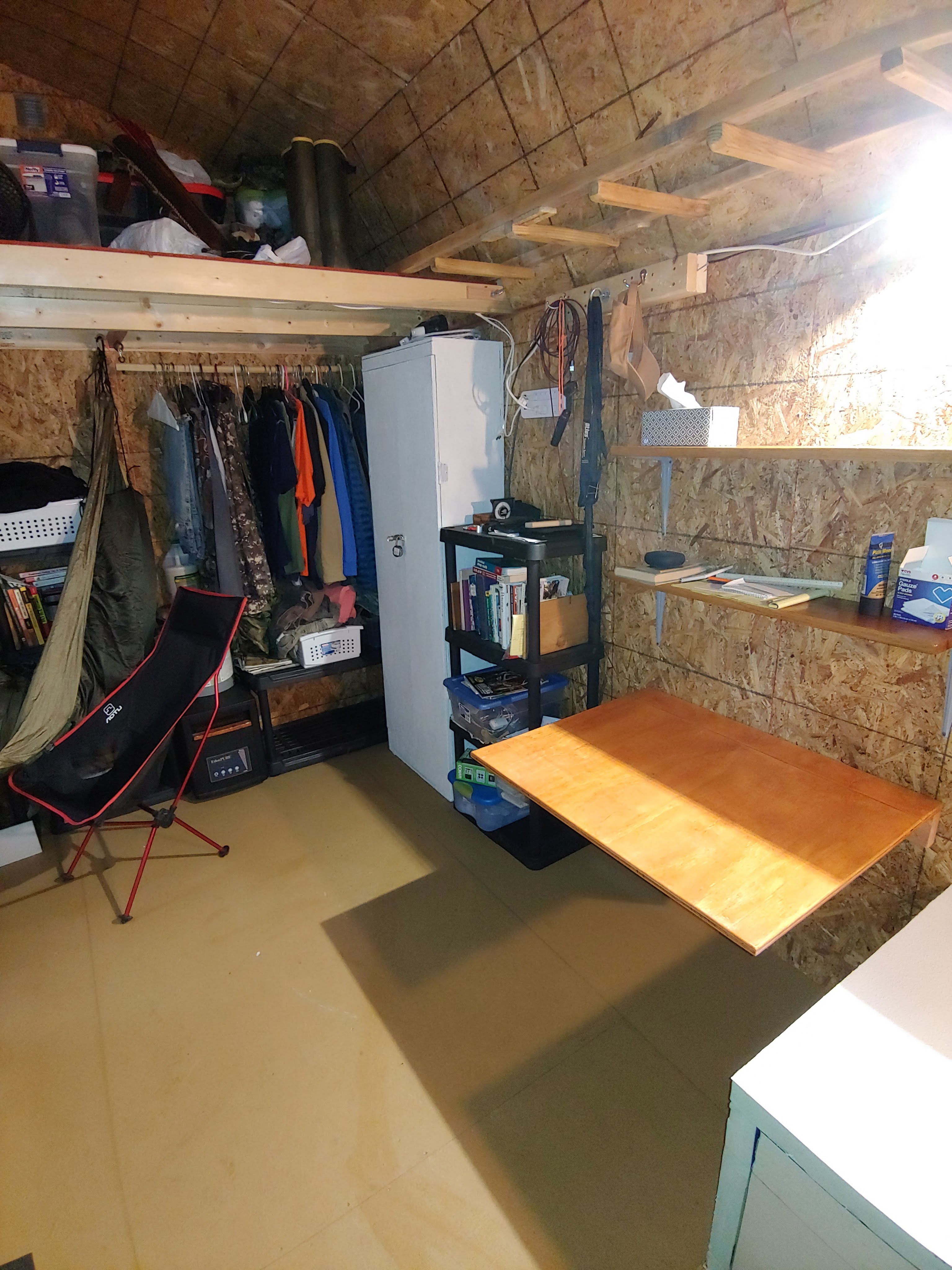
The finish was complete and dried a day before some rain set in. With nothing to be done outside, it was time to finish assembling and installing everything. The shelves went up quickly. The piano hinge was installed along with the 2 x 4 that would support the back strip of the table top. Using the old table to support the new, a level was used while screwing the whole piece to the wall. A single piece of 2 x 4 was screwed vertically to the wall to mount the swing out supports to. The swing-outs were attached with hinges and the whole thing was tested to see how well it fit. It was nearly perfect. One swing-out uses a shim from a piece of cereal box for it to be snug under the top. Everything was absolutely level, which shocked me considering the simple methods I used to put it together and mount it.

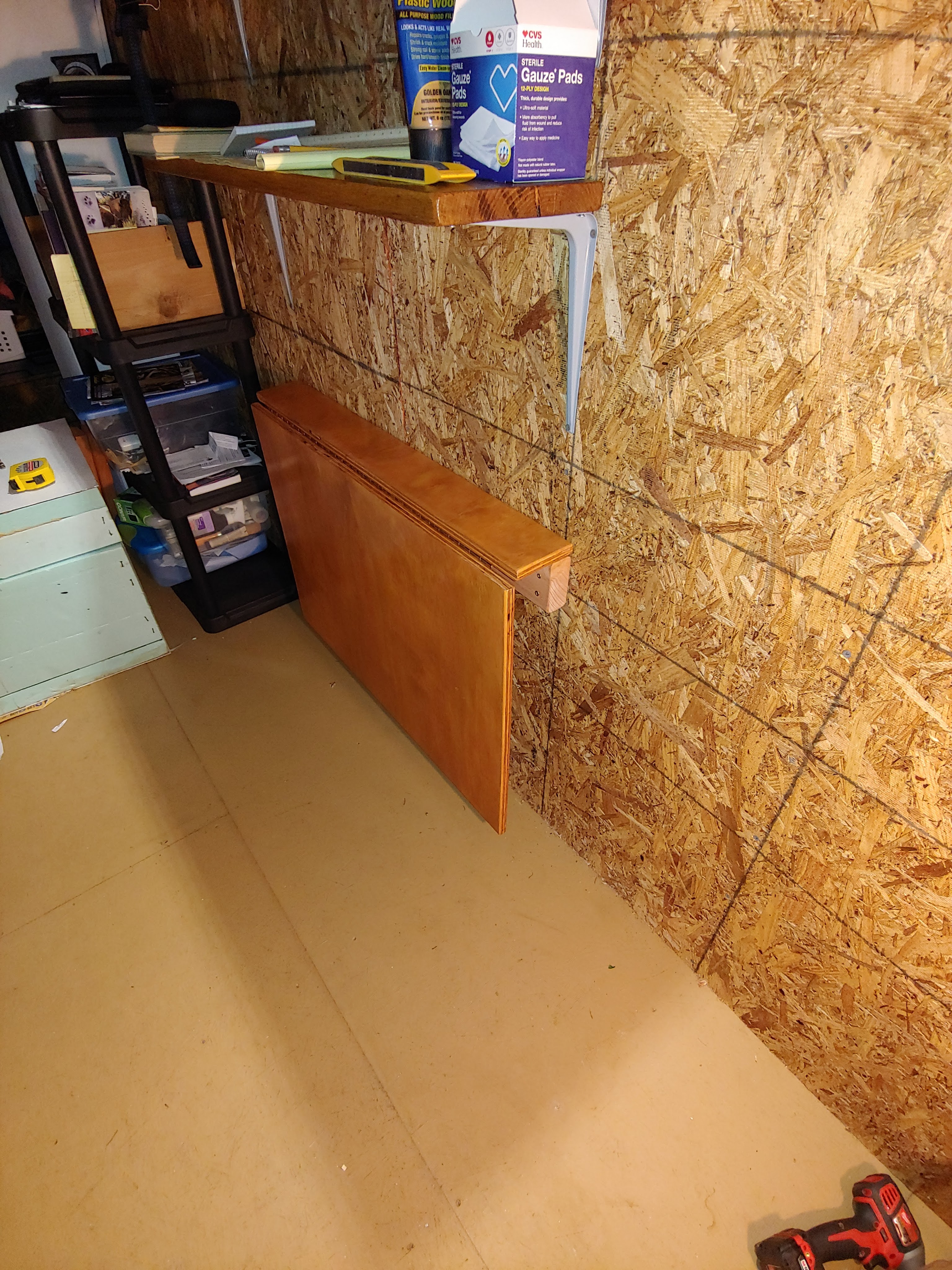
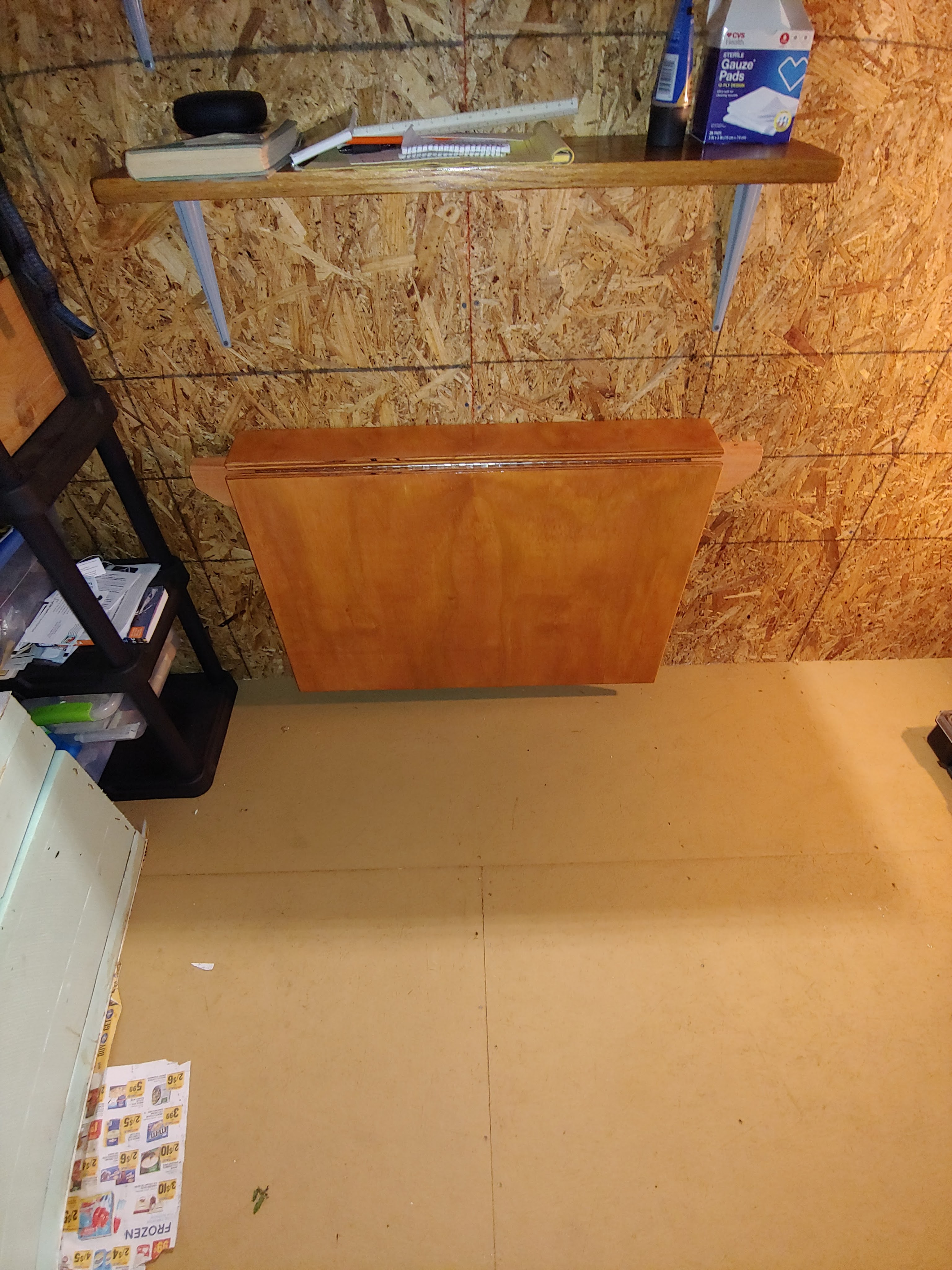
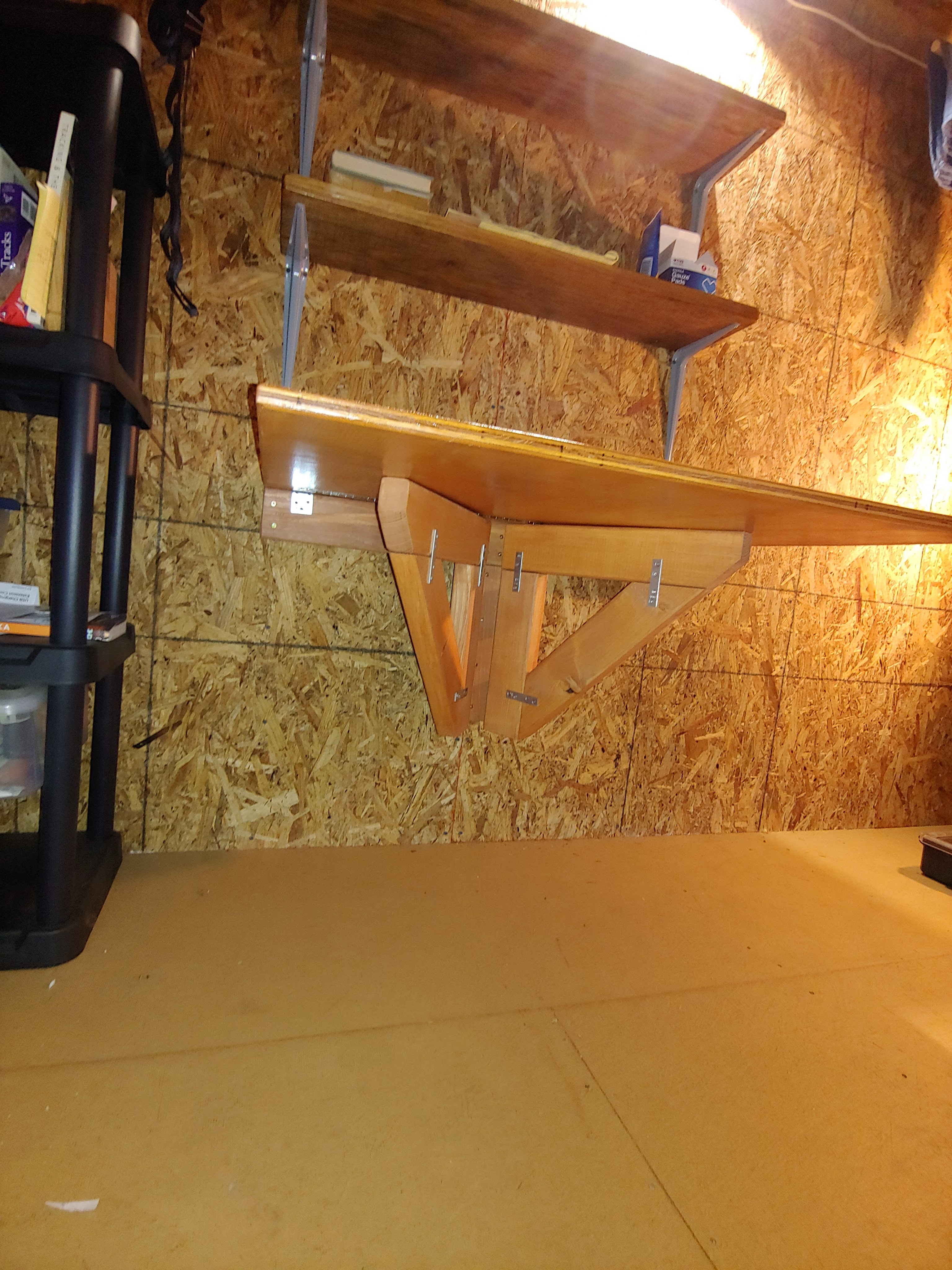

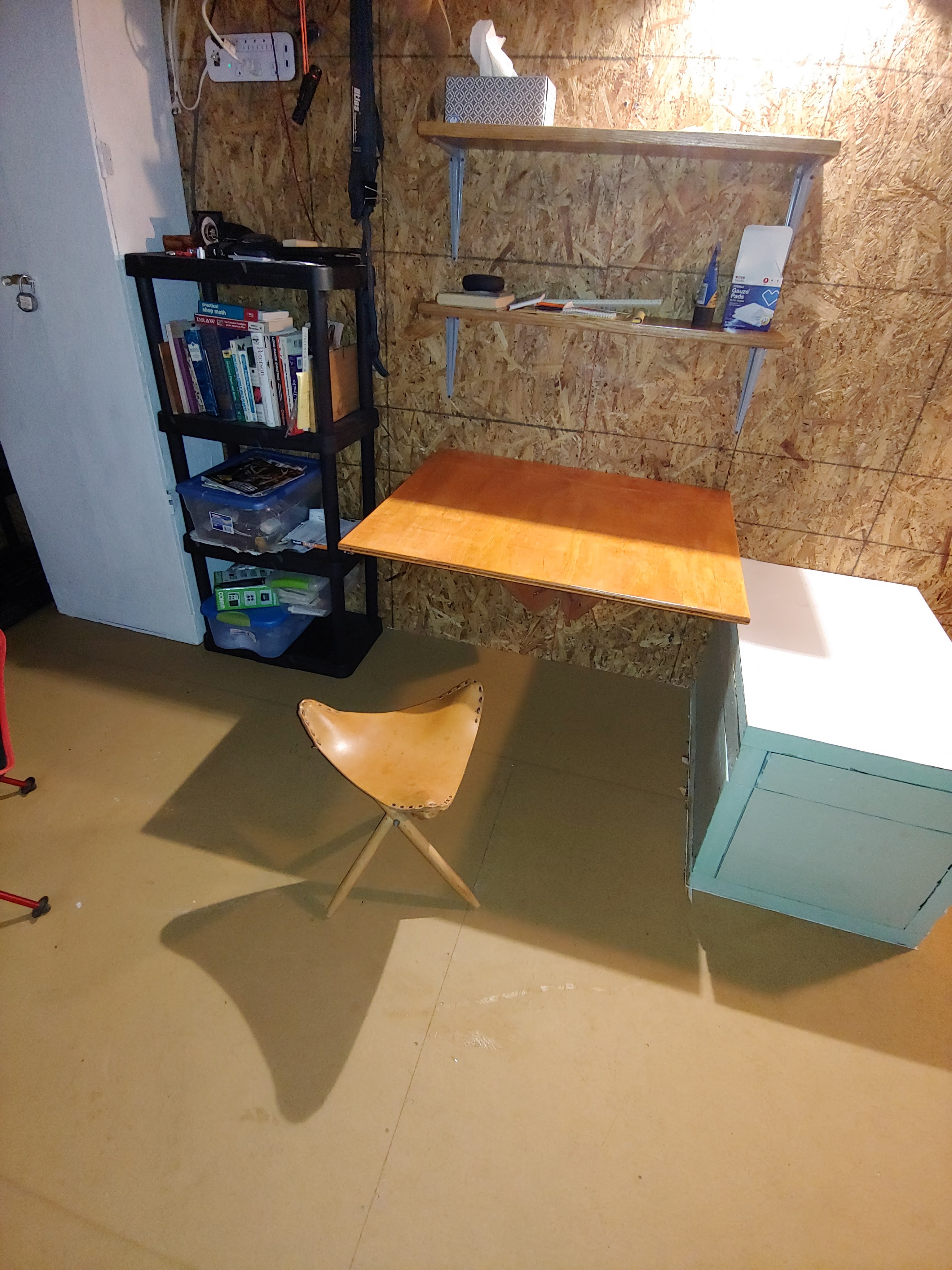
Once upon a time, long long ago, my brother and I rented an old cinderblock house on a farm out in the middle of nowhere. It was cold and very minimal, being more like a tool shed since we kept all the tools and materials for a handyman business in there with us. He put a couple of knickknacks up on the mantle over the stove. I asked him why and he said it made it feel a little more homey. I thought it was funny at the time given the setting. I walked into my little building to this new table and shelves that seemed to glow compared to the old contraption with a blue surgical drape for a table cover. It helped open up the space and took away the shed feel it had before. It would be the centerpiece for many a long, cold night to come. Now I understood. I was home.
 Back Yard Shack